
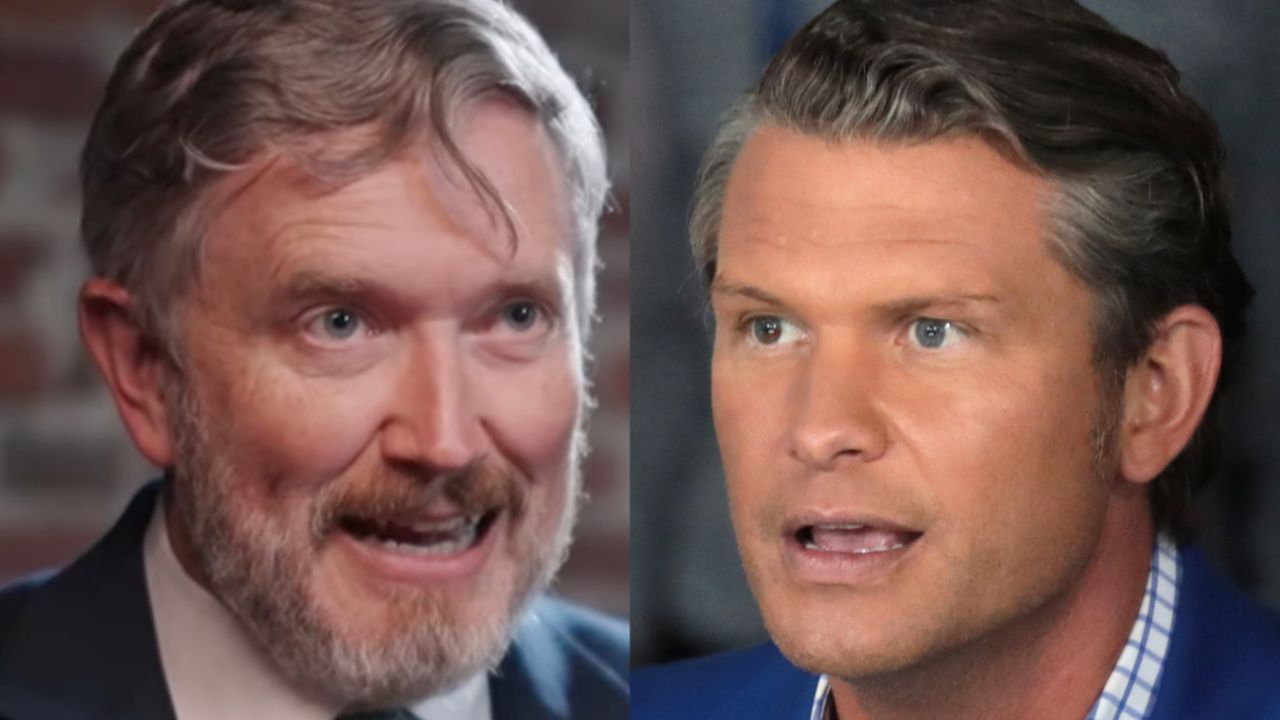
Republican Rep. Thomas Massie of Kentucky filed articles of impeachment against Defense Secretary Pete Hegseth on Tuesday, accusing the Pentagon chief of illegally continuing the U.S. war against Iran in defiance of Congress and of overseeing a pattern of unauthorized military operations stretching from the Caribbean to Venezuela to Yemen. The eight-article resolution marks the most serious Republican-led challenge yet to Hegseth’s tenure at the Department of Defense, and it arrives as lawmakers in both parties face mounting pressure over a conflict that polling shows has grown deeply unpopular with voters five weeks before the midterm elections.
Massie filed the resolution as privileged, a procedural designation that requires the House to act on it within two legislative days. That mechanism means Republican leadership cannot simply bury the measure in committee — GOP lawmakers will either have to vote on impeachment itself or move to table it, forcing members to go on the record over Hegseth’s handling of the war just as they prepare to leave Washington ahead of the November 3 elections. Massie did not notify GOP leaders of his plans before filing the resolution, according to Axios.
“In all of this, Secretary Hegseth has acted in a manner contrary to his trust as Secretary of Defense,” Massie said on the House floor, arguing that Hegseth’s conduct “frustrated Congress’s ability to exercise its most solemn constitutional responsibility” and permitted what he called an “unlawful war” to continue.
The resolution’s first three articles center on the War Powers Resolution of 1973, the law Congress passed over President Richard Nixon’s veto to constrain a president’s ability to commit U.S. forces to hostilities without congressional authorization. Massie’s filing argues that Hegseth executed unlawful orders when U.S. forces entered hostilities against Iran on February 28, 2026, absent a declaration of war, statutory authorization or a national emergency triggered by an attack on the United States. It further alleges that Hegseth continued the war after the House and Senate passed a concurrent resolution in June directing troop withdrawal — the first time such a measure has cleared both chambers of Congress in U.S. history — and after the law’s 60-day and 90-day statutory withdrawal deadlines lapsed.
A fourth article ties those alleged legal violations directly to one of the war’s deadliest incidents: the strike on the Shajareh Tayyebeh Elementary School in Minab, Iran, which the resolution says killed more than 200 civilians, most of them schoolgirls between the ages of seven and twelve. The article contends the deaths were the foreseeable result of Hegseth’s efforts to dismantle the Pentagon’s civilian-harm mitigation infrastructure, including a failed push to repeal a statutory civilian-protection requirement, the removal of the armed services’ senior judge advocates general, and public comments in which Hegseth said the military would not fight with “stupid rules of engagement” and pledged “maximum lethality, not tepid legality.”
Subsequent articles accuse Hegseth of directing extrajudicial killings of at least 221 people aboard vessels suspected of drug smuggling in the Caribbean and Eastern Pacific, including strikes on survivors clinging to wreckage; of retaliating against Democratic Sen. Mark Kelly of Arizona, a retired Navy captain, after Kelly told service members in a video that they could refuse illegal orders; of directing the January operation that captured Venezuelan President Nicolás Maduro without congressional authorization; and of launching Operation Rough Rider against Houthi targets in Yemen, which the resolution says killed an estimated 224 civilians over 52 days despite senior officials, including Hegseth himself, privately acknowledging in a leaked Signal chat that no imminent threat required immediate action.
The Pentagon dismissed the effort. “The entire Department is unified behind the Secretary’s vision and will continue working to put our warfighters and America first,” press secretary Kingsley Wilson said in an emailed statement to Reuters.
Massie’s resolution is not the first impeachment effort Hegseth has faced. House Democrats led by Rep. Yassamin Ansari of Arizona filed six articles of impeachment against him in April, alleging an unauthorized war against Iran, violations of the law of armed conflict, and gross negligence in handling classified information tied to the Signal chat scandal that emerged in 2025. Rep. Shri Thanedar of Michigan filed a separate set of articles in December 2025 accusing Hegseth of murder and conspiracy to murder in connection with a follow-up strike on Caribbean drug-boat survivors. Neither effort advanced in the Republican-controlled House, and House Minority Leader Hakeem Jeffries has said Republicans would never allow articles of impeachment to reach the floor.
Massie’s involvement adds a new dimension because his Republican membership and his privileged resolution give him procedural leverage that Democratic sponsors lacked. The Kentucky congressman has spent months building a public case that the Pentagon is unlawfully sustaining the Iran war, arguing in July that the administration was falsely treating renewed fighting after a collapsed ceasefire as a “second” war in order to restart the War Powers Resolution’s authorization clock. “Let me explain this absurd ruse,” Massie wrote on social media at the time, accusing Hegseth of “BREAKING THE LAW” by keeping troops in hostilities beyond the statute’s 90-day limit.
Massie is a longtime critic of American involvement in the Iran war and of continued U.S. aid to Israel, positions that put him at odds with President Donald Trump and much of the House GOP conference. He is not seeking reelection after losing his May primary to Ed Gallrein, a Trump-endorsed former Navy SEAL, by more than nine points. The race drew heavy outside spending from pro-Israel groups and from Trump himself, who called Massie a “totally ineffective LOSER” on social media and urged Kentucky Republicans to remove him. Massie’s break with Trump traces in large part to his push, alongside Democratic Rep. Ro Khanna, to force the release of files related to the late sex offender Jeffrey Epstein — a campaign that culminated in the Epstein Files Transparency Act being signed into law.
With nothing left to lose politically, Massie has continued using his remaining months in office to challenge the administration’s war-making authority. Tuesday’s filing came the same day the House was already scheduled to vote on another war powers resolution addressing the Iran conflict, the latest in a series of such measures; the House passed similar resolutions directing an end to hostilities in June and July, though none has resulted in a cessation of fighting.
The political backdrop for Tuesday’s vote is a war that has grown increasingly unpopular. A Reuters/Ipsos poll released Monday found Democrats leading Republicans 44% to 37% on the generic congressional ballot, the widest gap of Trump’s second term, with the conflict’s disruption of oil shipments and its role in pushing fuel prices toward record highs cited among the pressures weighing on the president’s standing.
House Speaker Mike Johnson and other GOP leaders will now have to decide within two legislative days whether to allow a vote on the merits of Massie’s impeachment articles or move to table the resolution — a choice that will put individual Republicans on record over a war effort increasingly scrutinized by their own constituents heading into November. Whatever the outcome, the vote is expected to fail to remove Hegseth from office, given the two-thirds Senate threshold required for conviction and the Republican majority controlling both chambers. But the forced floor vote itself represents a rare instance of a sitting Republican compelling his own party to publicly reckon with the administration’s conduct of the war just weeks before voters go to the polls.