
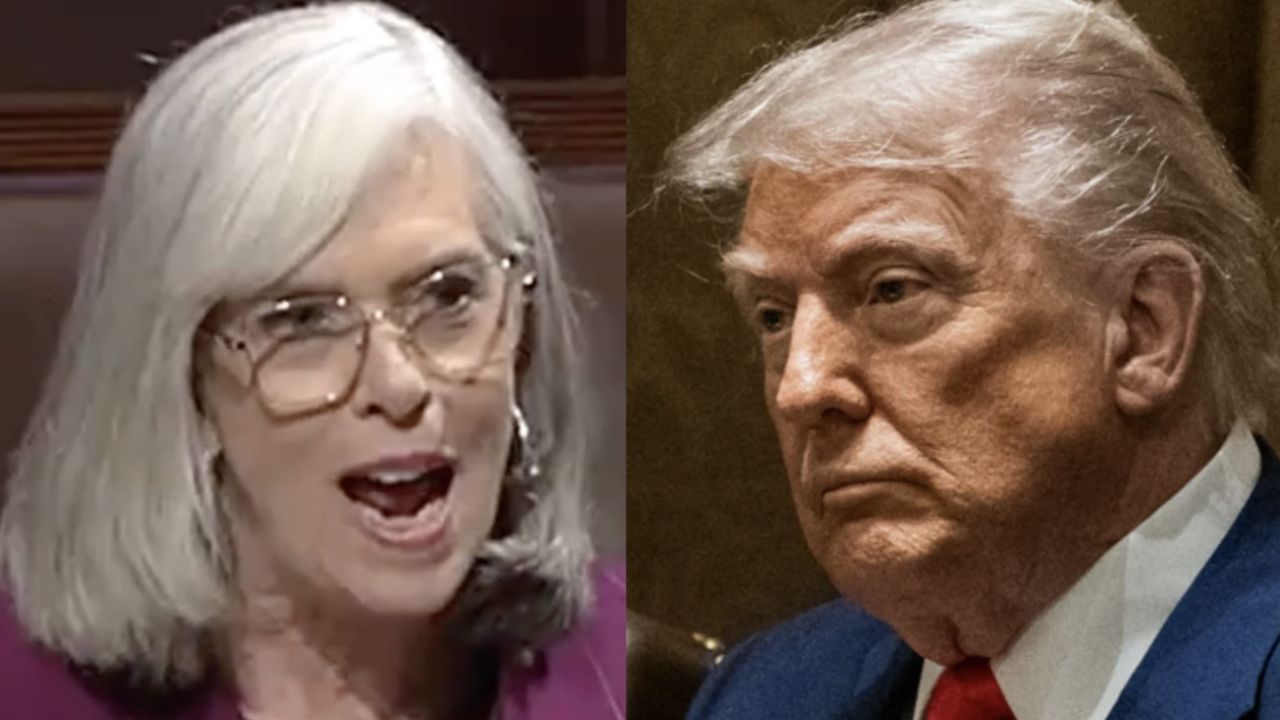
House Democratic Whip Katherine Clark used a Saturday morning social media post to accuse President Donald Trump of presiding over “skyrocketing inflation” and “record-high gas and grocery prices,” directly linking the administration’s economic troubles to the ongoing war with Iran and to tariffs she described as “senseless.” The Massachusetts Democrat, the second-ranking member of House Democratic leadership, posted the statement on X at 9:00 a.m. on September 12, 2026, framing it as a preview of the party’s closing argument ahead of the November midterm elections.
Clark’s post came roughly 24 hours after CBS News reported that consumer prices rose 3.4% year-over-year in August, matching July’s pace but landing above the 3.3% forecast from economists surveyed by FactSet. The timing placed her remarks squarely in response to that data, continuing a pattern in which Clark has repeatedly used fresh economic releases to press the case that Trump’s handling of the economy — and the war — is squeezing American households.
The Full Post
Clark’s statement, posted in its entirety, read:
“Skyrocketing inflation.
Record-high gas and grocery prices.
Trump’s endless war and senseless tariffs.
In November, Democrats will take back the House and stop this chaos.”
The post condensed the core of House Democrats’ midterm pitch into a single, sharable message, pairing economic grievances with a direct promise about the outcome of the election less than two months away.
Behind the Numbers: August’s Inflation Report
The CBS News report that prompted Clark’s post detailed a Consumer Price Index reading that came in hotter than Wall Street expected, with gasoline costs accounting for more than a third of the month’s overall price increase. Core CPI, which strips out volatile food and energy costs, rose 2.4% annually, roughly in line with forecasts, but its 0.3% monthly increase outpaced the 0.2% pace seen in July, suggesting price pressures were broadening rather than easing.
The report also raised the odds that the Federal Reserve will raise interest rates at its meeting scheduled for Wednesday, September 16 — a decision analysts said would mark the central bank’s first rate hike in more than three years. According to CME FedWatch data cited in the report, the probability of a hike jumped to 90% following Friday’s release, up sharply from 70% the day before. Fed Chairman Kevin Warsh had signaled at a Jackson Hole speech the previous month that the central bank still had “work to do” on inflation.
Energy Costs Driving the Surge
Much of the upward pressure on prices has been tied to the war with Iran, which has kept energy markets on edge for months. Diesel prices hit a record national average of $6.06 per gallon on Friday, September 11 — more than 60% higher than a year earlier, according to AAA data — while gasoline reached a national average of $4.30 per gallon the same day. Because diesel powers the freight trucks and railroads that move goods across the country, analysts warned that businesses could pass those higher transportation costs on to consumers in the months ahead.
Alexandra Wilson-Elizondo, global head and co-chief investment officer of multi-asset solutions at Goldman Sachs Asset Management, said in emailed comments included in the CBS report that the August data “does not fully capture some of the inflation pressures that have emerged more recently,” noting that the survey period predated a further climb in oil prices tied to tensions around the Strait of Hormuz.
A Pattern of Attacks on Trump’s Economic Record
Saturday’s post was not an isolated broadside. Clark has repeatedly tied rising costs to the war and to tariff policy throughout 2026. In August, after a separate inflation report, she declared on social media that “Donald Trump’s economy is a disaster,” adding that “his war is spiking gas costs” and that wages were down while inflation was up — concluding, as she did Saturday, that “in November, Democrats will take back the House.”
In June, Clark told reporters that the country was “500 days into the Trump economy,” pointing to inflation at a three-year high, gasoline above $4 a gallon, and a $760 billion rise in household debt, while noting that ground beef prices had climbed 21%. She argued that the cumulative effect of tariffs and the war had left “1 out of 3 families” struggling to afford enough food.
Earlier in the year, in March, Clark said small business owners in her district had told her the current economic climate was “harder than the pandemic,” citing tariffs, workforce shortages, and rising fuel costs as compounding pressures on Main Street. The following month, appearing on MS NOW, she said “84% of families are giving up something” to make ends meet and argued Republicans in Congress were “completely deaf to the cries for help.”
In a May appearance on CNBC’s “Squawk Box,” Clark was pressed on whether reducing interest rates would require cuts to government spending. She responded that “the fastest thing we can do to lower costs for Americans right now is end this war and get to a resolution of it, open the Strait of Hormuz, and bring those gas prices down” — directly linking any near-term relief on prices to a resolution of the conflict with Iran rather than to fiscal policy.
Democrats’ Midterm Strategy Centers on Affordability
Clark’s Saturday statement fits within a broader, coordinated Democratic strategy heading into November. Democratic Congressional Campaign Committee Chair Suzan DelBene has said affordability will remain the party’s central message, telling reporters over the summer that Democrats need to flip only three Republican-held seats to reclaim the House majority for the first time in four years. DelBene has described cost of living as “absolutely the number one issue across the country,” citing housing, food, health care, child care and energy costs.
The DCCC has backed that messaging with targeted advertising, including a digital campaign launched in July across 25 Republican-held districts that focused on rising grocery and gas prices and urged voters to “remember in November.” House Minority Leader Hakeem Jeffries has also circulated internal polling showing that voters increasingly associate the Democratic Party with the cost-of-living issue, a shift from earlier in the year when healthcare dominated the party’s public messaging.
More recently, House Democrats have moved to fold allegations of corruption into that same affordability message, arguing that self-dealing in Washington is directly connected to the financial strain felt by voters. That framing has become part of the party’s broader “Fighting for an Affordable America” campaign in the closing stretch of the midterm cycle.
The Stakes in November
With the midterm elections less than two months away, Clark’s post underscores how central the economy — and the war with Iran — have become to the political battle for control of the House. Republicans currently hold a narrow majority, and Democrats need a net gain of only a handful of seats to retake the chamber, a threshold that has kept both parties focused on economic messaging as the September 16 Fed decision and continued volatility in energy markets keep prices in the headlines. Clark’s statement, paired with the fresh inflation data it responded to, signals that Democrats intend to keep the war, tariffs and the cost of living at the center of their campaign through Election Day.