
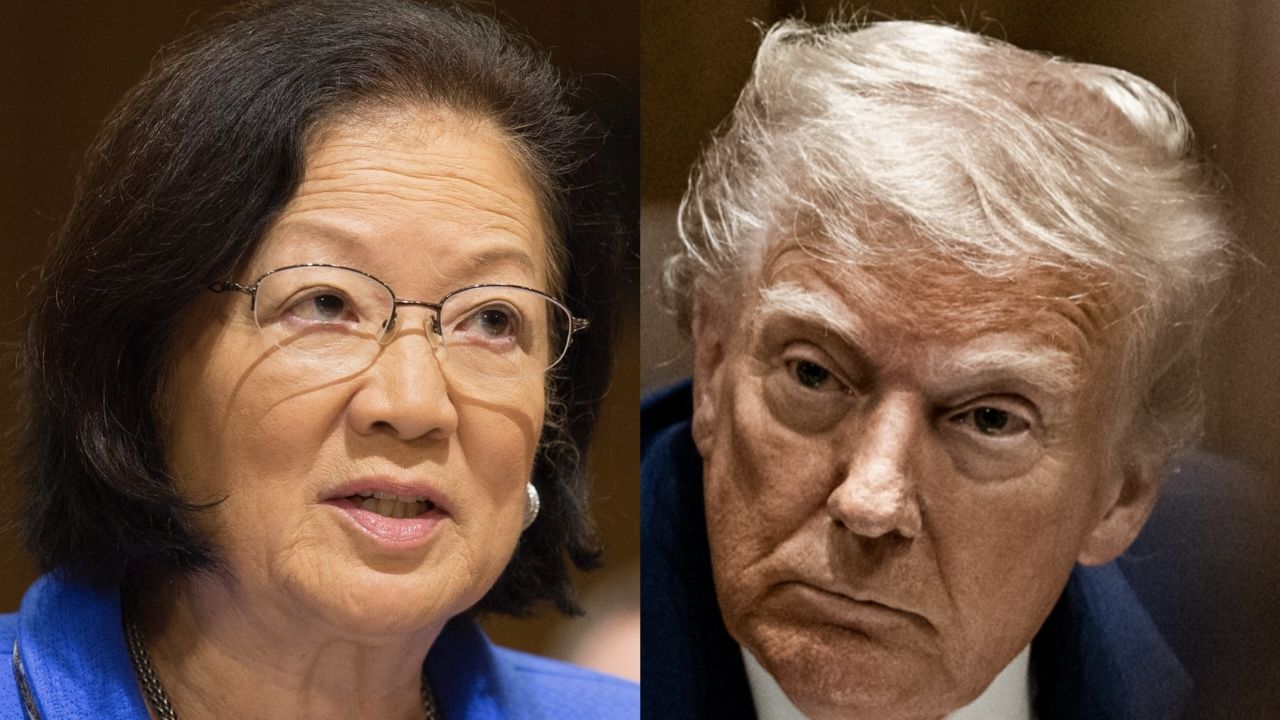
U.S. Senator Mazie K. Hirono (D-HI) accused President Donald Trump of driving American families toward financial ruin through his ongoing military conflict with Iran, tying the president directly to a fresh round of record-breaking diesel fuel prices that have rattled markets and household budgets across the country. In a post published to X on Saturday, September 12, 2026, at 9:47 a.m., Hirono wrote in full:
“Diesel prices just hit record highs. Record highs that Americans will have to pay at the pump, at the grocery store, and everywhere in between because of Donald Trump and his illegal war.”
The senator’s post came one day after the American Automobile Association (AAA) reported that the nationwide average price for a gallon of diesel had crossed $6 for the first time in U.S. history, settling at $6.06 on Friday, September 11. GasBuddy, which tracks retail fuel prices in real time, had projected the same milestone a day earlier. According to AAA’s tracking data, it marked the third time in a single week that diesel prices had set a new all-time record.
Hirono, a senior member of the Senate Armed Services Committee (SASC) and Ranking Member of its Subcommittee on Readiness and Management Support, has used her position on the committee throughout 2026 to press Trump administration officials on both the financial and human costs of the war against Iran, which began on February 28, 2026. Her Saturday post continued a pattern of public statements linking the conflict’s disruption of global oil markets directly to the price increases now hitting American consumers.
Diesel fuel plays an outsized role in the broader economy because it powers the freight trucks, farm equipment, and cargo ships that move goods through the supply chain. According to the Independent Grocers Alliance, fuel costs account for roughly 15% to 30% of the total cost of food, meaning that a spike in diesel prices tends to translate directly into higher grocery bills for consumers, even those who never fill up a diesel tank themselves.
The nationwide average price of diesel has climbed by roughly 60% since the war with Iran began in late February, according to AAA figures cited by NBC News. A year ago, the average price for a gallon of diesel stood at approximately $3.70; by Friday, that figure had grown to $6.06, an increase of more than $2.30 per gallon in twelve months. Regular gasoline prices have also climbed sharply, with the national average reaching $4.29 a gallon this week, though that figure remains below the historic high of $5.0165 set in June 2022.
The price increases are not evenly distributed across the country. AAA reported that California had the highest average diesel price in the nation as of Friday, at $7.98 a gallon, while Oklahoma had the lowest at $5.60. Analysts have pointed to a combination of factors driving the increases, including the closure of shipping lanes through the Strait of Hormuz, reduced Russian diesel exports tied to the ongoing war in Ukraine, dwindling U.S. Strategic Petroleum Reserve levels, and seasonal refinery demand.
Hirono’s Saturday post is consistent with statements she has made throughout the year connecting the war’s economic fallout to congressional oversight of the Pentagon. On April 30, 2026, during a Senate Armed Services Committee hearing, Hirono directly questioned Defense Secretary Pete Hegseth about the war’s toll, stating: “Since the start of the war, 13 brave U.S. Service members have been killed, more than 400 have been wounded. We burned through over $25 billion in taxpayer money. […] The closure of the Strait of Hormuz, which somehow caught the president by surprise, even though he had to have been warned, is directly contributing to the unaffordable prices that Americans are facing. This illegal war is driving up costs, undermining readiness, and alienating our allies with neither a clear rationale for starting this war, nor an exit strategy.”
Casualty and cost figures tied to the war have continued to climb since that April hearing. The Pentagon’s own casualty database showed 417 people wounded under the war’s original designation, “Operation Epic Fury,” between February and July, with an additional 403 wounded in what the military has since termed “Overseas Operations” between July 7 and September 8. Defense Secretary Hegseth told the Senate Appropriations Committee in July that the war’s cost had reached approximately $37.5 billion, though independent estimates, including those from the Center for Strategic and International Studies, have placed the true cost as high as $100 billion when accounting for munitions, equipment losses, and base repairs.
The Senate Democrats’ Joint Economic Committee has separately tracked the cumulative financial impact of the war on American households throughout 2026. One month into the conflict, the committee found that Americans had paid $8.4 billion more for gasoline compared to pre-war prices, with filling up the nation’s top-selling pickup truck costing $145. By July, that cumulative figure had grown to $56.4 billion, or roughly $477 more per household nationwide since the war began.
The Institute on Taxation and Economic Policy has continued updating its own running tabulation of the war’s fuel-cost impact. As of September 12, 2026, the institute’s tracker estimated that the average American household had paid an additional $679.58 in higher motor fuel costs since the war began, with a projection that the figure would climb to $1,011.88 by the end of fall if elevated prices persist. The institute further estimated that Americans, collectively, had paid more than $90 billion more to the oil industry since prices began rising.
Hirono is not the only Senate Democrat to have publicly linked the diesel and gas price spikes to the war in recent weeks. In May 2026, when Fox News asked lawmakers about a proposed federal gas tax holiday amid rising prices, Hirono told reporters: “Why doesn’t he just end the Iran war, which is an illegal war, so that would take care of those issues? He did not get authorization. It’s on President Trump. And the rise in gasoline and everything else, it’s on him.”
Other Senate Democrats have echoed similar warnings. Senator Chris Coons (D-Del.) told Energy Secretary Chris Wright during an April appropriations hearing that gas prices had jumped from roughly $3 a gallon a year earlier to $3.90, adding that “we’re going to see long-term impacts from this war in Iran, impacts at the pump, impacts in manufacturing, impacts in farming and the cost of food.” Senator Martin Heinrich (D-N.M.) noted in June that gas prices had surged more than 50% since the war began, costing American households and businesses more than $54 billion.
For his part, President Trump has repeatedly dismissed concerns about the war’s domestic economic fallout. In March 2026, the president described rising gasoline and diesel costs as a temporary and worthwhile trade-off, writing that the price increases were “a very small price to pay for U.S.A., and World, Safety and Peace,” and adding, “ONLY FOOLS WOULD THINK DIFFERENTLY!” The president has separately attributed rising prices to “big Oil Companies” rather than to the war itself.
Republican lawmakers and strategists have privately acknowledged growing concern about the political fallout from record fuel prices heading into the 2026 midterm elections. According to an Axios report, internal GOP polling shows voters placing blame for the price increases squarely on the president’s handling of the war, with one unnamed Republican operative telling the outlet: “Diesel’s at an all-time high. Gas is about $4 a gallon. We can’t message that away.”
The war itself has evolved considerably since it began in late February. A ceasefire and diplomatic framework known as the Islamabad Memorandum of Understanding was reached in mid-June 2026, but subsequent reporting indicates hostilities have continued intermittently in the months since, including strikes on Iranian oil tankers near Kharg Island and the port city of Jask, and an Iranian Revolutionary Guard Navy warning to commercial vessels operating near Kuwait and Bahrain. As of early September, U.S. Central Command reported that Iranian forces had targeted a U.S. Navy warship with ballistic missiles on two occasions within a 48-hour span, though the vessel evaded both attacks.
Hirono’s September 12 post did not specify any additional legislative action tied to her statement, but it aligns with her broader record of pressing Pentagon officials on the war’s toll throughout 2026, including her leadership of a July letter, joined by all Senate Armed Services Committee Democrats, demanding a full and accurate accounting of American service members killed, wounded, or injured in connection with the war. As diesel prices continue to set records into the fall, the economic dimension of the conflict appears likely to remain a central point of contention between Hirono and the administration heading into the November midterms.