
“Overbuilt” can sound like a compliment in military engineering—until the added armor, bigger gun, or extreme mission requirement makes the vehicle harder to move, supply, recover, or even classify. The machines below are real, documented attempts to push protection and firepower beyond practical limits, often driven by very specific fears: fortifications that wouldn’t crack, enemy armor that wouldn’t die, or a nuclear-age environment that forced designers to rethink what “survivability” meant.
What makes these vehicles worth revisiting isn’t just shock value. It’s the recurring pattern: the more a design prioritizes maximum armor and maximum punch, the more it exposes the hidden infrastructure armored warfare depends on—bridging, transport, maintenance capacity, doctrine, and crew practicality. In several cases, the engineering was impressive; the problem was that the concept was too heavy, too specialized, or too hard to integrate into how armies actually fought.
Panzerkampfwagen VIII “Maus” (Germany, WWII)
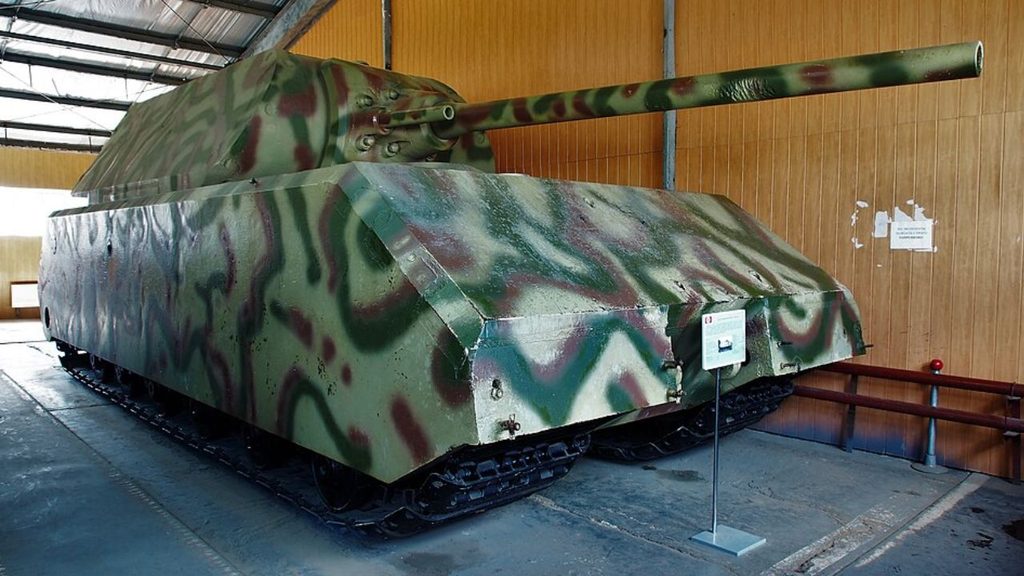
The Maus is “make it bigger” taken literally: a super-heavy German tank concept intended to be practically unstoppable through mass and armor. Guinness World Records recognizes it as the heaviest tank ever constructed, and that framing matters because it is tied to what was actually built rather than what remained on paper. Per Guinness, the documented weight is 188 tonnes—an extreme figure that immediately signals how far outside normal armored vehicle constraints it sat.
At that scale, the limiting factor stops being only battlefield threat and becomes basic feasibility: transport, bridging, recovery, and ordinary movement turn into major constraints. Because its end-of-war prototype/near-prototype history is easy to mythologize, the most defensible way to view Maus is as a landmark example of “too much tank,” not as a war-changing weapon.
Obiekt 279 / Object 279 (USSR, 1959 experimental heavy tank)
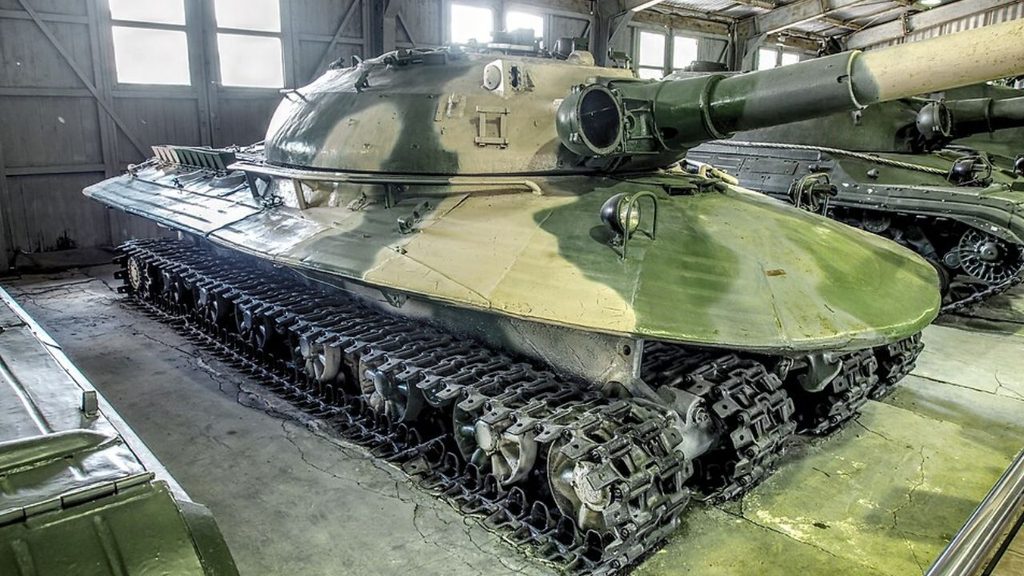
Object 279 is Cold War anxiety made metal: a 1959 Soviet experimental heavy tank shaped and equipped for a battlefield threatened by nuclear, biological, and chemical hazards. According to Wikipedia’s Object 279 entry and IPMS/USA Reviews, it was fitted with CBRN protection and explicitly described as intended to function on an NBC battlefield. Its distinctive “flying saucer” hull and four-track layout make the concept instantly legible: keep moving and keep the crew protected in conditions that could overwhelm conventional designs.
One point that often gets distorted is the claim that it could “survive a nuke.” Popular writeups tend to treat that as absolute invulnerability, which is not a safe reading. It’s more accurate to frame Object 279 as an attempt to address nuclear-era operating conditions, not as a promise of survival at ground zero. The broader takeaway is how extreme environmental requirements can drive radical layouts—and how hard those layouts can be to justify when doctrine shifts and the nightmare scenario can’t be fully validated through real-world use.
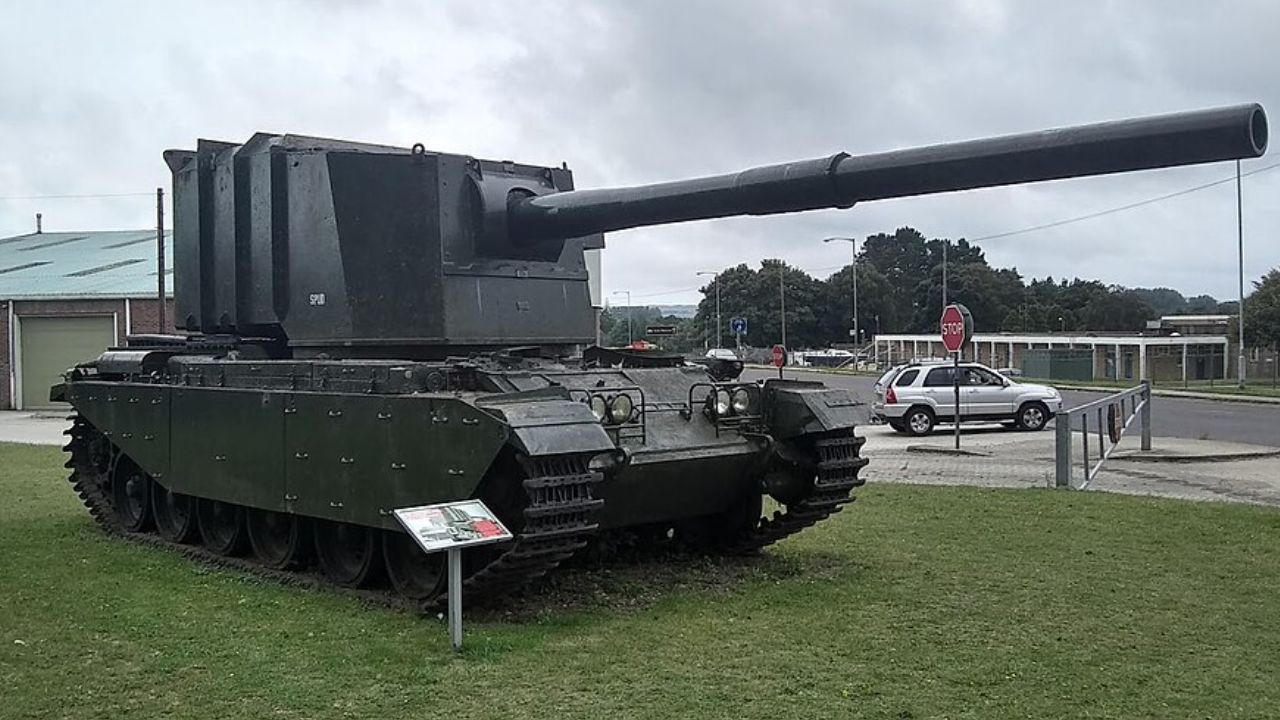
FV4005 (Stage II) “Centaur” (UK, Cold War prototype)
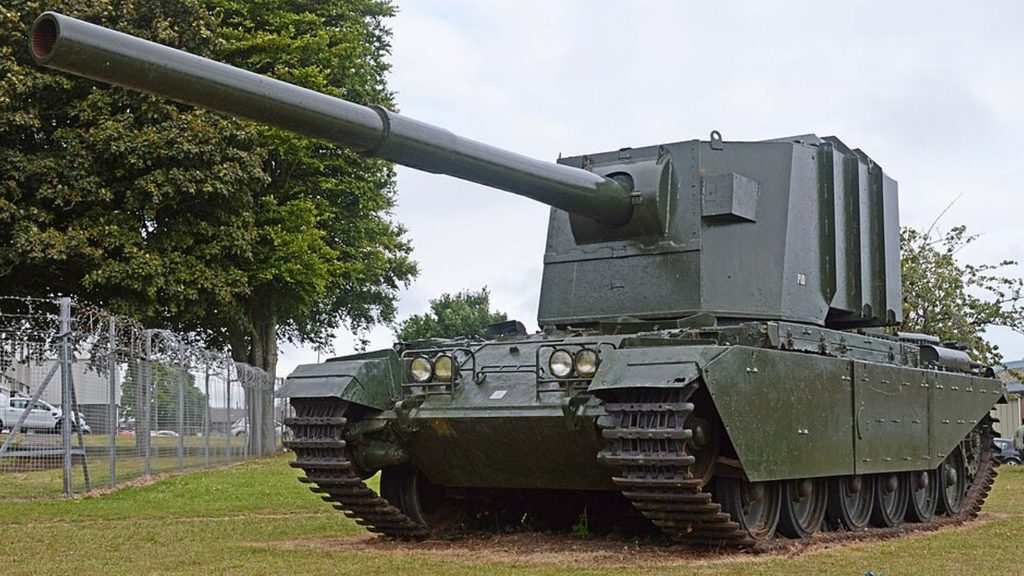
FV4005 (Stage II) is Britain asking a blunt design question: what if you mount the biggest possible anti-tank gun on a proven chassis? The Tank Museum (Bovington) provides the careful superlative that anchors its reputation: FV4005 carried what is “almost certainly the largest gun ever fitted to a tank,” a 183 mm weapon that defines the entire project. The vehicle’s identity is inseparable from that single choice—prioritizing raw firepower above the usual balance of turret design, silhouette, and overall vehicle compromise.
That “almost certainly” phrasing is worth keeping intact. Definitions matter, and readers will debate what counts as a tank versus related categories like self-propelled guns or assault guns. Framed responsibly, FV4005 illustrates the risk of chasing maximum caliber: the gun becomes the system, and everything else becomes an accommodation. It’s a vivid example of a period when “one-shot problem solving” could look attractive, even as operational realities pushed armies toward more flexible, repeatable solutions.
Super-Heavy Tank T28 / T95 Gun Motor Carriage (USA, WWII/postwar trials)
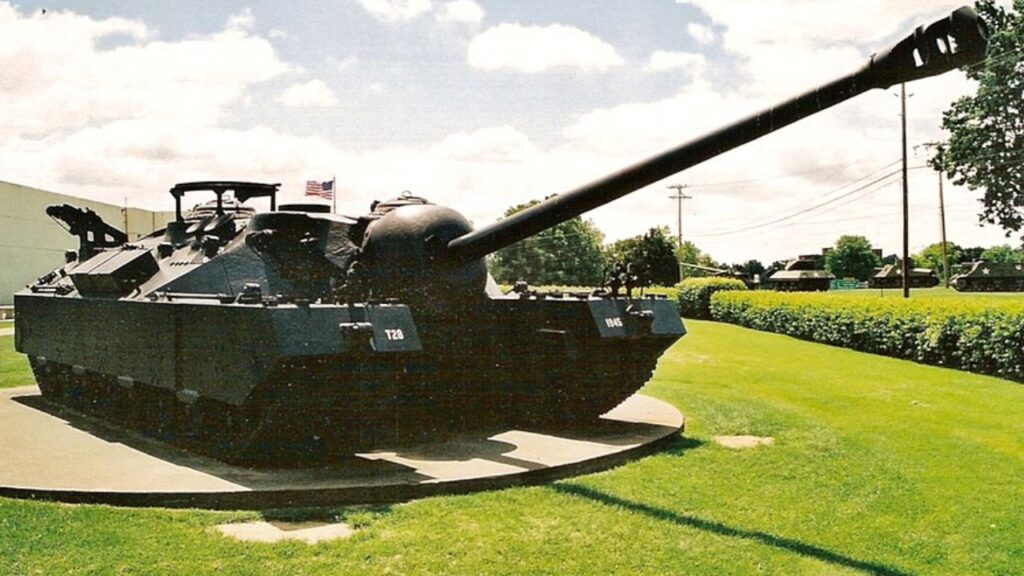
The American T28/T95 is a bunker-buster concept built around a single purpose: defeating fortifications with extreme armor and a casemate-mounted gun. It is “tank-like” in weight and intent but turretless enough that classification debates follow it everywhere. According to Wikipedia (T28 super-heavy tank) and Tank Encyclopedia, it was redesignated as Super Heavy Tank T28 in June 1946 due to its heavy armor/armament and weight—an official acknowledgement that it sat outside normal U.S. armored categories.
That designation history is more than trivia; it signals how atypical the vehicle was, even to the organization that built it. The broader consequence is strategic: vehicles optimized for one terrifying job can become hard to justify when the war changes—or ends—before the specific problem they were built for remains urgent. Because some historians still classify it closer to an assault gun, the safest conclusion is also the clearest: T28/T95 shows how far the U.S. was willing to go when trying to solve the hardest target set imaginable.
IS-7 (USSR, late-1940s heavy tank program)
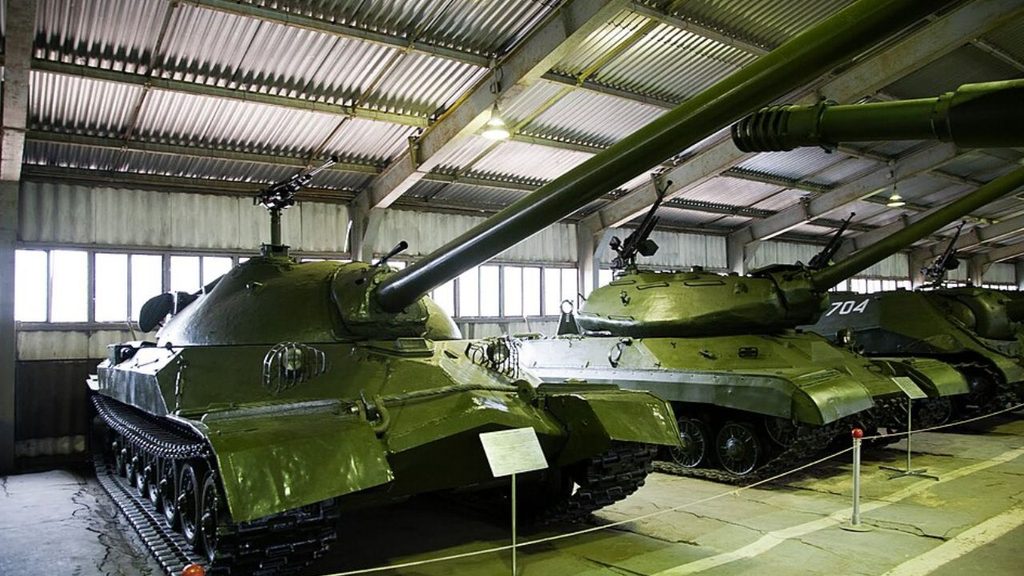
The Soviet IS-7 is often remembered as a “boss fight” heavy tank design that never became a standard answer, despite its reputation as a peak late-1940s concept. Per Wikipedia’s IS-7 entry, the program produced a 68-ton heavy tank with very thick armor and a 130 mm S-70 long-barreled gun, and it is described as among the most advanced heavy-tank designs of its era. In other words: maximum protection and a major gun, packaged as the culmination of a heavy-tank lineage.
IS-7 also highlights the gap between technical achievement and doctrinal fit. A vehicle can be “advanced” and still be the wrong tool for where armored warfare is headed. And because it was not fielded in wartime conditions, performance claims are difficult to separate from secondary summaries and program optimism. Read conservatively, IS-7 is best understood as a high-water mark in heavy-tank ambition rather than a combat-proven solution.
Jagdtiger (Germany, WWII heavy tank destroyer)
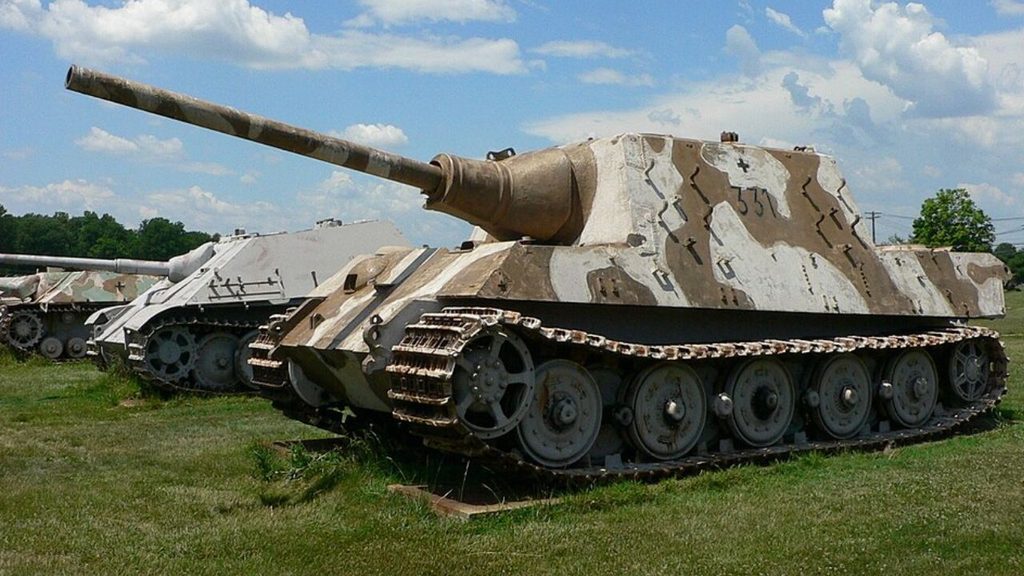
The Jagdtiger represents the late-war German impulse toward “more” taken to an operational extreme: massive armor paired with an enormous 128 mm gun in a heavy tank destroyer configuration. It is frequently cited as the heaviest operational WWII armored fighting vehicle, a distinction that captures both its threat and its sheer burden. As an endgame design, it reflects an effort to overpower opponents through protection and firepower even as the broader war situation deteriorated.
Its defining trade-off is straightforward: weight. What Jagdtiger gains on paper in dominance it pays for in mobility limits and a heavy maintenance burden—the kind of mechanical strain that can turn combat use into a recovery-and-repair problem as much as a gunnery one. The practical lesson is that “operational” does not automatically mean “efficient.” A vehicle can reach service and still impose costs that restrict how commanders can realistically employ it.
Across these designs, the common thread isn’t just size—it’s how extreme requirements force the battlefield to accommodate the vehicle rather than the other way around. When armor and firepower are pushed past practical limits, mobility and support become decisive constraints, and even basic questions of role and classification can get messy. That is what makes these machines compelling: they show where the edge is—and what happens when designers deliberately drive past it.