
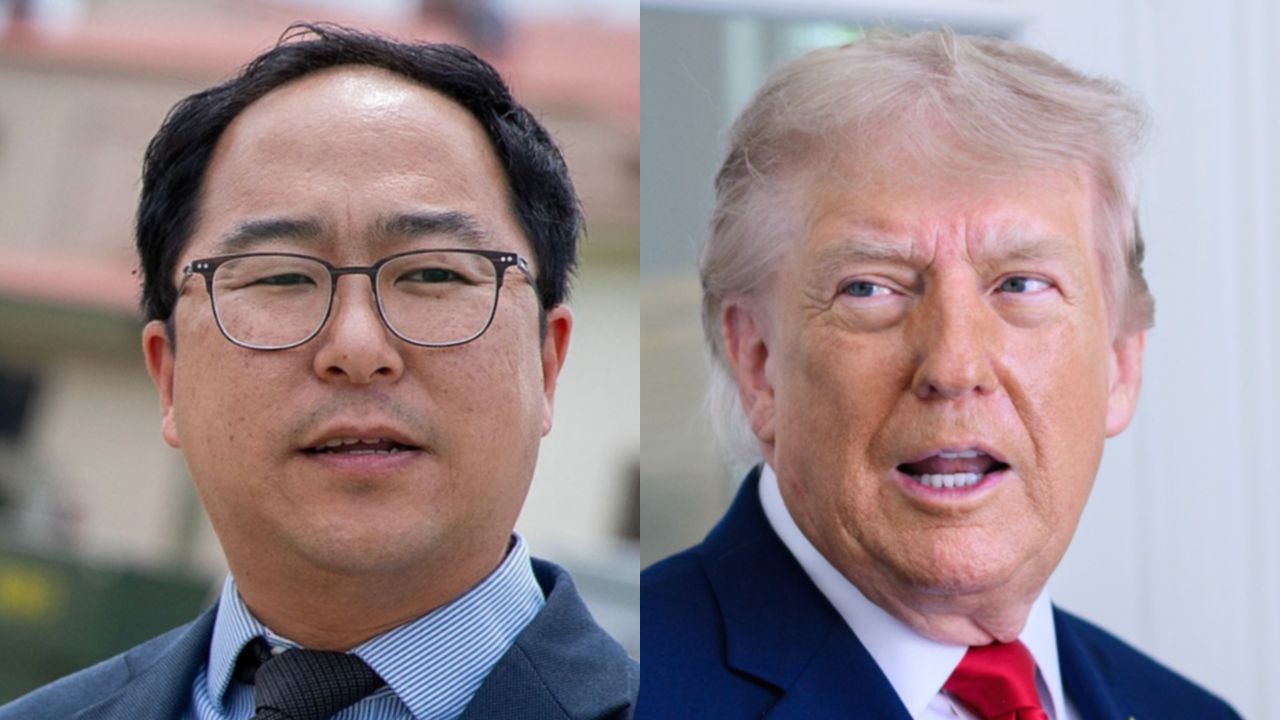
Sen. Andy Kim, D-N.J., said President Donald Trump’s stock trading activity in defense contractors benefiting from the war Trump is directing against Iran illustrates exactly the kind of conflict of interest his own legislation is designed to prevent. Kim’s post on X responded to a Truth Social post from Trump.
Kim: “Trump Invested in Stocks of Companies Doing Business With His Administration”
“If it’s for the country, then let’s pass my legislation that would ban the President, VP, Cabinet, members of Congress, and others for owning stocks. Instead Trump invested in stocks of companies doing business with his Administration,” Kim wrote. “That’s the definition of corruption.”
Trump Claimed “Hundreds of Billions” in Stock Gains “for the U.S.A.”
In the post that prompted Kim’s response, Trump wrote: “I do this for our Country, not myself. I’ve made Hundreds of Billions of Dollars on Stocks, and many other type Holdings, for the U.S.A., not myself, and all I do is get criticized by the Radical Left Dumocrats. Very unfair, but what can you do!” Trump did not identify which stocks or holdings accounted for the figure or provide supporting documentation.
Disclosure Showed Trump Bought Up to $24 Million in Defense Stocks in 2025
According to Trump’s 2025 annual financial disclosure filed with the Office of Government Ethics, brokers representing Trump purchased between $9.7 million and $24.3 million in stock from roughly a dozen arms manufacturers and other Pentagon contractors that year, according to an analysis by Responsible Statecraft, a publication of the Quincy Institute. The holdings included Palantir Technologies, Lockheed Martin, General Dynamics, RTX and GE Aerospace — companies whose products have been directly used in the war against Iran that Trump ordered beginning Feb. 28.
Companies Manufacture the Specific Weapons Used in the War
Palantir developed the Maven Smart System, the AI targeting platform the Pentagon has said was used to help identify roughly 1,000 targets within the war’s first 24 hours, and separately holds a $10 billion Army software contract. Lockheed Martin manufactures the F-35 and F-22 jets used in strikes on Iran; General Dynamics produces bombs and missiles used in the campaign; RTX manufactures the Tomahawk cruise missiles used in strikes, including one that hit a school in Minab, Iran; and GE Aerospace makes engine components used in aircraft deployed by the U.S. and Israel against Iran.
Trump Bought and Sold Defense Stocks Around Iran Negotiation Dates in June
A separate CNN analysis of more than 1,000 additional trades Trump disclosed found transactions in Lockheed Martin, Northrop Grumman, General Dynamics and RTX between June 12 and June 24 — dates that coincided with active U.S.-Iran negotiations — with some purchases and sales occurring within a single day of each other. Trump bought Lockheed Martin stock June 15 and sold it June 16, one day before signing a memorandum of understanding with Iran that later collapsed.
PBS Found Trump’s Account Bought Energy and Defense Stocks the Day War Optimism Faded
PBS NewsHour reported that on March 23, hours after Trump posted that talks with Iran were “very good and productive” and extended a negotiating deadline, oil prices fell nearly 11% on hopes the war was ending — and the same day, Trump’s brokerage account purchased shares in Phillips 66, ExxonMobil, Chevron, Lockheed Martin and General Dynamics, companies PBS noted stood to benefit if the conflict continued rather than concluded.
Kim’s Bill Would Ban Stock Ownership Across All Three Branches
Kim introduced the Restoring Trust in Public Servants Act in January, which would set a uniform standard barring the president, vice president, members of Congress and Supreme Court justices from owning or trading individual stocks. “Trust is the scarcest resource that we have right now, and one our democracy cannot go without,” Kim said when introducing the bill.
Trump’s Assets Are Not Held in a Blind Trust
Unlike some past presidents, Trump has not placed his assets into a blind trust during his second term, meaning he can potentially know which stocks he owns and could influence policy affecting those holdings’ value; presidents are not legally required to do so, and are not barred by law from trading individual stocks while in office.
House Passed Narrower Stock Ban That Excludes the President
The House passed H.R. 1908, the End Congressional Stock Trading Act, on July 22 in a 232-198 vote, which would bar members of Congress from buying new individual stocks but would not extend to the president or force divestment of existing holdings. Some Democrats criticized the measure as insufficient; Rep. Seth Magaziner, D-R.I., called it “a stock trading ban that still allows stock trading.” Separate Senate bills that would extend restrictions to the president remain pending without a scheduled vote.
Trump’s Reported Income Quadrupled in His First Year Back in Office
According to Responsible Statecraft’s analysis of the disclosure, Trump’s reported income roughly quadrupled from 2024 to 2025, his first year of his second term, a period that coincided with the escalating Iran conflict and the administration’s proposed $1.5 trillion defense budget for 2027.
Kim Has Tied Ethics Concerns to War Spending Oversight
Kim, a member of the Senate Foreign Relations Committee, has separately pressed the administration on the costs and conduct of the Iran war, framing both his stock-trading legislation and his war-oversight work as part of a broader argument that public officials should not personally benefit from decisions affecting national security and military spending.