
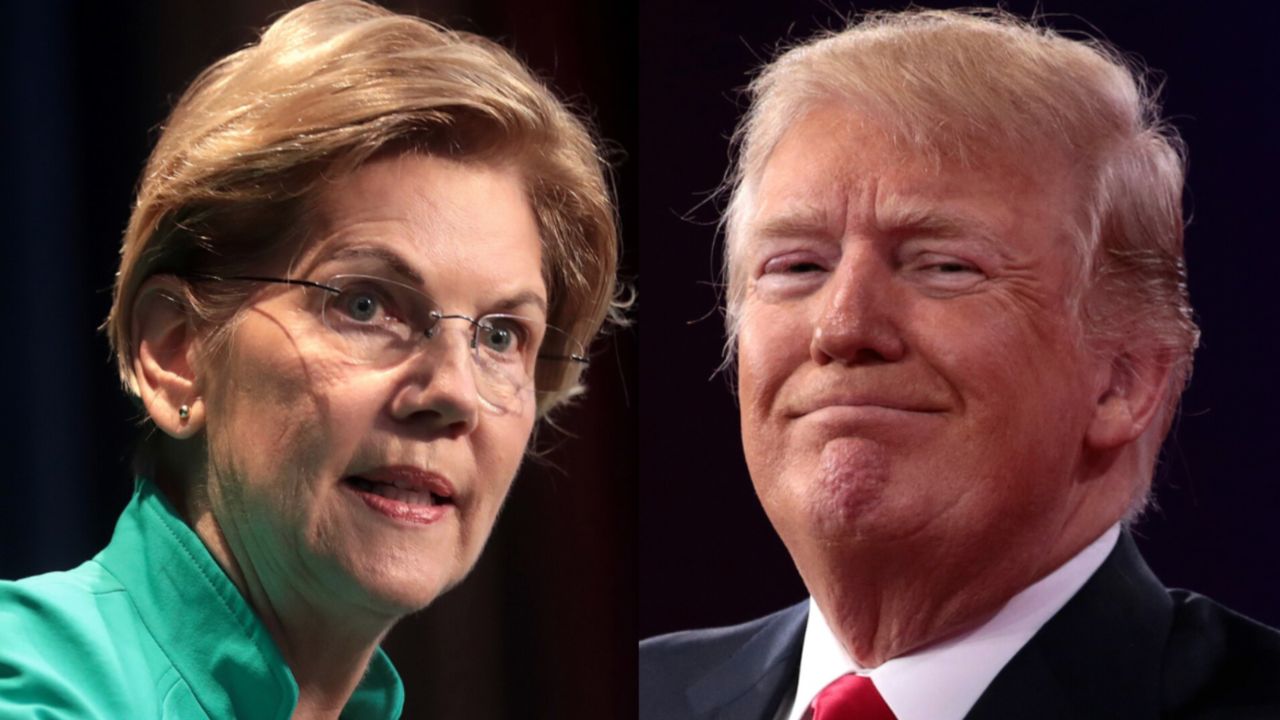
Sen. Elizabeth Warren, D-Mass., said record Labor Day gas prices are a direct consequence of the war with Iran, in a post on X.
Warren: Highest Labor Day Prices “EVER RECORDED”
“Americans traveling this weekend are getting hit by the highest Labor Day gas prices EVER RECORDED thanks to Donald Trump’s war with Iran,” Warren wrote.
National Average Hit $4.14 a Gallon, Breaking a 14-Year-Old Record
The national average price for regular gasoline stood at $4.14 a gallon heading into Labor Day weekend, according to AAA’s daily price tracker, marking the highest Labor Day price on record and surpassing the previous record of $3.82 set in 2012. It was nearly a dollar higher than the same weekend in 2025. Diesel separately hit a record national average of $5.85 a gallon on Sept. 4, according to AAA.
Prices Remain Below the 2022 All-Time Peak
Despite the Labor Day record, the national average for regular gasoline remained below the all-time high of $5.02 a gallon set in June 2022, according to AAA data.
Economist Says “Everything Points to the Iran War and the Strait of Hormuz”
Tom Seng, a professor of energy finance at Texas Christian University, told the Associated Press that “everything points to the Iran war and the Strait of Hormuz” as the driver of the price increase. Crude oil traffic through the strait, a chokepoint for roughly a fifth of global oil shipments, has fallen sharply since the U.S. and Israel struck Iran in late February, with Iran refusing to reopen the waterway.
Crude Oil Prices Have Roughly Risen 30-40% Since the War Began
West Texas Intermediate crude rose from roughly $67 a barrel before the conflict to near $93 by Labor Day weekend, while Brent crude, the international benchmark, climbed from about $72 to near $96-97 over the same period, according to market data cited in contemporaneous reporting.
Energy Secretary Acknowledged Prices Are Higher, Offered No Firm Timeline for Relief
Energy Secretary Chris Wright acknowledged the increase in a Sept. 6 appearance on ABC’s “This Week.” “Yes, they’re higher today, but we’re doing everything we can to push them down,” Wright said. Pressed the same day on CBS’s “Face the Nation” about whether prices would fall to $3 a gallon by Sept. 20, as Treasury Secretary Scott Bessent had previously predicted, Wright said only that “prices headed downward is not an unreasonable expectation,” citing the end of peak summer driving season and recent regulatory changes allowing refiners to produce more gasoline and diesel.
Wright Said Military Blockade’s Goal Is to “Strangle” Iran’s Economy
Wright told CBS the U.S. military’s primary regional role was “to stop the export of any Iranian crude or crude-related products,” saying, “we are strangling their economy to try to bring either a change in policy from the existing regime or a new regime.” He said oil exports through the strait were “at the highest they’ve been since the conflict started” but “still causing trouble.”
Energy Department’s Own August Forecast Sees Disruption Persisting Through Late 2027
The Energy Information Administration’s most recent Short-Term Energy Outlook, published Aug. 11, projects approximately 600,000 barrels per day of residual Strait of Hormuz supply disruption persisting through the end of 2027, citing continued severe constraints on transits through the waterway. The agency’s own data shows the strait’s throughput fell from roughly 21.6 million barrels per day in the fourth quarter of 2025 to just 4.9 million barrels per day by the second quarter of 2026.
EIA’s Forecast Has Swung Sharply as Cease-Fire Efforts Rose and Fell
The agency’s outlook has shifted significantly over the course of the war, reflecting the conflict’s on-and-off trajectory. After a June 18 memorandum of understanding between the U.S. and Iran temporarily reopened the strait, the EIA’s July STEO turned notably more optimistic, projecting retail gasoline would average around $3.60 a gallon in the second half of 2026 and fall further in 2027 as shipping traffic rebounded. That reopening did not hold, and by its August update, the agency had reversed course, again citing “continued severe constraints” on the strait and once more forecasting elevated prices persisting through 2027 — underscoring how closely government price projections have tracked the conflict’s unresolved, intermittent nature.
Wright Earlier Said Price Increases Were Justified by War’s Strategic Goals
In March, as prices first began climbing, Wright said on NBC’s “Meet the Press” that he would “pay no attention to what Iran says” regarding warnings of $200-per-barrel oil, and told ABC’s “This Week” that even if prices reached $5 a gallon, “at least this increase in gasoline prices is for something that’s going to change the geopolitical situation in the world forever.” He added he could “guarantee the situation would be dramatically worse without this military operation.”
Rising Prices Have Emerged as a Political Liability Ahead of Midterms
The sustained price increases have drawn attention as a political vulnerability for Republicans heading into November’s midterm elections, with the war’s broader costs — including effects on U.S. munitions stockpiles reported elsewhere — compounding concerns about affordability that Democrats have raised throughout the six-month conflict.
Treasury Secretary’s Earlier Prediction of $3 Gas Has Not Materialized
Bessent had previously predicted gasoline could fall to $3 a gallon by Sept. 20, contingent on progress in talks with Iran, a benchmark that appeared increasingly unlikely to be met given prices remaining above $4 a gallon heading into September and the continued absence of a resolution to the conflict.