
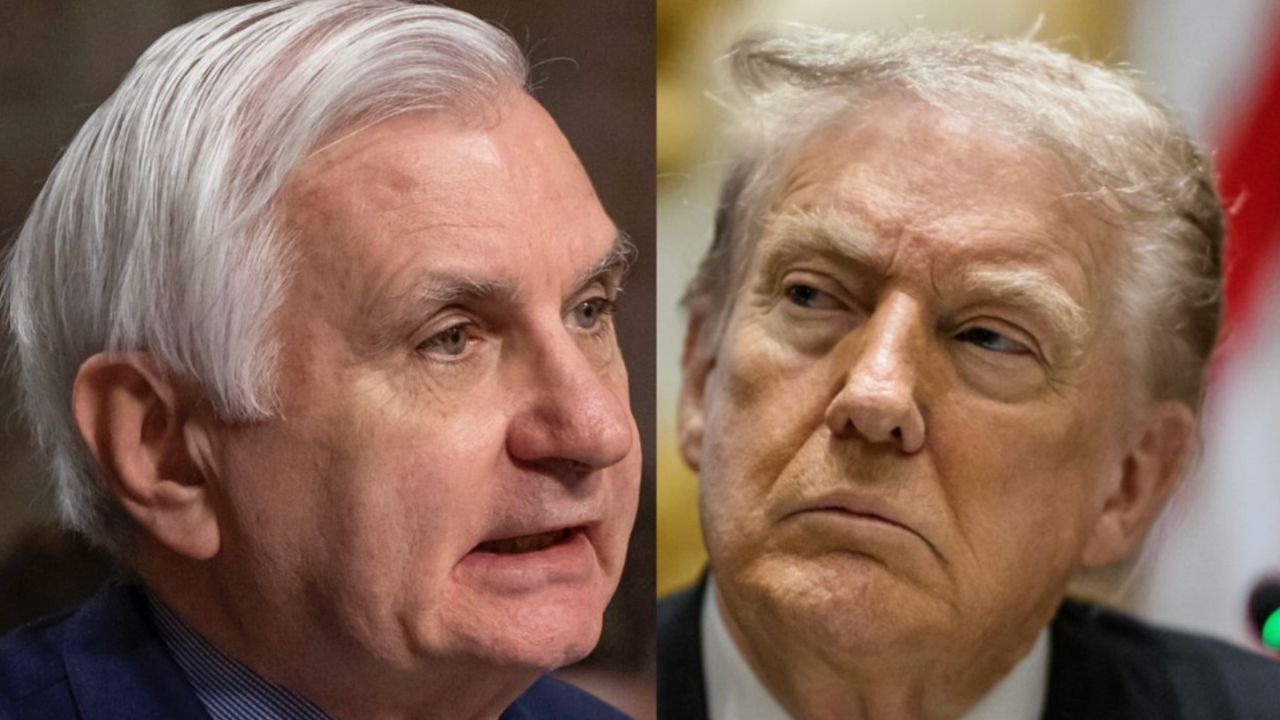
Sen. Jack Reed, D-R.I., the top Democrat on the Senate Armed Services Committee, criticized President Donald Trump’s White House ballroom project after Trump told New York Magazine he was building monuments to himself because “nobody will do it once I’m gone.” Reed’s post on X linked to CNN’s reporting on the interview.
Reed: “NOT Necessary for National Security”
“Let’s be clear: Trump’s glitzy ballroom is NOT necessary for national security. Instead of addressing affordability, Trump is choosing to redirect hundreds of millions of tax dollars toward building himself a gaudy WH monument,” Reed wrote.
Trump Told Magazine “Nobody Will Do It Once I’m Gone”
Asked by New York Magazine about monuments including a planned “triumphal arch,” Trump did not dispute that he was building them for himself. “That’s true,” Trump said. “Nobody will do it once I’m gone. When I leave here, nobody will.” Trump added that “the people should be thankful” for the ballroom, saying, “a lot of people said, ‘Don’t do this interview.’ But I’m proud of the work I’m doing.”
Trump Has Cited National Security to Justify the Project
Trump has argued the ballroom serves national security purposes, pointing to plans for a rooftop drone port, an underground bunker and bulletproof windows. Some congressional Republicans and Trump advisers told New York Magazine that continued attention on the ballroom could hurt the GOP’s midterm chances by complicating the party’s preferred messaging.
Project’s Publicly Stated Cost Has Roughly Tripled Since Its Announcement
The ballroom’s estimated cost has climbed steadily since it was first announced in July 2025 at roughly $200 million. Trump raised the figure to $300 million by October, and by late March told reporters the cost had reached $400 million, repeatedly insisting the project was “taxpayer-free” and that “we have no taxpayer putting up 10 cents.”
Contractor Estimates Showed Taxpayers Covering Roughly Half of $600 Million Cost
Internal estimates from Clark Construction, the project’s contractor, obtained by The Washington Post showed the cost had grown to $600 million by March, with $293 million listed as coming from private sources and the remainder — $155 million from the Secret Service, $149 million from the White House Military Office and $3 million from the Executive Residence — drawn from public funds. The White House has argued that security-related spending, including the bunker and drone facility, is separate from the ballroom itself.
House Democrat Says Administration “Lied” About Taxpayer Funding
House Appropriations Committee ranking member Rosa DeLauro, D-Conn., said in an official committee statement that the Post’s reporting “confirmed the Trump administration planned to use more than $300 million in taxpayer money” for the project and had “already spent tens of millions of taxpayer dollars on its construction, while brazenly lying to the American people the whole time.”
Federal Planning Commission Approved the Project in April
The National Capital Planning Commission, the federal body responsible for reviewing construction on federal property in Washington, voted to approve the ballroom’s site and building plans on April 2, calling it the project’s final procedural review requirement under the National Capital Planning Act. Commission chairman Will Scharf, Trump’s former personal lawyer, said at the time he believed “this ballroom will be considered every bit as much of a national treasure as the other key components of the White House.” The separate U.S. Commission of Fine Arts, whose members are also Trump appointees, later approved the project’s design after its secretary said the panel had received more than 2,000 public comments, over 99% of them opposed.
House Oversight Democrat Sought Documents on the Approval Process
Rep. Robert Garcia, D-Calif., ranking member of the House Committee on Oversight and Government Reform, sent a December 2025 letter to NCPC Chairman Scharf requesting all documents related to the commission’s review of the ballroom plans, including any waivers or deviations from the commission’s standard review process, citing the committee’s oversight jurisdiction over the District of Columbia.
Federal Judge Ruled Project Required Congressional Authorization
Despite the commission’s approval, U.S. District Judge Richard Leon ruled the same week that the ballroom could not proceed without congressional authorization, writing in his decision: “The President of the United States is the steward of the White House for future generations of First Families. He is not, however, the owner!” Leon subsequently ordered construction of the aboveground portion halted on two separate occasions; the Supreme Court in August temporarily allowed construction to continue while litigation proceeds.
Corporate Donors Include Major Tech and Defense Contractors
Private donors listed by the administration include Amazon, Apple, Meta, Google, Microsoft, Coinbase, Lockheed Martin, Palantir Technologies and the Adelson Family Foundation, funneled through the nonprofit Trust for the National Mall. Ethics experts have raised concerns that some corporate donors also hold federal contracts, potentially creating conflicts of interest.
Arch Project Set to Break Ground Near Arlington National Cemetery
Separately from the ballroom, the administration is scheduled to break ground within two weeks on a 250-foot “triumphal arch” near Arlington National Cemetery, one of several monument-style projects Trump has pursued alongside the ballroom construction.
Associate Says Ballroom Reflects Trump’s Focus on Permanent Legacy
A person close to Trump told CNN earlier this year that the project reflects the president’s desire to leave behind structures that cannot be easily undone. “Look at Donald Trump’s life, look at what he’s done: Built things that no one will ever tear down,” the person said, adding that even if successors reverse his policies, “the one thing they can’t tear down will be” the ballroom.
Reed Has Repeatedly Criticized Administration’s Spending Priorities
Reed’s comments continue a pattern of criticism he has directed at the administration’s spending decisions throughout 2026, including previous statements questioning Pentagon budget priorities amid the ongoing war with Iran and reported strain on military readiness.