
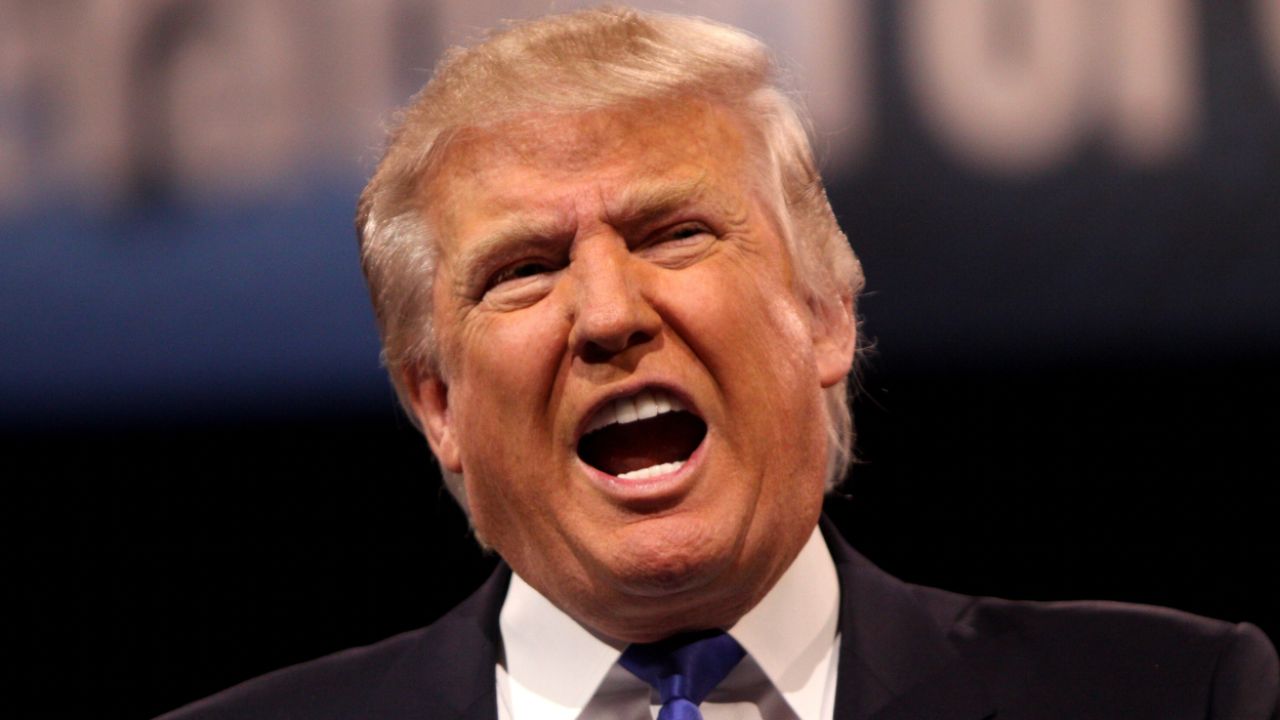
President Donald Trump declared on Monday, August 31, that Iran had become “officially a Failed Nation” that “IS DEAD,” accusing Tehran’s leadership of presiding over a collapsed military, a worthless currency, unpaid soldiers and police, and inflation of 300 percent. The post, published to Truth Social at 7:09 a.m., came hours after the United States carried out its first strikes on Iranian territory since late July, and as Iran responded with missile and drone attacks on American positions in Jordan and the United Arab Emirates.
“Iran is officially a Failed Nation. IT IS DEAD! They have no Navy, they have no Air Force, they have no currency, they are not paying their soldiers or police, Inflation is at 300%, and their leadership is in total disarray and incapable of properly representing the country,” Trump wrote. “The only thing they have is FAKE NEWS from the USA, a willingness to kill their protesters (now over 100,000 people dead. They must be tried for war crimes against humanity!), and a good line of ‘BULL****.’ Thank you for your attention to this matter! President DONALD J.TRUMP”
Renewed Strikes Break a Month-Long Lull
The post landed against the backdrop of a fresh outbreak of fighting between Washington and Tehran, the first active exchange between the two since late July, following a month-long pause in direct hostilities. U.S. forces struck two Iranian rocket launchers on Larak Island, roughly 660 kilometers (410 miles) east in the Strait of Hormuz, an operation U.S. Central Command said was necessary to eliminate an “imminent threat” from Islamic Revolutionary Guard Corps forces preparing to launch naval mines into the waterway.
CENTCOM disputed Iran’s characterization of the strike as an “act of aggression,” stating on X that its forces had taken “limited, precise action against IRGC minelaying forces posing an imminent threat in the Strait of Hormuz,” and adding that “Iran created the threat and the US military eliminated it to protect civilian mariners, commercial shipping, and the free flow of global commerce.” The strikes reportedly killed and wounded several Iranian soldiers and civilians.
Iran Retaliates Against Jordan and UAE
Iran’s response followed within hours. The IRGC launched at least eight ballistic missiles toward U.S. forces stationed in Jordan, with air-defense systems reported to have intercepted most of the incoming fire. Iran also claimed to have struck the Al Minhad air base in the United Arab Emirates and downed a U.S. drone over Gulf waters, though the UAE’s defense ministry denied any strike on the air base and said only that its air force had engaged an Iranian drone over its territorial waters.
Iran’s Ministry of Foreign Affairs condemned the Larak Island strike as a “direct violation of national sovereignty and territorial integrity,” and said the U.S. bases in Jordan had been used to launch and support the attack. Tehran warned it would respond decisively to further military aggression and said the United States and any parties supporting its actions bore full responsibility for further escalation.
Iranian President Masoud Pezeshkian, in his first comments following the exchange, said Iran was “not looking for war,” but would “never sit still in the face of any aggression.” A senior Iranian source separately told Reuters the overnight hostilities remained a “limited and contained confrontation.”
Trump’s “Smithereens” Post Preceded the “Failed Nation” Declaration
Trump’s Monday morning statement followed an earlier post from Sunday night in which he shared what appeared to be an AI-generated video depicting explosions at Kharg Island, Iran’s principal oil-export hub, captioned: “Kharg Island being blown to smithereens!!! President DJT.” The post offered no further details, and U.S. officials told reporters there was no evidence any actual strike had occurred at the site overnight.
Hamid Bovard, head of Iran’s state-run National Iranian Oil Company, dismissed the claim, telling reporters that “Trump’s tweets are laughable and conditions in Kharg are calm,” and said workers were continuing repairs from earlier strikes on the island. Kharg Island sits roughly 410 miles from Larak Island, the site of the most recent confirmed American action.
A Conflict Now in Its Sixth Month
The renewed strikes mark an escalation in a war that began in late February with joint U.S.-Israeli strikes that killed Iran’s Supreme Leader, Ayatollah Ali Khamenei. Trump has sought a firm commitment from Tehran to permanently forgo nuclear weapons development, a term the Iranian government has so far declined to accept.
The latest flare-up follows what had been a comparatively quiet stretch since late July, and comes as the broader conflict enters its sixth month, further denting hopes for any near-term resolution. Analysts noted that Iran’s rapid retaliation against both Jordan and the UAE suggests Tehran views its economic-pressure and military tracks as running in parallel rather than as substitutes for one another.
Market and Regional Ripple Effects
Oil prices rose more than 2 percent on Monday following the exchange of strikes, reflecting renewed uncertainty over the security of the Strait of Hormuz, a corridor through which a significant share of global crude shipments pass. The renewed hostilities came just after U.S. officials had said the previous week that all mines had been detonated or removed from the waterway, with warnings that any vessel found placing new mines would be destroyed.
The escalation also unfolded alongside continued Israeli military activity elsewhere in the region, including a fresh wave of incursions, searches and artillery strikes by Israeli forces in southern Syria’s Quneitra governorate, even as reports circulated of ongoing negotiations toward a potential Syria-Israel security arrangement.
Trump’s Broader Case Against Tehran’s Government
In his Monday post, Trump went beyond describing the military exchange to lay out a broader indictment of the Iranian government’s capacity to govern, asserting that Iran’s naval and air forces no longer function, that its currency has become worthless, and that its security forces are going unpaid amid what he described as 300 percent inflation. He characterized Iran’s leadership as being in “total disarray” and “incapable of properly representing the country.”
Trump also renewed his allegation that Iranian authorities have killed more than 100,000 protesters, calling for the country’s leadership to face prosecution for “war crimes against humanity.” He dismissed Iranian statements and reporting on the conflict as “FAKE NEWS from the USA” and a “good line of BULL****,” closing the post with a formal signature reading “President DONALD J. TRUMP.”
What Remains Unclear
Analysts noted that the significance of Trump’s Kharg Island post remains uncertain, with the strike claim serving variously as possible advance signaling of a future operation, a form of psychological pressure on Tehran, or simply a reaction to Iran’s retaliatory strikes on Jordan and the UAE. They cautioned that an actual strike on Kharg’s oil infrastructure would represent a materially different escalation than prior U.S. actions, which had deliberately avoided Iran’s oil-export capacity, and could send global crude prices to levels unseen since the earliest days of the conflict.
As of Monday, the White House and Pentagon had not issued a formal statement responding to or elaborating on Trump’s characterization of Iran as a “Failed Nation,” and Iran’s government had not directly addressed the claim.