
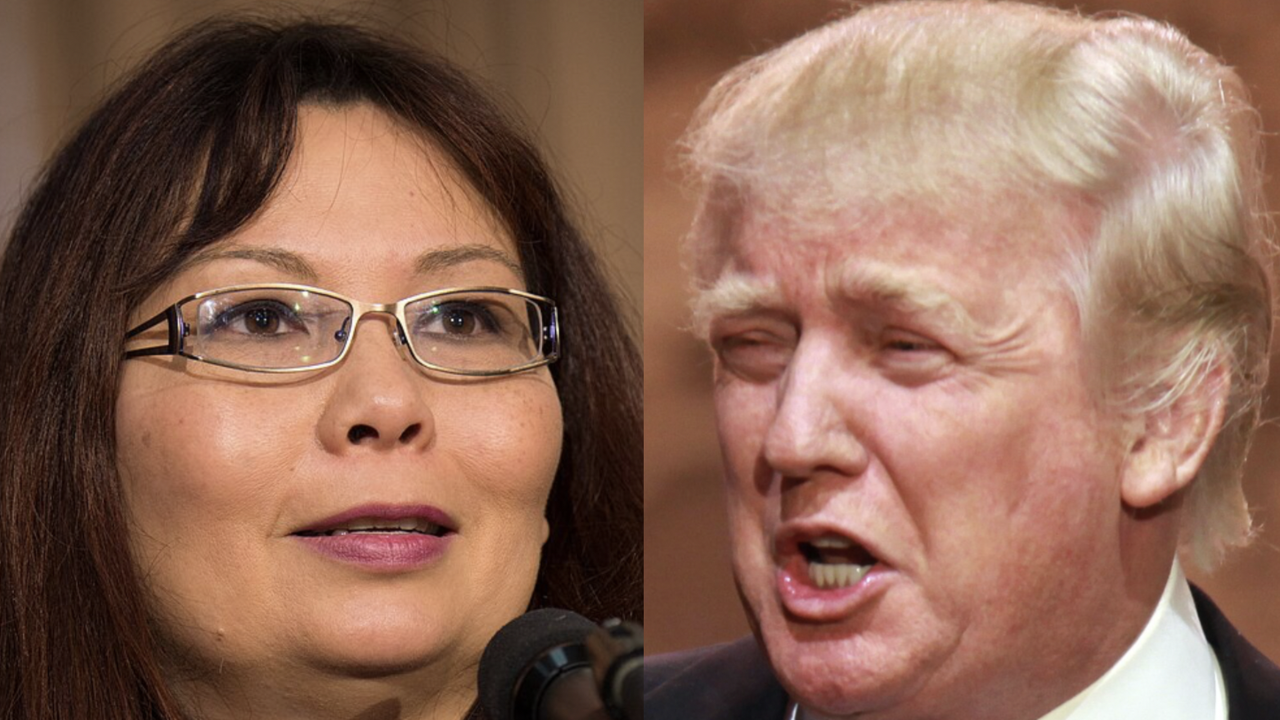
U.S. Senator Tammy Duckworth (D-IL) accused President Donald Trump of being so ill-equipped to manage the ongoing war with Iran that Tehran is now openly discussing waiting him out, after a senior Iranian military adviser said this week that Iran could prolong the conflict until Trump leaves the White House. In a post on X on Thursday, August 13, 2026, Duckworth wrote that the president is “dangerously out of his depth” and warned that another two years of the current approach “is not an option.”
Duckworth’s Full Statement
Duckworth, a combat veteran and member of the Senate Armed Services, Foreign Relations and Veterans’ Affairs Committees, posted the following statement to X at 11:47 a.m. on August 13, 2026:
“Trump is so dangerously out of his depth that Iran is talking about dragging this war out until he leaves office.
Two more years of this shit is not an option.”
The senator’s post was a direct response to reporting on comments from a senior adviser to the commander of Iran’s Islamic Revolutionary Guard Corps (IRGC), who suggested Tehran’s strategy could hinge on outlasting the current administration.
The Iranian Comments That Prompted the Response
The remarks Duckworth was reacting to came from Mohammad Reza Naqdi, who served as the IRGC’s coordinating deputy from 2019 to 2025 and now serves as a senior adviser to the IRGC commander, in an interview published this week. Naqdi said Iran needs to establish enough deterrence that no adversary “ever dares to attack” it again, and framed a drawn-out war as one path to that goal, saying Tehran could “prolong this war until we get to the next term of the presidency and cause attrition.” He argued that a longer conflict would demonstrate to any future adversary that attacking Iran carries a lasting cost.
Naqdi also disputed that Washington had achieved its objectives in the war, telling PBS that Iran has already prevailed on what he characterized as America’s two central goals — toppling the country’s leadership and breaking up the country. He described U.S. strategy as inconsistent, saying officials had repeatedly shifted their stated objectives, at one point citing the invasion of Kharg Island and the reopening of the Strait of Hormuz as examples. His comments marked one of the clearest signals yet that a senior IRGC figure is factoring the duration of Trump’s presidency directly into Iran’s strategic planning for the war.
Naqdi further claimed the war has given Iran valuable combat experience it lacked before the conflict began, saying the country had never before fought a real war against the United States and had used the past five months to learn how, and that Iran has come to see the American military as weaker than it previously assessed. On Iran’s strikes against vessels in the Strait of Hormuz, he said ships moving through areas outside Iran’s control could reasonably be suspected of transporting supplies for the opposing side. He also said Iran manufactures more missiles than it uses on a daily basis, and warned that a future in which Iran had exhausted its missile stockpile would make the country even more dangerous to the United States given the number of American economic interests around the world.
The White House Response
The White House answered Naqdi’s comments with a blunt warning to Tehran, telling PBS it would be wise for Iran to agree to a deal, adding that otherwise Iran already knows what will happen. Naqdi’s suggestion that Iran could simply try to outlast Trump runs counter to the approach the administration has increasingly emphasized: maintaining military leverage around Iran while letting the naval blockade, frozen assets, sanctions and Tehran’s economic strain continue to build pressure on the government.
Trump addressed the state of the war directly on Truth Social this week, writing that the United States has “total control” over the Strait of Hormuz and intends to keep it, and describing the ongoing naval blockade as a “WALL OF STEEL” that Iran cannot do anything about. The president also repeated a grim assessment of Iran’s military and economic standing, saying Tehran has no navy, no air force, an unpaid military and an IRGC he described as decimated and fleeing. Speaking to reporters while traveling in Ohio this week, Trump said the situation with Iran is going “absolutely fine,” and argued the country had lost its longtime position as the region’s chief antagonist.
Duckworth’s Sustained Opposition to the War
Thursday’s post is the latest in a monthslong campaign by Duckworth against the administration’s handling of the conflict, which the Trump administration has referred to as Operation Epic Fury since it began on February 28, 2026. On the day hostilities started, Duckworth issued a statement accusing Trump of breaking his promises to the American people, saying many had believed him when he vowed to keep the country out of foreign wars and to lower costs for families.
In the days that followed, Duckworth accused Trump of launching an illegal attack against Iran without the constitutionally required authorization from Congress and without a known imminent threat, calling the move part of a pattern she described as reckless, senseless and dangerous. She has since pressed the administration repeatedly on the legal basis for the war, joining colleagues in formally disputing the legal justification the administration presented in its May 1, 2026, War Powers Resolution notification to Congress, which claimed hostilities with Iran had “terminated.” Duckworth and her colleagues also requested that the administration publicly release the Office of Legal Counsel opinion used to justify that determination, along with any opinion justifying the use of force against Iran without congressional authorization.
Duckworth has continued to press military leadership on the administration’s strategy as the war has dragged on. During a Senate Armed Services Committee hearing, she questioned U.S. Central Command chief Admiral Brad Cooper on the administration’s lack of a clear strategy or end state for the war, warning it was setting the country up for a “forever war” at great cost to servicemembers and the public. Notably, when Duckworth asked whether Cooper had been consulted on the possibility of deploying ground troops in Iran, the admiral did not deny having provided such advice, leaving open the possibility that the conflict could expand into a ground war.
When Trump announced a ceasefire with Iran in April 2026, Duckworth said that before the war began, the Strait of Hormuz had been open and free of violence, gas had been a dollar cheaper, and thousands more people — including 13 American servicemembers — had still been alive. She said only someone as “deeply incompetent, delusional and unfit” as Trump would characterize the outcome as a win given the toll on the American public.
Congressional Efforts to End the War
Duckworth is part of what has become known as the “Senate Six,” a group of senators who have repeatedly forced floor votes on War Powers Resolutions intended to end hostilities in Iran — votes Republicans have blocked nine times. She has said she would oppose the fiscal year 2027 National Defense Authorization Act unless it included her amendment to cut off funding for offensive operations against Iran, while still permitting defensive operations, until the American public consents to the war.
Duckworth has also pushed for greater transparency on the war’s toll on servicemembers. She has led colleagues in backing the Honoring the Sacrifices of Our Troops in War Act, which would bar the Secretary of Defense from manipulating casualty records and would retroactively restore benefits to military personnel and civilian employees who have supported Iran-related operations since the war began. Separately, she has pressed the inspector general community to designate a lead inspector general to independently oversee the war and the ongoing blockade, and to disclose that designation publicly.
Broader Political and Economic Fallout
Duckworth has tied her criticism of the war to its economic effects on Americans, joining colleagues in raising concerns about how the conflict has driven up jet fuel prices, with forecasts estimating airlines could face as much as $24.1 billion in additional fuel expenses in 2026 as a result of the Strait of Hormuz crisis. The senator, an Army National Guard combat veteran who lost both legs while serving as a helicopter pilot in Iraq, has consistently framed her opposition to the war around the toll it takes on servicemembers and their families, arguing that officials who have not served in combat are quicker to send others into harm’s way.
Naqdi’s comments this week arrived as the administration has continued to press Iran over compensation demands tied to the war, after Trump said Monday that Iran should pay compensation for U.S. troops and others killed as a result of decades of conflict, attacks and human rights violations involving the country. As of Thursday, neither the Trump administration nor congressional Republicans had issued a direct response to Duckworth’s latest post.