
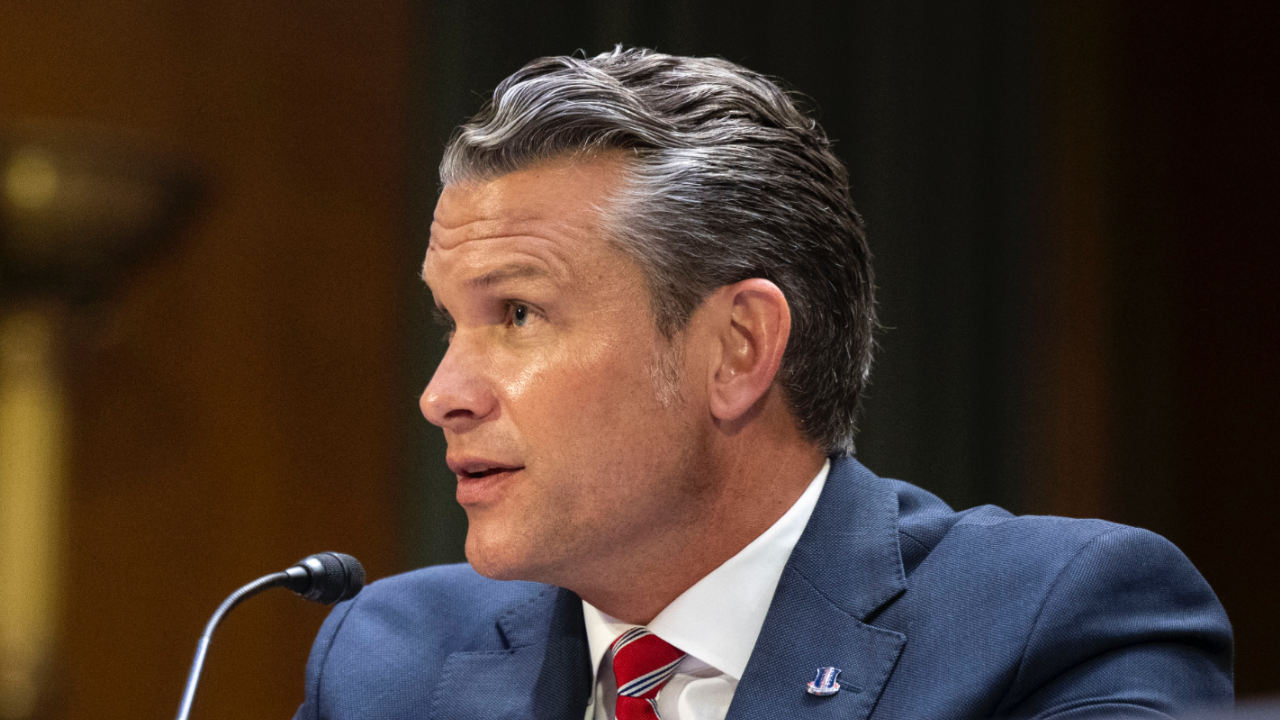
Secretary of War Pete Hegseth called on military leaders from across Latin America Wednesday to intensify joint operations against drug cartels, while separately reiterating the Trump administration’s push for a $1.5 trillion defense budget. “Under President Trump, the United States War Department seeks a historic generational investment in our military spending through a new one point five trillion dollar budget,” Hegseth said, according to the official video of his remarks posted on War.gov. “We have work to do with our Congress, but make no mistake, we will work as hard as humanly possible with Republicans and across the aisle if we can, to deliver what is truly a necessary historic, historic investment to ensure America remains the dominant military power on planet Earth.”
The Event Where He Spoke
Hegseth delivered the remarks at a forum of the Americas Counter Cartel Coalition in Panama City, addressing civilian defense leaders and top generals from 18 other countries, according to the New York Times’ report on the event. Speaking on the sidelines of a major U.S.-led regional training exercise, Hegseth described the coalition’s collective goal as working “to degrade, dismantle and destroy narco-terrorist networks,” adding, in what the Times described as his “typical bravado,” that the coalition’s motto would be: “We do bad things to bad people.”
Which Countries Have Joined
According to the Times, 18 countries have joined the Pentagon-led coalition to date: Argentina, the Bahamas, Belize, Bolivia, Chile, Colombia, Costa Rica, the Dominican Republic, Ecuador, El Salvador, Guatemala, Guyana, Honduras, Jamaica, Panama, Paraguay, Peru, and Trinidad and Tobago. Hegseth said Wednesday that Honduras and Colombia had newly agreed to allow joint operations with U.S. forces, following Ecuador’s launch of joint operations with the U.S. against designated terrorist groups in March and Guatemala’s agreement in May to allow joint airstrikes and other military action inside its borders.
The New Task Force Behind the Push
The Panama meeting followed a significant institutional step taken the week before. According to the Times, U.S. Southern Command announced Joint Task Force Western Hemisphere, establishing infrastructure for an expansion of the campaign against drug trafficking in cooperation with regional allies. Gen. Francis Donovan, the head of Southern Command, said in an online post that the new task force would “take the fight to the enemy.”
The Scale of Military Action Already Taken
The task force builds on roughly a year of Pentagon operations in the Caribbean and Eastern Pacific. According to the Times, the military has conducted 66 boat strikes that have killed at least 221 people the military says, without presenting evidence, were trafficking drugs. Hegseth said Wednesday the strikes had decreased the number of suspected drug vessels by more than half in the Caribbean and Eastern Pacific.
Legal Experts Have Challenged the Strikes’ Legality
The Times reported that legal experts have warned the strikes may be illegal under the laws of armed conflict, because the military cannot deliberately target civilians who are not directly participating in hostilities, even if they are breaking the law — and that drug trafficking, in their assessment, does not rise to the legal standard of “hostilities” required to justify lethal military force.
Whether the Strikes Have Actually Reduced Drug Availability
Separate from the legal questions, the Times reported that its own investigation found cocaine — by far the top drug smuggled out of South America — remains as easy to obtain in much of the United States as it was before the strikes began, a finding that runs counter to Hegseth’s claim that the campaign has meaningfully disrupted trafficking.
How Trump Has Legally Justified the Strikes
According to the Times, Trump justified the military’s strikes on small boats last year by claiming the United States was engaged in a formal “armed conflict” with drug traffickers designated as terrorist organizations, describing smugglers for such groups as “unlawful combatants” — the legal theory underlying the administration’s broader shift toward treating trafficking organizations as military targets rather than solely a law enforcement matter.
Why Colombia’s Involvement Is Considered Significant
The Times noted that Colombia’s participation carries particular weight given the country’s history and recent political shift. Colombia is the world’s largest producer of cocaine and had long been a close U.S. ally, but relations grew strained over the previous four years under leftist former President Gustavo Petro, who frequently criticized Trump’s boat strikes and broader regional policies. Colombian voters elected a right-wing president in June, opening the door to the fast-tracked military cooperation Hegseth announced.
Who’s Notably Not Involved
The coalition’s membership list has a conspicuous gap. According to the Times, Mexico — home to the cartels most responsible for trafficking fentanyl and other deadly drugs into the United States — remains absent from both the regional alliance and this week’s Panama conference, alongside Brazil. Both countries are led by left-wing leaders; Mexican President Claudia Sheinbaum has maintained a consistent position on U.S. military cooperation, summarized in her own words as “coordination but not subordination.”
Where the $1.5 Trillion Figure Fits Into the Broader Budget Fight
Hegseth’s budget remarks in Panama were not a new appeal but a continuation of a request he has pressed across multiple public forums throughout 2026, including at the Joint Base Lindsey Graham renaming ceremony two days earlier and in prior Senate Appropriations Committee testimony. The figure combines a base defense budget with a substantially larger reconciliation component that requires separate congressional action, and remains pending before Congress without final approval.
Where This Leaves Things
As of Wednesday’s remarks, the $1.5 trillion budget request remained unresolved in Congress, the counter-cartel coalition’s expanded task force had only just been established the week before, and the underlying legal and effectiveness questions surrounding the boat-strike campaign — whether the strikes comply with the laws of armed conflict, and whether they have meaningfully reduced drug availability in the United States — remained unresolved despite Hegseth’s public claims of success.