
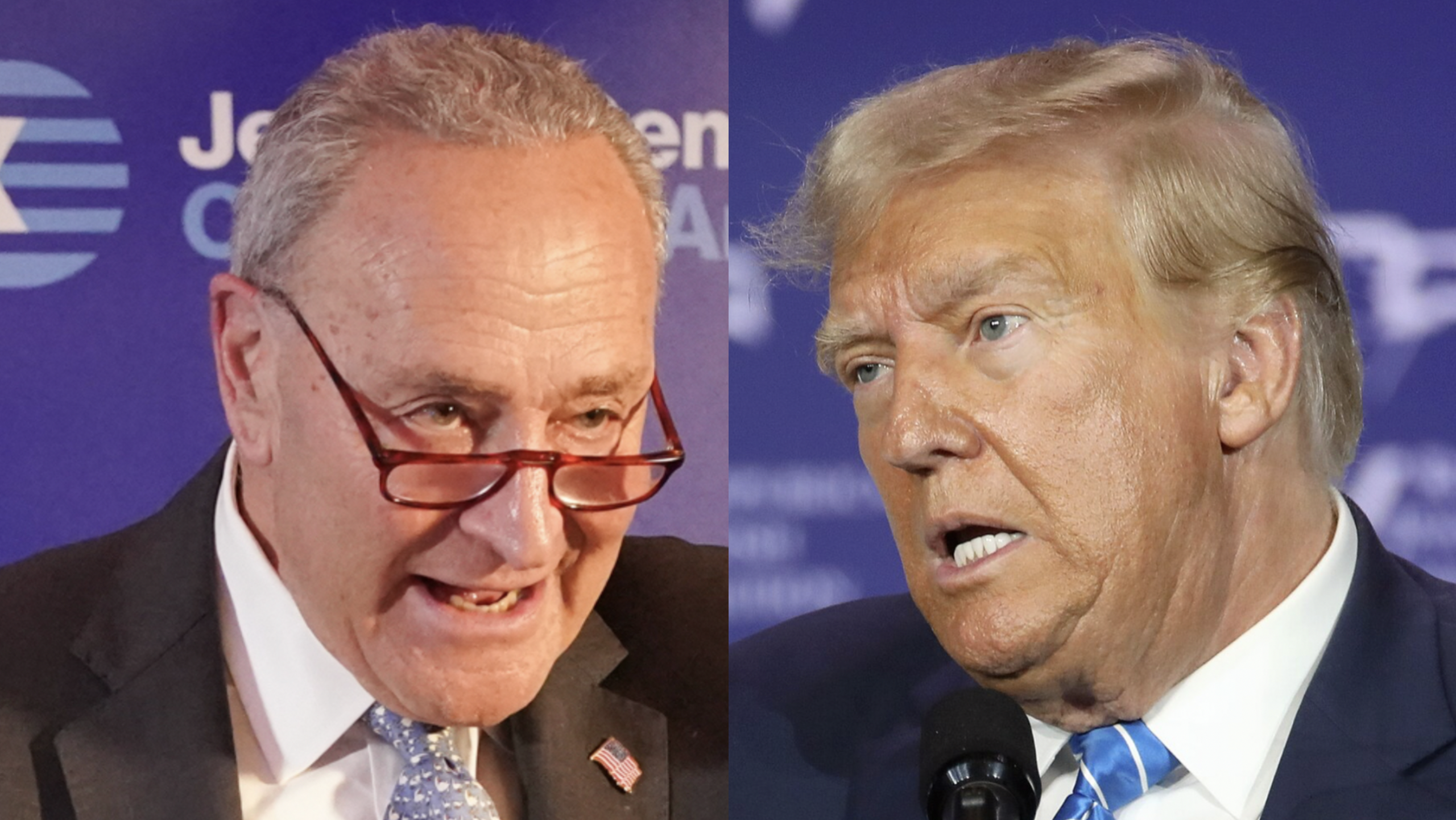
Senate Democratic Leader Chuck Schumer (D-N.Y.) escalated his weeks-long campaign against President Donald Trump’s handling of the war with Iran on Thursday, declaring on X that the conflict has become “one of the greatest foreign policy dumpster fires in American history” and warning that it is now spreading to Egypt while American troops remain in harm’s way for what he called an avoidable war.
Schumer’s post, published to his official X account at 11:32 a.m. on July 30, 2026, read in full:
“Trump’s war with Iran has been one of the greatest foreign policy dumpster fires in American history, and it seems to be expanding with new attacks now targeting Egypt. Our troops’ lives are unnecessarily at risk fighting a war that was totally avoidable. All while Trump is too busy playing keyboard warrior on Truth Social. We must end this war now.”
Trump's war with Iran has been one of the greatest foreign policy dumpster fires in American history, and it seems to be expanding with new attacks now targeting Egypt.
— Chuck Schumer (@SenSchumer) July 30, 2026
Our troops’ lives are unnecessarily at risk fighting a war that was totally avoidable.
All while Trump is…
Attacks Reaching Egyptian Territory
Schumer’s reference to the war “expanding” into Egypt follows a drone strike a day earlier at Egypt’s Mediterranean port of Damietta, where an unmanned aerial vehicle hit a U.S.-owned liquefied natural gas storage tanker, the Energos Winter, igniting a fire that spread to a second vessel. British maritime security firm Ambrey flagged the strike in an initial assessment, while Egypt’s petroleum ministry confirmed a fire at the port but stopped short of attributing it to a drone attack. Officials said the blaze was extinguished quickly and that there were no casualties.
The Damietta incident came amid a broader flare-up in the conflict, with Iran firing on U.S. forces in Jordan and the United States and Saudi Arabia striking Iran-backed armed groups in Iraq in response. Yemen’s Houthi movement, which is backed by Tehran, also declared a naval blockade targeting Saudi shipping, adding another front to a war that began with U.S. and Israeli strikes on Iran in February. President Trump, briefed on the Damietta strike while at the White House, told reporters the United States would respond forcefully, saying simply, “It’s our turn.”
A Conflict With No Clear End Date
The war Schumer is describing as a “dumpster fire” has now stretched across five months, far longer than the timeline Trump originally suggested when operations began. U.S. and Israeli forces launched their first strikes on Iran in late February 2026, with the stated goals ranging from preventing Iran from acquiring a nuclear weapon to degrading its ballistic missile program. Iranian officials have disputed the administration’s justification for the war, and repeated claims from the White House that a ceasefire or diplomatic “understanding” had been reached have each unraveled within weeks, followed by renewed strikes.
Schumer’s Escalating Rhetoric Since February
Thursday’s post is the latest in a string of statements Schumer has issued since the war began, each sharpening in tone as the conflict has dragged on. In February, shortly after strikes were first threatened, Schumer released a statement through Senate Democratic Leadership arguing that the administration had failed to explain its strategy to Congress or the public, and insisting that “confronting Iran’s ruthless campaign of terror, nuclear ambitions, regional aggression, and horrific oppression of the Iranian people demands strength, resolve, regional coordination, and strategic clarity.”
“A Military Moron”
By April, with the war roughly six weeks old, Schumer’s language had grown considerably harsher. In an X post that month, he called Trump “a military moron,” writing that the war, with what he described as a $44 billion price tag and gas prices above $4 a gallon, had left the country “worse off today than we were when he started it.” He called for passage of a War Powers Resolution to end the conflict for good. A White House spokesperson responded at the time that Trump had taken “courageous action” against Iran’s nuclear ambitions and was working toward “a definitive agreement to deliver lasting peace.”
Forcing a Vote on War Powers
Schumer’s criticism has not been confined to social media or written statements. In early June, after 39 days of fighting, he held a media availability announcing that Senate Democrats would force a floor vote on a War Powers Resolution aimed at reining in the administration’s military actions. Speaking to reporters, Schumer argued that by every measure — the Strait of Hormuz, Iran’s nuclear program, gas prices, and American credibility abroad — the country was “in worse shape” than before the war began, calling it “a colossal failure.”
Demanding Transparency on a Collapsed “Understanding”
Later that month, after Trump announced what the administration described as an “understanding” with Iran, Schumer took to the Senate floor twice within days to demand the administration release the actual terms of the arrangement. He argued that Americans had been told “dozens of times” that the war was over, only to be disappointed each time, and accused the administration of hiding behind vague language rather than presenting Congress with a real agreement.
“A Recipe for Utter Disaster”
By mid-July, Schumer’s assessment had hardened further. In comments covered by Al Jazeera on July 14, he accused Trump of repeating past mistakes in the region without a coherent strategy, describing the trajectory of the war as “a recipe for utter disaster.” Around the same time, he also opposed advancing the annual National Defense Authorization Act, telling colleagues that Congress could not simply look away as the administration extended what he characterized as an unauthorized war.
Rejecting Comparisons to Vietnam
Schumer has also pushed back directly on Trump’s own framing of the conflict. After the president compared the Iran war to Vietnam, Schumer took to the Senate floor to reject the comparison and renew his demand that the war be brought to an immediate end, arguing that the ceasefire the administration had once touted had “completely collapsed” and that American troops were continuing to come under attack even as the Strait of Hormuz remained what he called a minefield.
Other Democrats Have Voiced Similar Alarm
Schumer is far from the only lawmaker to have raised objections to the war’s conduct and scope. Independent Senator Bernie Sanders has separately called on Congress to act to end the conflict, while Senator Chris Murphy has suggested Cabinet officials should examine whether the president’s fitness for office is in question. Criticism has occasionally come from outside traditional Democratic ranks as well, including from former Republican Congresswoman Marjorie Taylor Greene, who broke with the administration over its threats to strike Iranian infrastructure.
The Human and Financial Toll
The war has produced a mounting toll on both fronts Schumer highlighted in his post — American service members and taxpayer dollars. Beyond the roughly $44 billion price tag Schumer has cited, the conflict has been tied to a spike in gas prices, disruptions to Strait of Hormuz shipping traffic, and a steady stream of attacks on U.S. bases and personnel across the region, including strikes in Jordan and reported American casualties earlier in the war. Oil markets reacted again this week, with crude prices climbing more than 7% as shipping firms explored rerouting tankers away from the Bab al-Mandeb Strait and the Strait of Hormuz.
The Front Widens Further
The Egypt strike Schumer referenced was not an isolated event but part of a rapid widening of the conflict this week. Jordan said it intercepted an Iranian missile attack, the Pentagon confirmed it had struck Islamic Revolutionary Guard Corps targets inside Iran including command centers and drone facilities, and Iranian state media reported that a family of three was killed in U.S. strikes on Qeshm Island. The Treasury Department also issued a fresh round of sanctions targeting Iranian entities and tankers as the fighting intensified.
Trump’s Own Public Posture
Schumer’s jab about Trump “playing keyboard warrior on Truth Social” follows a pattern the Senate leader has criticized before, including after a widely covered Easter Sunday post in which Trump threatened Iran in terms Schumer, at the time, described as “ranting like an unhinged madman on social media” and warned was “threatening possible war crimes and alienating allies.” The president has continued to comment publicly and frequently on the war’s progress even as members of his own administration, including Secretary of State Marco Rubio, have offered shifting timelines for when operations might conclude.
What Comes Next
With the conflict now touching Egyptian territory alongside Jordan, Iraq, Yemen, and the Gulf shipping lanes, Schumer’s Thursday post signals that Senate Democrats intend to keep pressing for a formal end to U.S. involvement through legislative means, including renewed War Powers Resolution efforts, rather than relying on administration assurances that the war is nearing its conclusion. Neither the White House nor Republican Senate leadership had issued a public response to Schumer’s July 30 post as of publication.