
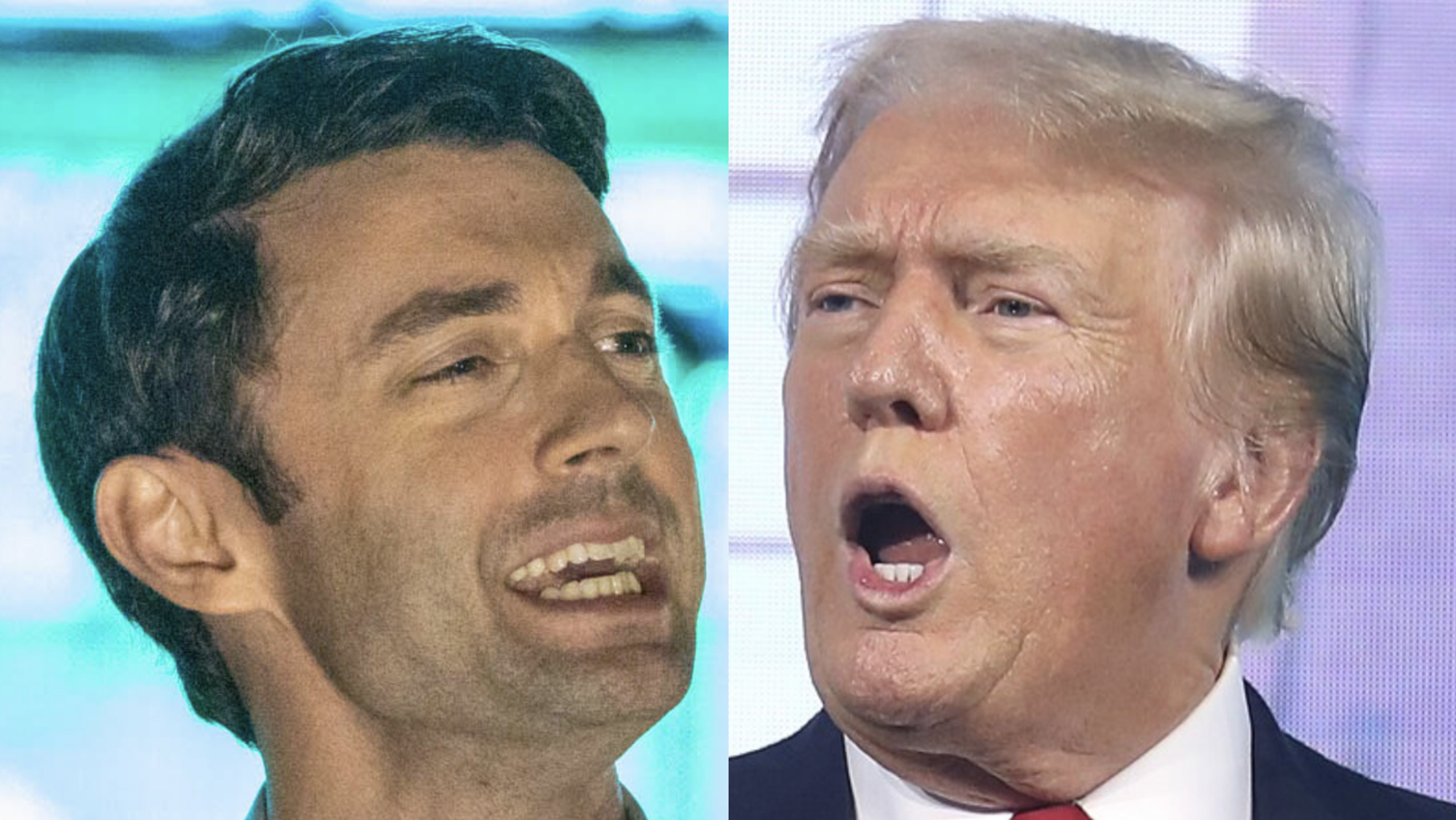
U.S. Senator Jon Ossoff, D-Ga., accused President Donald Trump on Monday of reviving debunked 2020 election conspiracy theories to distract voters from rising consumer prices and to salvage a faltering Republican midterm effort in Georgia, where Ossoff is seeking re-election this November.
In a post on X published at 7:55 p.m. on July 13, 2026, Ossoff wrote in full:
“Donald Trump’s spiral continues. The failed president, pocketing billions as he drives up prices, is afraid to lose the midterms. So he will reheat debunked election conspiracy theories and tell bizarre new lies to deny his 2020 defeat and attack voting rights. This is a disaster for Trump puppet Mike Collins. Already mired in scandal, Mike will now have to double down on conspiracy theories toxic in the General Election. From the start, Trump’s obsession with Georgia elections revealed his fury that Black voters were instrumental to his defeat. I’m asking concerned citizens nationwide to join me and support our voter protection efforts in Georgia.”
Context: A Renewed Fight Over the 2020 Georgia Vote
Ossoff’s statement came amid reports that Trump is preparing to publicly declare Georgia’s two Democratic senators, Ossoff and Raphael Warnock, illegitimate, citing unproven fraud claims tied to the 2020 presidential election, which Trump lost in Georgia by roughly 12,000 votes. Ossoff’s post directly ties that renewed push to Mike Collins, the Republican U.S. representative and Trump-endorsed candidate now running against him in the general election.
The Fulton County Raid
Ossoff’s accusation follows a January 28 FBI raid on the Fulton County election office, an action examined in detail by the Brennan Center for Justice. According to the Brennan Center’s analysis, the raid was based on claims and conspiracy theories about the 2020 vote that had already been investigated and rejected by a nonpartisan Performance Review Board, an on-site election monitor, and state investigators reviewing complaints before the State Election Board. The organization further reported that Fulton County filed a motion alleging the Justice Department omitted key information from the affidavit used to justify the search.
The Brennan Center detailed one of the FBI’s central claims: that Fulton County’s official ballot count differed from its recount total by more than 3%. State investigators had already found that same claim, made by the same witness, to be unsubstantiated nearly two years earlier. The actual discrepancy, according to the analysis, was less than two-tenths of one percent in a county that cast more than half a million ballots — the result of duplicate batch-naming in the county’s scanning software, which was corrected and rescanned in the presence of monitors from both political parties before final numbers were certified.
Ossoff’s Record on Election and Voting Rights Issues
Monday’s post is consistent with a pattern of public statements and legislative action Ossoff has taken on election administration and voter protection since Trump returned to office. In March, Ossoff and a group of Senate colleagues sent a letter to Attorney General Pam Bondi urging the Department of Justice to continue operating its Election Threats Task Force, which the senators said helps protect election workers from threats of violence. The letter cited Brennan Center research finding that 38 percent of local election officials had reported mistreatment and 54 percent had expressed concern for colleagues’ safety. The senators wrote that “the federal government’s ability to fight election interference has been greatly hampered in the early weeks of this Administration.”
Ossoff has also reintroduced the Right to Vote Act, legislation that would establish a federal statutory right to vote and allow citizens to challenge restrictive ballot-access policies in court, and previously introduced the Election Worker and Polling Place Protection Act to expand legal protections for election staff and volunteers.
The Economic Backdrop: Rising Prices and Rising Wealth
Ossoff’s characterization of Trump “pocketing billions as he drives up prices” points to two separate but concurrent trends tracked by economists and financial analysts since Trump’s return to office in January 2025.
On wealth, published estimates of Trump’s personal fortune have climbed sharply since he resumed the presidency, driven largely by his majority stake in Trump Media & Technology Group and by crypto-related ventures including World Liberty Financial. Wealth trackers that estimated Trump’s net worth at roughly $2.3 billion in 2024 placed it at approximately $6.5 billion to $6.8 billion by mid-2026, a gain financial reporting has attributed to a mix of realized cash — including more than $1.2 billion drawn from World Liberty Financial — and paper gains tied to Trump Media’s stock valuation and cryptocurrency token prices.
On prices, the U.S. Department of Agriculture’s Economic Research Service has documented sustained food-price increases through 2026, including a 32 percent year-over-year jump in fresh tomato prices as of May and an overall forecast increase of roughly 7.7 percent for fresh vegetables this year. The Bureau of Labor Statistics has separately recorded broader consumer-price pressure tied in part to tariffs; Harvard Business School’s Pricing Lab estimated that tariff pass-through had already added roughly 0.7 percentage points to the Consumer Price Index by September 2025. Economic analysts have projected that expanded tariffs could cost the average American household an additional $700 to $1,000 annually in 2026.
Political Stakes for Georgia’s Senate Race
Ossoff’s post frames the renewed 2020 conspiracy claims as politically damaging for Mike Collins, whom Ossoff described as “already mired in scandal.” Collins, a Trump-endorsed congressman, emerged from a competitive Republican primary process to challenge Ossoff in November’s general election, in a contest both parties regard as one of the most closely watched Senate races in the country.
Ossoff closed his post by calling on “concerned citizens nationwide” to support voter protection efforts in Georgia, a state that has remained a focal point of national election-integrity disputes since the 2020 presidential contest.
What Comes Next
Neither the White House nor Rep. Collins’s campaign had issued a public response to Ossoff’s post as of Monday evening. Georgia’s general election will take place in November 2026, with both parties preparing for a costly and closely contested race that is expected to draw national attention through Election Day.