
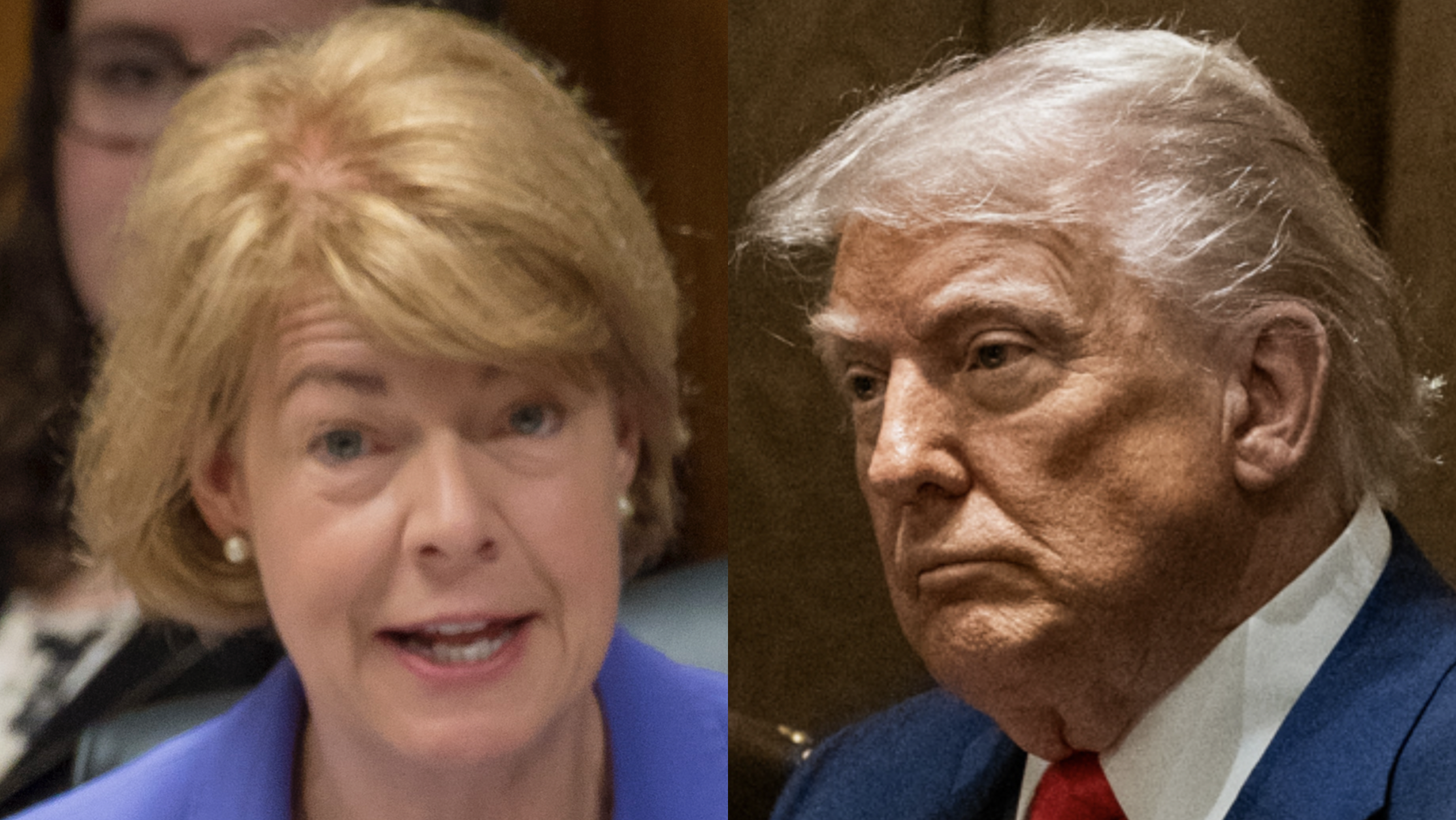
U.S. Senator Tammy Baldwin (D-Wis.) took to social media on Saturday, July 11, 2026, to renew her criticism of the Trump administration’s approach to federal spending, arguing that the government’s money should go toward health care rather than military hardware. In a post published to X at 8:56 p.m., Baldwin wrote simply: “Let’s spend money on health care, not bombs.”
The post, short and unadorned, arrived without an accompanying statement or press release, but it lands squarely within a broader fight Baldwin has waged for much of the past year over federal budget priorities under President Donald Trump, Defense Secretary Pete Hegseth and Vice President JD Vance. As the Ranking Member of the Senate Appropriations Subcommittee on Labor, Health and Human Services, Education, and Related Agencies, Baldwin has repeatedly positioned herself as one of the Senate’s most vocal critics of what she describes as a budget that favors the Pentagon over American families. The full text of her July 11 post reads in its entirety: “Let’s spend money on health care, not bombs.”
The message comes against the backdrop of a historic run-up in Pentagon spending. In April 2026, the Trump administration unveiled a fiscal year 2027 budget request seeking roughly $1.5 trillion for defense — a proposal representing a 44 percent increase and described by budget officials as the largest request of its kind in decades. Budget Director Russell Vought wrote at the time that “President Trump promised to reinvest in America’s national security infrastructure, to make sure our nation is safe in a dangerous world.” The plan calls for roughly $1.1 trillion in defense funding to move through the regular appropriations process, with an additional $350 billion routed through budget reconciliation, a maneuver Republicans can push through without Democratic votes.
That same budget blueprint proposed cutting non-defense spending by 10 percent, with reductions touching housing assistance, environmental programs, disaster relief and health research. Among the proposed cuts was $106 million from the Agency for Healthcare Research and Quality. Reporting from CNN detailed that the administration also sought to eliminate low-income energy assistance programs and slash funding for the Federal Emergency Management Agency, even as it pursued new spending, including a missile-defense initiative known as the “Golden Dome” and a $10 billion fund for construction projects in Washington, D.C.
Baldwin has been especially pointed about the tradeoff between military spending and health programs in her official capacity on the Appropriations Committee. In April 2026, her Senate office released a statement titled “Baldwin Slams RFK, Jr.’s Budget That Cuts Disease Research, While Trump Asks for $450 Billion More for Defense,” in which she questioned Health and Human Services Secretary Robert F. Kennedy Jr. over a budget proposal that cut funding for biomedical research, opioid treatment programs and heating and cooling assistance while including a “$450 billion, or 42 percent, increase in Defense spending.” Baldwin’s office noted that under Kennedy, the National Institutes of Health awarded 22 percent, or 2,235, fewer new research grants than the year before. She also pressed Kennedy on his agency’s move to terminate roughly $2 billion in Substance Abuse and Mental Health Services Administration grants, which her office said were reinstated only after her pressure.
The senator’s health care advocacy also played out on the Senate floor during the government shutdown fight that stretched into November 2025. As Republicans and Democrats clashed over whether to extend enhanced Affordable Care Act insurance subsidies set to expire at the end of 2025, Baldwin introduced Amendment 3947 to a Republican continuing resolution in a last-ditch effort to keep the subsidies in place. “I am doing this because my Republican colleagues are refusing to act to stop health care premiums from doubling for over 20 million Americans,” she said on the floor. The amendment failed, and the Senate passed the Republican measure reopening the government through January 30, 2026, in a 60-40 vote without extending the subsidies.
Following that vote, Baldwin held a press conference in Milwaukee alongside Wisconsin residents facing steep premium increases on the federal marketplace. One attendee, Nancy Peske, said her monthly premium would rise from $372 to $1,163.50 in 2026. “This is a health and wellness issue,” Baldwin told reporters. “This is an affordability and cost-of-living issue, and this is a quality of life and dignity issue. And it touches every single one of us right now.” She added that the American health care system is “a broken system that prioritizes profits over patients.” Baldwin also said afterward that “every single Republican voted no on my amendment,” arguing that Republicans had “chose[n] to send a clear, unmistakable message that they are OK with jacking up health care costs on 22 million Americans.”
Baldwin’s Saturday post also fits into a wider pattern of Democratic pushback against the scale of the administration’s defense request. Senator Chris Coons (D-Del.) issued a statement in April 2026 calling Trump’s $1.5 trillion request evidence that “President Trump and Secretary Hegseth are in way over their heads,” and argued that the increase was being pursued “while he claims, ‘it’s not possible for us to take care of day care, Medicaid, [and] Medicare.'” Senator Patty Murray (D-Wash.), the top Democrat on the Senate Appropriations Committee, separately called the same budget “morally bankrupt,” pointing to a proposed White House ballroom renovation as an example of misplaced spending priorities, according to reporting from Fortune.
Republican defense leaders have defended the spending request as necessary given global threats. House Armed Services Committee Chair Mike Rogers and Senate Armed Services Committee Chair Roger Wicker said in a joint statement reported by NPR that “America is facing the most dangerous global environment since World War II,” citing growing threats from China, Russia and Iran as justification for the increase.
The scale of the funding request comes as U.S. defense spending was already at record levels entering 2026. According to Congressional Budget Office and Department of Defense figures, the FY2026 defense topline reached roughly $1.04 trillion, and the enacted FY2026 National Defense Authorization Act authorized $890.6 billion for national defense — $8 billion more than the White House had requested. The Office of Management and Budget also submitted a separate supplemental funding request in June 2026 seeking $67 billion tied to U.S. military operations against Iran, including $21 billion for munitions and additional funding for cybersecurity, drones and space-based systems.
Baldwin has not been uniformly opposed to defense spending throughout her Senate career. She has previously voted for National Defense Authorization Act legislation that secured funding for Wisconsin-based military manufacturing, including hundreds of millions of dollars for the Oshkosh-built Joint Light Tactical Vehicle and military construction projects at Wisconsin National Guard bases. Her office has framed that support as tied to protecting service members’ pay, health benefits and Wisconsin jobs rather than to across-the-board Pentagon budget growth. Her Saturday post, however, drew no such distinction, framing the choice in blunt terms as one between health care funding and bombs.
Baldwin, who has served as Wisconsin’s junior senator since 2013 and was reelected in 2024, has increasingly used her Appropriations Committee role and her social media presence to draw contrasts between the administration’s military buildup and its approach to domestic health programs. Saturday’s post did not reference a specific piece of legislation or vote, but it echoed language she and other Democratic appropriators have used throughout 2026 as Congress continues to negotiate both the FY2026 defense reconciliation spending and the FY2027 budget request moving through committee.