
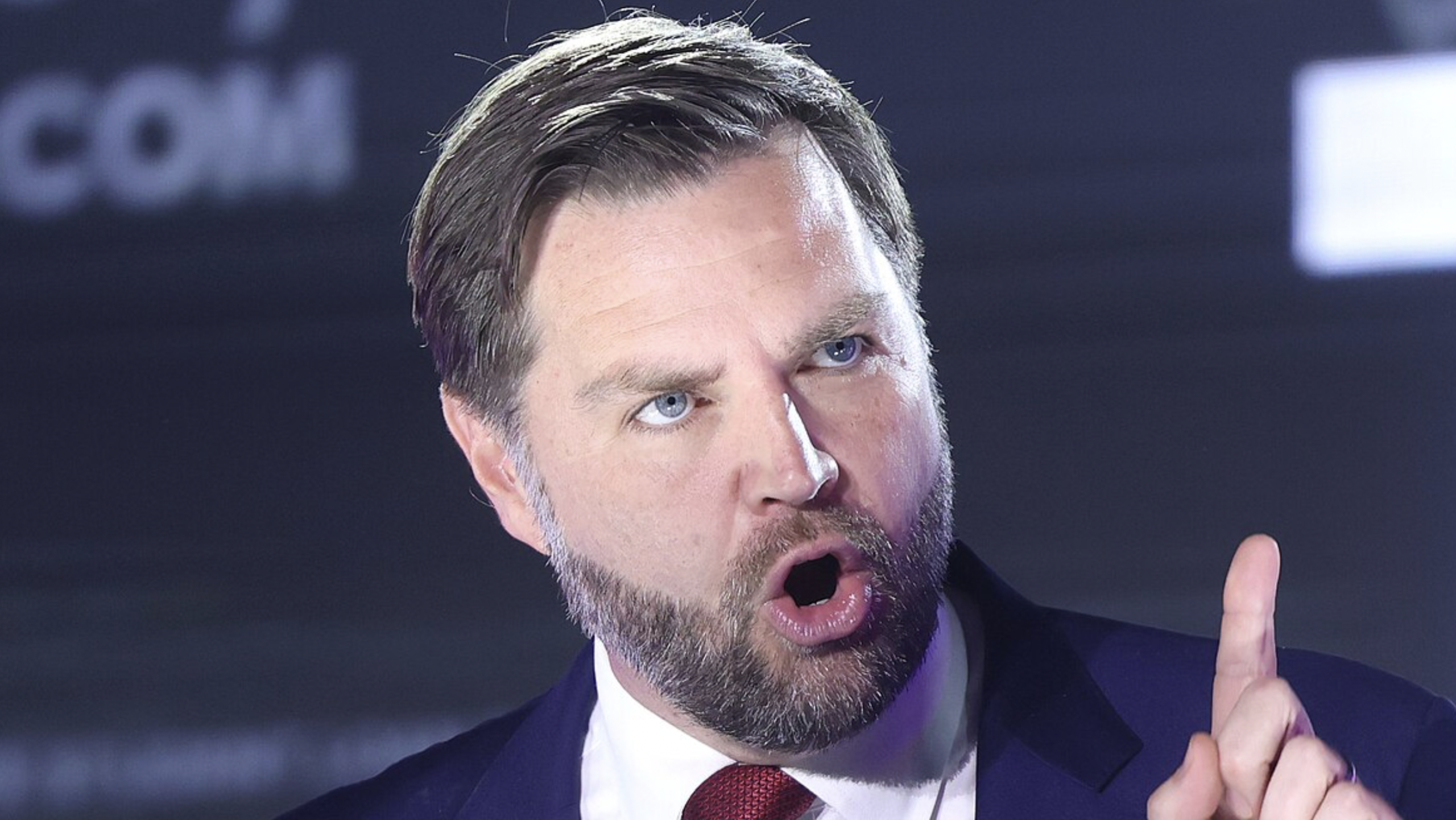
WASHINGTON — Vice President JD Vance on Tuesday drew a sharp and pointed contrast between the Trump administration’s emerging nuclear framework with Iran and the 2015 Obama-era Joint Comprehensive Plan of Action, arguing that the regional architecture surrounding the new deal is fundamentally different — and that America’s Gulf Arab partners are proof.
Speaking to reporters on Fox News on Tuesday, June 16, 2026, Vance fielded the question he said he fields most often regarding the deal: how is it different from the JCPOA? His answer was direct.
“What is interesting, there has been chatter about this peace deal with Iran and one question I’m most often asked is how is this different from Obama’s JCPOA,” Vance said. “We are not giving them a red cent. Obama gave them a billion dollars in cash.”
The reference alluded to the $1.7 billion settlement the Obama administration paid to Iran in January 2016, a figure that included $400 million in principal tied to a pre-revolutionary arms contract dispute and $1.3 billion in accrued interest. That payment was delivered in cash and occurred on the same day Iran released five American hostages, drawing intense congressional scrutiny and criticism from lawmakers who questioned the optics of the simultaneous transactions.
The JCPOA and Its Critics
The Joint Comprehensive Plan of Action, signed in 2015 by the United States, Iran, China, Russia, the United Kingdom, France, and Germany, placed limits on Iran’s nuclear enrichment activities in exchange for the lifting of international sanctions. The deal extended Iran’s so-called “breakout time” — the period required to enrich enough material for a nuclear weapon — from approximately two to three months to roughly one year, and allowed international inspectors greater access to Iranian nuclear sites.
The agreement was praised by the Obama administration as a historic diplomatic achievement. President Obama called it “a good deal” that met America’s “core objectives” in preventing Iran from obtaining a nuclear weapon. But it was deeply controversial from the outset, particularly among America’s Gulf Arab partners, who objected to the deal’s failure to address Iran’s ballistic missile program, its support for armed proxy groups across the region, or its broader destabilizing activities in the Middle East.
Vance invoked that regional objection directly Tuesday. “You know what Gulf Arab countries thought of the JCPOA? They hated it,” he said. “What they think about President Trump’s peace plan? They love it. It is turning over a new leaf to the Middle East.”
A Unified Gulf Behind the New Deal
The vice president framed the Gulf states’ enthusiasm not merely as a political endorsement, but as a structural feature of the deal itself — one made possible by a degree of American-Gulf coordination that Vance said had no historical precedent.
“What we’ve done here is actually unite the Gulf together,” he said. “That could have transformative impact for the next couple of generations.”
Vance made the remarks in the context of President Trump’s appearance at the G7 summit in Geneva, where Trump met separately with the Emir of Qatar and with the leader of the UAE — meetings that Vance described as emblematic of a broader realignment now taking shape across the Middle East. Coalition partners, Vance said, are coming together with the United States in ways not previously seen.
“You see the United States working with Gulf Arab partners in a way you have never seen before in the history of this country, and that is why we have gotten to a point where we have a good peace deal on the table,” he said. “You see Gulf Coast countries pushing back against Iran, uniting and doing something different for a change.”
Respect Built on Military Action
Vance connected the deal’s regional support to the hard realities of what the United States military accomplished over the preceding months. The U.S. launched military operations against Iran on February 28, 2026, under Operation Epic Fury, a campaign that targeted Iran’s nuclear facilities, ballistic missile arsenal, and military command structure in coordination with Israel. The strikes inflicted severe damage on Iran’s conventional forces and, according to the vice president, created the conditions under which the current diplomatic framework became achievable.
“It is clear they respect the Commander-in-Chief, and Iran respects our military because of what we’ve been able to do,” Vance said Tuesday.
A Contrast in Philosophy
Implicit in Vance’s remarks is a broader argument about the philosophy underlying each deal. The JCPOA was widely characterized by its defenders as a multilateral diplomatic achievement constructed through international coalition building — but one that explicitly excluded Iran’s Gulf Arab neighbors from the negotiating table, a point that drew sustained criticism from Saudi Arabia, the UAE, Bahrain, and others who viewed Iran’s regional behavior as an existential concern not addressed by a nuclear-only framework.
The Trump administration’s 2026 framework, by contrast, has been built with Gulf participation at its core. Qatar has served as a key intermediary throughout the negotiating process, and Pakistani Prime Minister Shehbaz Sharif, who mediated the talks, confirmed a formal signing ceremony is scheduled for June 19 in Switzerland. Gulf states are also expected to serve as the principal financiers of any economic reconstruction benefits flowing to Iran under the deal’s compliance structure.
The signing, if it proceeds as scheduled Friday, would mark the formal conclusion of a military and diplomatic campaign that began when the United States launched combat operations against Iran in late February — and would formalize an agreement that Vance said is already being received in the region in a manner wholly unlike its predecessor.
“What we’ve done here is actually unite the Gulf together,” he said. “That could have transformative impact for the next couple of generations.”