
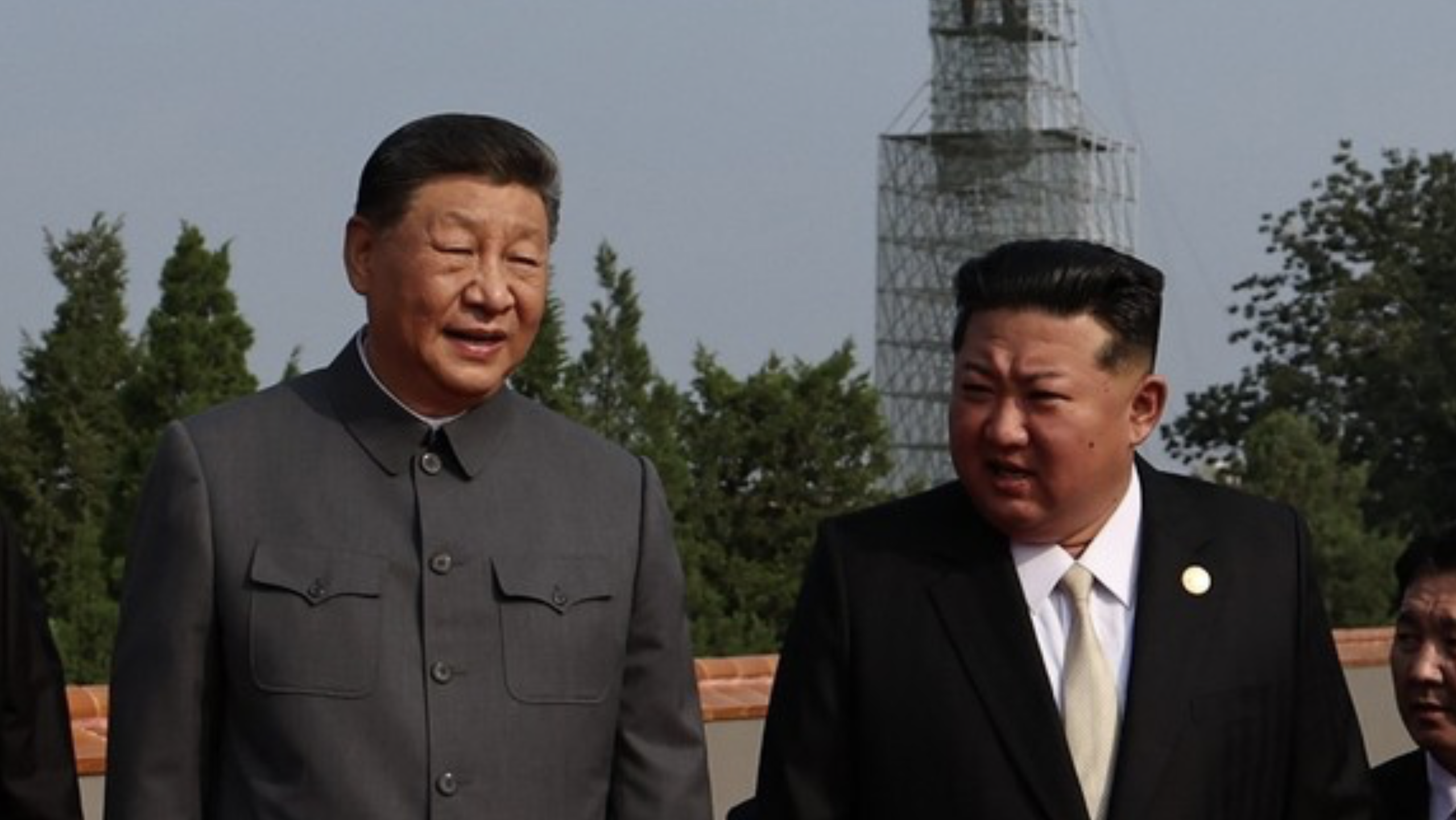
BEIJING, June 5, 2026 — China announced Friday that President Xi Jinping will make a rare state visit to North Korea on June 8 and 9 to meet with leader Kim Jong Un — his first trip to Pyongyang in nearly seven years and his first overseas visit of 2026, coming just weeks after hosting both President Donald Trump and Russian President Vladimir Putin in Beijing.
China’s official Xinhua News Agency announced the visit Friday, saying Xi will travel at Kim’s invitation. North Korea’s Korean Central News Agency also confirmed the trip, though neither outlet provided additional details. Chinese foreign ministry spokeswoman Mao Ning said the two leaders would exchange views on bilateral ties and issues of “mutual interest.”
Xi’s First Visit to Pyongyang Since 2019
Xi’s last state visit to North Korea was in June 2019 — a two-day trip that came shortly after the collapse of Trump-Kim denuclearization talks in Hanoi. In the seven years since, a global pandemic shut the China-North Korea border for years, Kim deepened military cooperation with Russia, and North Korea’s nuclear arsenal expanded significantly.
The visit will be only Xi’s second trip to Pyongyang — an unusually low number given the two countries’ formal alliance. It reciprocates Kim’s September 2025 visit to Beijing, where the North Korean leader attended China’s Victory Day Parade marking the 80th anniversary of China’s defeat of imperial Japan, and held summit talks with Xi alongside Putin.
The summit will also commemorate the 65th anniversary of the two countries’ 1961 friendship treaty, Chinese state media said.
The Nuclear Backdrop
The announcement came one day after North Korea unveiled a new uranium enrichment facility, with Kim inspecting centrifuges at a third known nuclear fuel production site and announcing plans to bolster the country’s nuclear forces “at an exponential rate.” Experts said the timing — publicly revealing a new nuclear facility the day before Xi’s visit was announced — was deliberate, signaling Kim’s eagerness to cement North Korea’s status as a nuclear weapons state ahead of the summit.
North Korea is believed to have produced enough weapons-grade material for approximately 90 nuclear warheads and may have assembled about 50 so far, according to a 2024 report by the Federation of American Scientists. Its arsenal includes nuclear-capable weapons designed to strike targets as close as Seoul and as far as the U.S. East Coast.
Beijing is officially wary of North Korea’s nuclear program but has in recent years tacitly supported Pyongyang’s weapons development — siding with Russia at the United Nations Security Council to chip away at sanctions on North Korea’s ballistic missile program.
Why Now
The visit reflects several converging strategic interests. China wants to keep Pyongyang close as North Korea’s military cooperation with Russia deepens — Kim has deployed troops and munitions to support Russia’s war in Ukraine in exchange for economic support and advanced military technology from Moscow. Beijing is wary of North Korea drifting too far into Russia’s orbit and losing its own leverage over the Kim regime.
North Korea also needs new Chinese investment and economic agreements. Despite its growing ties with Russia, North Korea remains heavily dependent on China as its largest trading partner and primary economic lifeline — a relationship Xi’s visit is expected to formalize in new bilateral agreements.
Japan’s defense buildup is also likely to feature on the agenda. Both China and North Korea have been critical of Tokyo’s recent military expansion, including Japan’s decision to lift its post-World War II ban on selling lethal weapons abroad. Japan’s growing partnership with South Korea to navigate Chinese aggression and a Trump administration that has questioned the value of alliances has made North Korea a useful diplomatic partner for Beijing once more.
The Geopolitical Signal
That Xi’s first overseas trip of 2026 is to Pyongyang — rather than a G7 capital or a major economic partner — carries deliberate symbolism. In May, Xi hosted Trump in Beijing for a summit that produced a 90-day tariff truce, then immediately hosted Putin. Now he is heading to Pyongyang. The sequencing — Trump, Putin, Kim — presents China as the indispensable diplomatic hub of a multipolar world, capable of engaging with Washington while simultaneously affirming ties with its most sanctioned allies.
Trump, for his part, has offered to meet Kim again in his second term. Kim has not rejected the idea outright but has said he would only restart talks with Washington if the United States ends its “hostile” policies and accepts North Korea’s nuclear status — a condition the U.S. has consistently refused. Whether Xi’s visit will help facilitate any renewed U.S.-North Korea engagement — as Xi attempted during his 2019 Pyongyang trip — remains one of the key questions heading into the summit.