
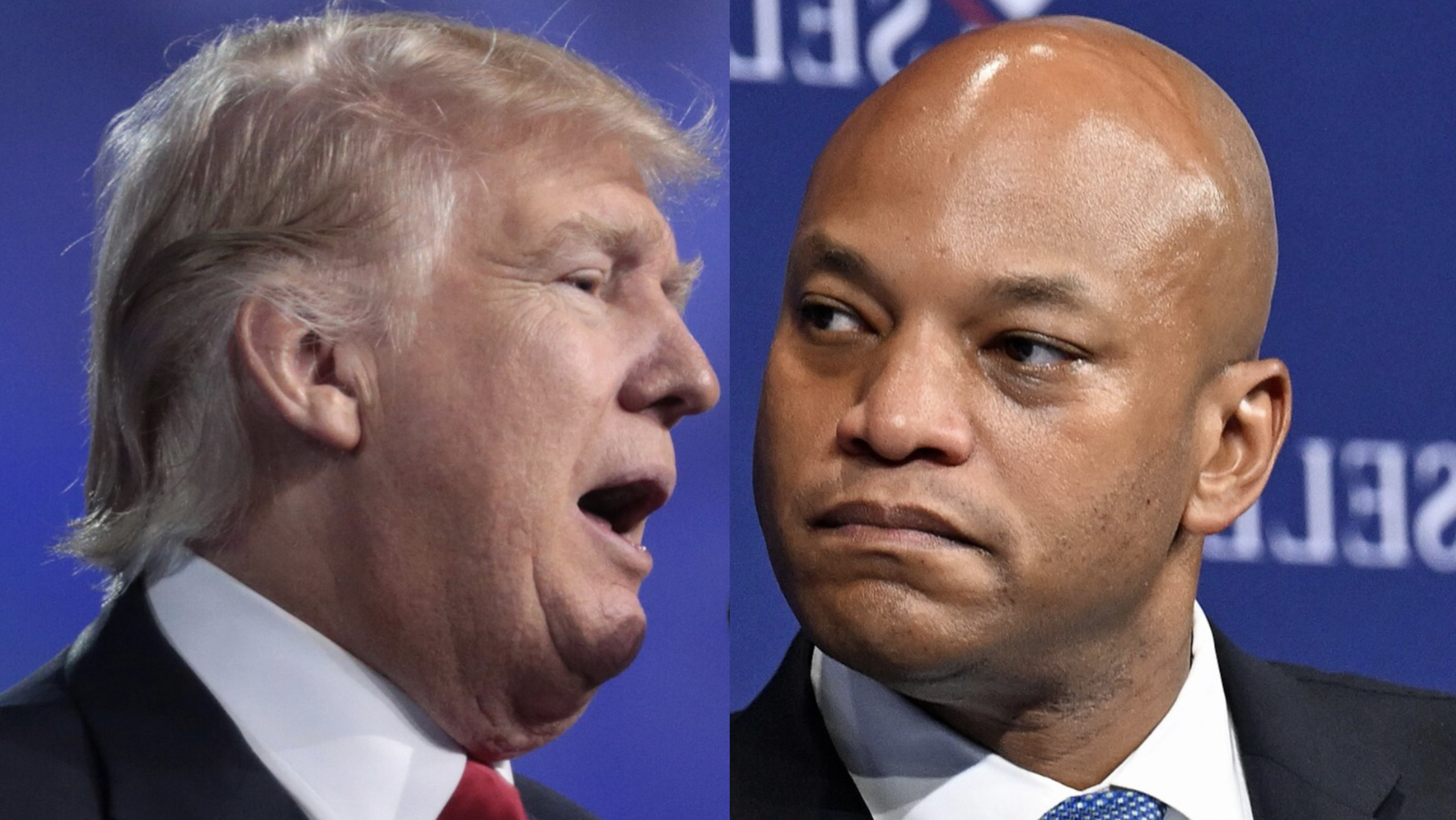
President Donald Trump took direct aim at Maryland Governor Wes Moore on Friday, accusing the Democratic governor of obstructing a major renovation project at Joint Base Andrews — one the president says would transform two aging military golf courses into world-class facilities and deliver specially designed holes for America’s Wounded Warriors. In a fiery Truth Social post published June 5, 2026, Trump declared that Moore’s interference amounted to an attack on the United States Air Force and the men and women who serve it, demanding the project move forward without delay.
The President’s Broadside
Trump’s post left little room for interpretation. “The Governor of the Great State of Maryland, Wes Moore, has put a halt to all work being done at Joint Base Andrews Air Force Base, concerning the renovation and restoration of their two old and dilapidated Golf Courses, into two, World Class, Jack Nicklaus Designed Courses, plus nine additional holes, also designed by Jack, specially adapted for our Wounded Warriors,” Trump wrote. The president called Moore’s intervention a direct assault on the armed forces, writing, “By doing this, the Governor is attacking the United States Air Force, and our Military — not a smart thing to do.” Trump closed the post with a blunt demand on behalf of service members and veterans: “Our Soldiers and Veterans deserve THE BEST — NO WAITING, NO GAMES!”
How the Project Began
The renovation plan has roots in November 2025, when Trump made a high-profile visit to Joint Base Andrews aboard Marine One alongside golf legend Jack Nicklaus for an aerial inspection of the base’s golf facilities. Trump met Nicklaus at the military base for an aerial tour. Before departing the White House that day, Trump told reporters the courses were in serious disrepair. “He’s involved in trying to bring their recreational facility back,” Trump said of Nicklaus, calling it “a great place that has been destroyed over the years through lack of maintenance, so we’ll fix that up, and Jack will be the architect and he’ll design it.”
A Historic Base, a Long-Neglected Facility
Joint Base Andrews, located 15 miles from the White House in Maryland, houses Air Force One and features three 18-hole golf courses that have served presidents since Gerald Ford first played there in 1974. The Courses at Andrews is the only 54-hole golf course within the Department of Defense. Despite its storied history as a presidential retreat — Barack Obama played it more frequently than any president, roughly 110 times in eight years — the facilities had fallen into disrepair by the time Trump announced the overhaul.
The White House said the renovation will be the most significant in the history of Andrews. The courses and clubhouse need improvements due to age and wear, it said, and there are discussions about including a multifunctional event center as part of the project. White House spokesman Davis Ingle framed the undertaking as a long-overdue investment. “President Trump is a champion-level golfer with an extraordinary eye for detail and design,” Ingle said. “His vision to renovate and beautify Joint Base Andrews’ golf courses will bring much-needed improvements that servicemembers and their families will be able to enjoy for generations to come.”
Nicklaus Design and the Scale of the Vision
The choice of Jack Nicklaus as architect signals the ambition behind the project. Nicklaus Design has completed over 425 courses across 40 states and 45 countries. Beyond renovating the two primary championship layouts, Trump’s post revealed an expanded scope not previously publicized — nine additional holes specially adapted for Wounded Warriors, a component the president highlighted as central to the project’s mission. The Courses at Andrews serve as an essential part of the Base Recreation Program, open to active and retired military members, DoD civilians, and their families. For wounded and disabled veterans, accessible on-base recreational facilities can eliminate the need to travel off-installation for adaptive golf programs.
The Environmental Review at the Center of the Dispute
The project has not moved without friction. The Department of the Air Force issued an early public notice inviting public input on the Air Force’s “Finding of No Practicable Alternative” addressing potential impacts to wetlands and floodplains related to proposed renovations at the Joint Base Andrews golf course complex. The proposed action is subject to Executive Orders 11990 and 11988 because the proposed action may impact or be within wetlands and 100-year floodplain areas. That environmental review process — standard for federal construction projects near sensitive ecological areas — appears to be the mechanism through which Governor Moore has exerted state-level influence over the project’s timeline.
Moore’s Role and the State-Federal Tension
Maryland requires state permits and review for projects that affect wetlands and waterways, giving Governor Moore’s administration a degree of oversight even over construction on federal military property when state environmental laws are implicated. Trump’s post made clear he views that oversight as an illegitimate obstacle, arguing that Air Force and military personnel should not be “forced to wait through a long Legal Review process.” Moore, a Democrat and decorated U.S. Army veteran who served with the 82nd Airborne Division and was awarded the Bronze Star Medal for his service in Afghanistan, has not publicly issued a formal statement in direct response to Friday’s post. His administration has previously maintained that Maryland stands ready to work with federal officials on matters affecting the state.
Trump’s Pattern of Military Base Upgrades
The Andrews golf renovation fits into a broader pattern of construction and renovation initiatives Trump has pursued since returning to office in January 2025. Since beginning his second term, Trump has undertaken various construction projects at the White House, including renovating the Lincoln Bedroom’s bathroom, paving over the Rose Garden, and decorating the Oval Office in gold. In his most ambitious renovation project, Trump in October ordered the demolition of the East Wing of the White House to make way for a 90,000-square-foot ballroom, a project that drew sharp criticism for not going through a proper review. Trump has said the $300 million construction of the new ballroom will be funded by private donations from companies and wealthy individuals.
A Pattern of Clashes with Maryland’s Governor
Friday’s dispute over the golf course renovation is not the first time Trump and Moore have found themselves at odds. Earlier in 2026, Trump publicly criticized Moore’s handling of infrastructure and environmental issues in Maryland, telling reporters Moore “can’t fix anything” — and citing that frustration as the reason he excluded the governor from a White House dinner for governors. Moore’s office responded at the time by saying Maryland was ready to provide serious leadership to meet the moment. The latest confrontation, however, is notably sharper in tone, with the president directly accusing a sitting governor of attacking the United States military.
The Wounded Warrior Dimension
Central to Trump’s argument is the claim that the halt disproportionately harms Wounded Warriors — service members who have sustained serious injuries in the line of duty. Golf has long been recognized within the military community as a valuable form of adaptive recreation and rehabilitation. When wounded U.S. service members redeploy from combat zones, they are met with a multitude of physical therapy, counseling, and rehabilitation measures aimed at getting them back on their feet. An on-base facility specially designed for adaptive play would eliminate barriers of distance and accessibility that currently limit participation for many veterans in the National Capital Region.
Trump’s Demands Going Forward
In his post, Trump framed the path forward as simple and non-negotiable. “These Courses exist, they are terrible, Jack Nicklaus will make them GREAT,” he wrote. “Why should the Air Force and other Military personnel be forced to wait through a long Legal Review process?” The president’s public post functions as both a rebuke of Moore and a pressure campaign — signaling the White House intends to push the project through regardless of the governor’s objections. Whether the administration pursues legal or executive avenues to override state environmental review, or whether a negotiated resolution emerges between Annapolis and Washington, remains to be seen.
What Comes Next
The standoff places Joint Base Andrews at the center of an escalating fight between a Democratic state government and a federal executive branch determined to move quickly on military base improvements. The Air Force’s public comment period on the environmental review invites written comments, with submissions directed to the NEPA Program Manager at Joint Base Andrews or submitted by email to the base’s environmental office. With Trump having now made this dispute a matter of national public attention — and framing it explicitly as a question of support for the military and Wounded Warriors — the political pressure on Governor Moore to find a resolution is likely to intensify in the days ahead.