
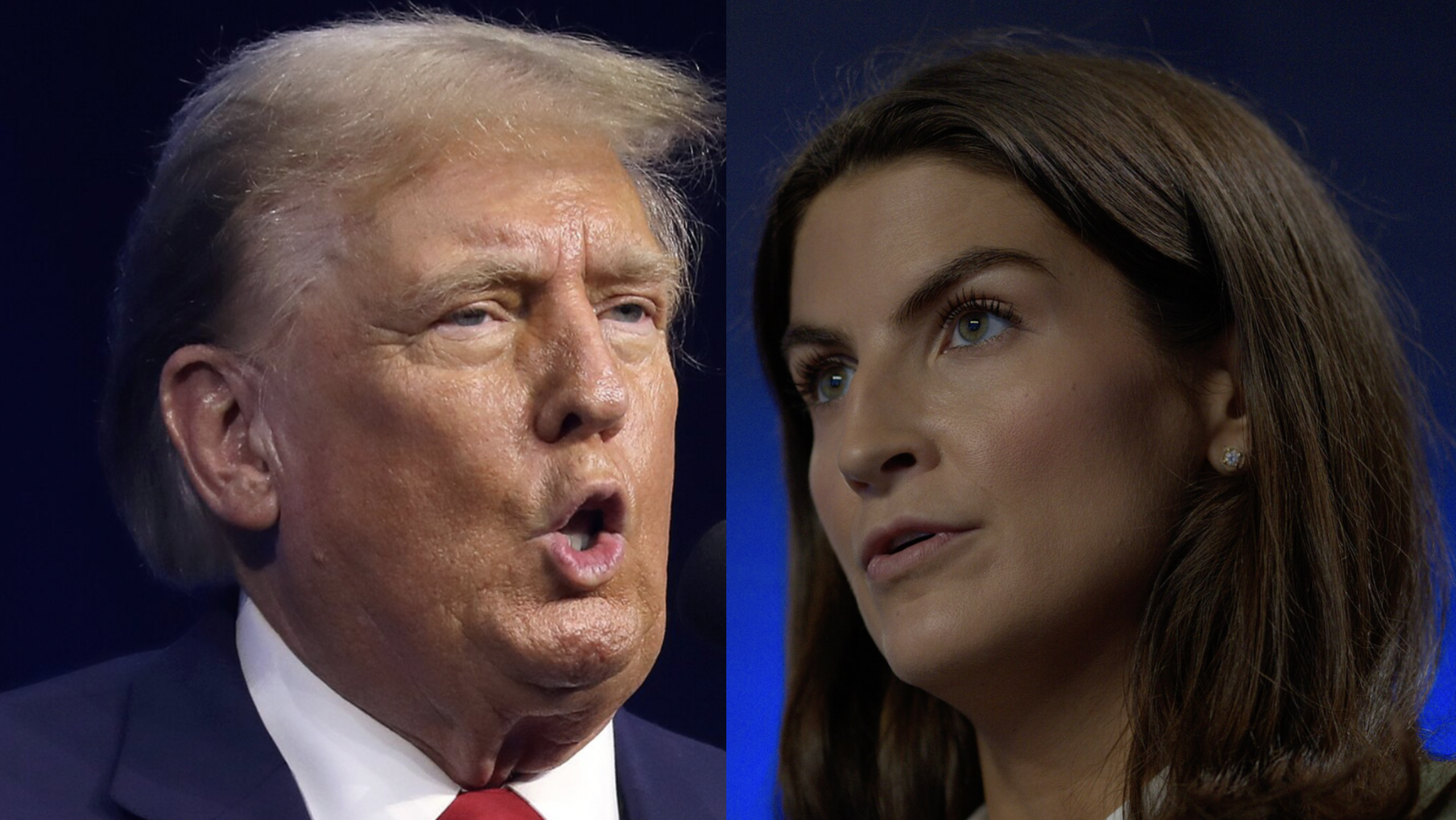
President Donald Trump launched a pointed and personal attack on CNN correspondent Kaitlin Collins during a White House press event on June 3, 2026, targeting the reporter by name while she stood in the room — calling her corrupt, questioning why she never smiles, and accusing the network she works for of being one of the most dishonest organizations in American media.
The remarks came as Trump was responding to a question about a federal anti-weaponization fund, which he used as a springboard to address what he described as years of media corruption directed at him and his supporters. Speaking with Collins visible in the room, Trump moved from defending the fund to targeting her directly. “CNN’s a very corrupt organization,” he said, “with a corrupt reporter standing right there, never smiles. She never — a young beautiful woman — never smiles. I never see a smile on her face. I see her standing there with hatred in her eyes.”
Trump went on to frame Collins’ demeanor not as professional skepticism, but as ideological hostility. “Like she has hatred because we have borders, because we have a strong military, because we cut our taxes, because we do things that everybody wanted,” he said. “And then we win our election in a massive landslide. We went 87% of the counties in this country. Nobody’s ever heard of a thing like that.”
It was not the first time the two have clashed. Collins and Trump have had a long and contentious relationship, one that dates back through multiple Trump press conferences, CNN town halls, and years of adversarial exchanges. Collins, who has been one of the more prominent White House correspondents covering Trump’s administrations, has repeatedly pressed the president on claims and decisions he has been reluctant to address, and Trump has consistently singled her out among reporters he views as antagonistic.
Wednesday’s remarks were among the most direct he has made about her in a public setting with her present. Trump did not merely criticize Collins’ reporting — he questioned her character, her emotional state, and her motivations in terms that were unusually personal even by his standards. “The reporters should be happy,” he said, steering toward a broader point. “They shouldn’t be unhappy. They should be very happy because you know what we’re doing? We’re saving our country.”
The attack on Collins came embedded in a longer monologue in which Trump accused CNN of having prior knowledge of alleged corruption by the Biden and Obama administrations. “We have all the information,” Trump said. “I said what we have and what we are going to be showing over the coming weeks and months, you’re not even going to believe. Some of you will believe it. Like CNN will believe it because they knew what was going on. They’re crooked as hell.”
Trump’s accusations against CNN extended beyond Collins individually. Returning to the subject later in the same press event, Trump said the network had “abused our people so badly” — referring to supporters and individuals he said had been targeted by federal prosecutors under the Biden administration. “CNN, in particular, CNN does such false reporting,” he said, before adding an aside about the network’s ownership change. “But now they have new ownership, so maybe it’ll straighten it out. I doubt it, but it’s hard to straighten garbage out.”
The broadside against CNN fits a pattern that has defined much of Trump’s relationship with the press across both of his terms. Trump has consistently accused major outlets — CNN, The New York Times, and others — of serving as instruments of political opposition rather than neutral news organizations. He has used the phrase “fake news” to describe their coverage and has, on numerous occasions, singled out individual reporters for personal criticism in settings where those reporters were present.
For Collins and CNN, the exchange was another episode in a years-long dynamic that shows no sign of easing. The president made clear Wednesday that he views the press corps not as adversaries to be tolerated but as participants in a political conflict — and that he intends to treat them accordingly.