
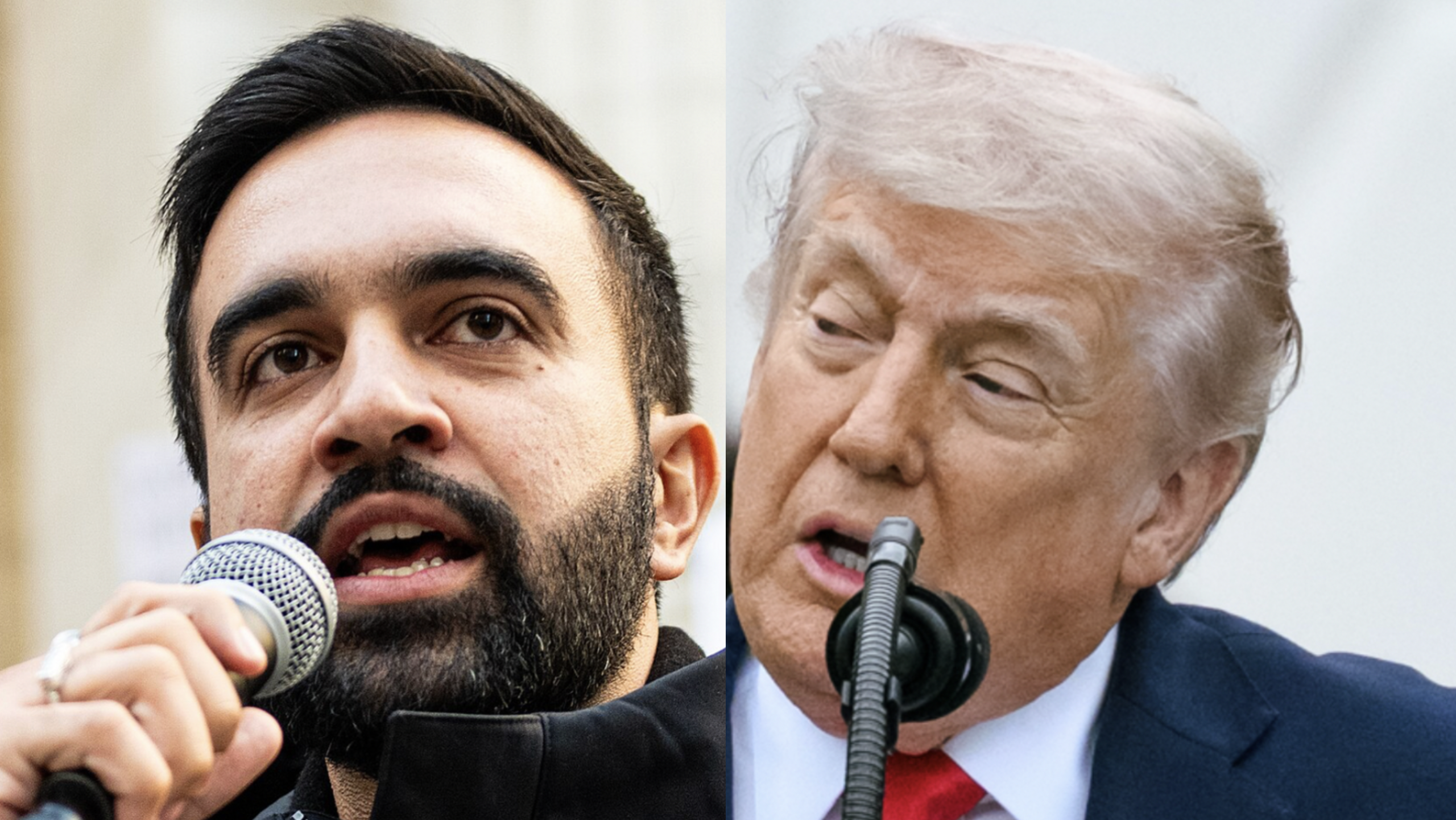
New York City Mayor Zohran Mamdani marked three months of U.S. military operations against Iran with a forceful public rebuke on May 28, 2026, calling the conflict “reckless” and declaring it must end — reigniting a debate that has split Washington since American and Israeli forces first struck Tehran on February 28 without a single congressional vote authorizing the war.
Mamdani’s Full Statement
Mamdani delivered his remarks in a post on X, directing his condemnation squarely at the human and economic toll the conflict has imposed on ordinary Americans. “Three months ago today, a war began that no one voted for — and the cost has been paid by people who had no say in it,” Mamdani wrote. “Thousands of civilians have lost their lives. Thirteen U.S. servicemembers will never come home to their families. Americans across this country and our city have watched prices rise at the pump and the grocery store, their budgets strained by a conflict launched without a single vote of Congress. Every life lost abroad and every dollar squeezed from a working family here is part of the same reckless bill, handed to the people who could least afford it by those who will never pay it themselves. I opposed this war from the first day. I oppose it still. It must end.”
A Historic Mayor With a Long Record of Opposition
Mamdani, 34, made history when he was sworn in as New York City’s 112th mayor on January 1, 2026, becoming the city’s first mayor of South Asian descent, its first Muslim mayor, and the youngest leader to hold the office in generations. Born on October 18, 1991 in Kampala, Uganda, to Indo-Ugandan academic Mahmood Mamdani and Indian filmmaker Mira Nair, he is also the first African-born mayor of New York City. He is additionally the first mayor from the borough of Queens. Before ascending to City Hall, he represented the 36th New York State Assembly District and its neighborhoods of Astoria, Ditmars-Steinway, and Astoria Heights.
His opposition to the Iran conflict predates his time in the mayor’s office. A member of the Democratic Party and the Democratic Socialists of America, Mamdani ran on a platform centered on affordability and working-class concerns — the same themes that anchor his May 28 condemnation of a war he says is draining family budgets while being paid for by those least able to afford it.
How the War Began — Without Congress
U.S. military strikes on Iran officially began on February 28, 2026. The joint attacks by Israel and the United States were met with counterattacks by Iran on other Middle East nations, as well as Israeli and American assets. Israeli and United States forces also killed Iran’s Supreme Leader Ali Khamenei and other Iranian leaders.
The strikes were launched without a prior congressional authorization for the use of military force. Congressman Morgan McGarvey of Kentucky declared that same day: “President Trump is starting yet another war in the Middle East without the approval of Congress or the American people, putting our troops — who are our neighbors, our family members, and our kids — in harm’s way and spending billions on regime change in another country, all while Americans can barely afford their expenses at home.”
Congress Pushes Back — and Fails
Congressional Democrats — along with a small number of Republicans — moved quickly to challenge the White House’s authority to wage war without legislative approval. On February 26, Senators Tim Kaine, Chuck Schumer, and Adam Schiff announced they would force a vote on a War Powers Resolution to ensure any U.S. participation in hostilities against Iran received explicit congressional authorization.
Senator Schiff stated plainly on February 28: “Donald Trump is drawing our country into yet another foreign war that Americans don’t want and Congress has not authorized. President Trump had no authority under the Constitution to initiate this war of choice, place the lives of U.S. servicemembers in harm’s way, and risk a broader conflict without making the case to the American people and seeking congressional approval.”
Those efforts failed. On March 4, 2026, the Senate rejected a war powers resolution by a 47–53 vote that sought to force President Trump to obtain consent from Congress for military actions against Iran. A day later, a similar resolution failed to pass in the House of Representatives.
The Human Cost: 13 Americans Dead
The casualty figure cited by Mayor Mamdani — 13 U.S. servicemembers killed — is consistent with official tallies. As of March 23, 2026, the Congressional Research Service confirmed that 13 U.S. service personnel had officially been reported killed in Operation Epic Fury. In the 40 days following the start of hostilities, at least 13 U.S. service personnel were killed and 381 were wounded. The estimated overall death toll, including civilians, mounted to at least 10,000.
As of March 1, civilians had been reported killed in Iran, Israel, Kuwait, the United Arab Emirates, and Syria.
Trump’s Ceasefire Claim and the War Powers Dispute
A temporary ceasefire was declared in April, but the legal and constitutional debate has continued. On April 7, 2026, Trump ordered a two-week ceasefire. The ceasefire was subsequently extended, and no exchange of fire between United States Forces and Iran has occurred since that date.
As the 60-day window under the 1973 War Powers Resolution approached expiration, the Trump administration took the position that congressional authorization was no longer necessary. “The hostilities that began on February 28, 2026, have terminated,” Trump wrote to House Speaker Mike Johnson and Senate President pro tempore Chuck Grassley. Nevertheless, Trump also acknowledged in the same letter that the threat posed by Iran to the United States and American Armed Forces remains significant, and promised to keep congressional leaders updated on further developments.
Trump told reporters he considers seeking congressional authorization under the War Powers Act “unconstitutional,” falsely claiming other presidents had not done so.
A Reckless Bill for Working Families
Beyond the battlefield, Mamdani’s statement zeroed in on the economic ripple effects of the conflict — rising fuel and grocery prices he argues are being absorbed disproportionately by working Americans. It is a line of argument that Democrats in Congress have echoed since the war’s opening days.
Senator Edward Markey of Massachusetts, after voting against continued military action on March 4, declared: “Donald Trump is conducting an illegal and reckless war in Iran. Congress has not authorized this war, nor should it, as Trump drags us into a dangerous and unnecessary conflict.”
Opposition Growing — From Both Sides of the Aisle
Opposition to the war has not been limited to Democrats. Republican Representative Thomas Massie of Kentucky stated plainly: “I am opposed to this War. This is not ‘America First.'” Senator Rand Paul, a leading Republican in the Senate effort to curb Trump’s war authority, similarly declared: “The Constitution conferred the power to declare or initiate war to Congress for a reason, to make war less likely.”
For Mamdani, who now leads a city of more than eight million people and governs one of the most militarily diverse populations in the country, the statement on May 28 was less a policy proposal than a moral indictment — a declaration that the bill for this war is being paid by people who never had a vote in whether it was worth fighting.
“I opposed this war from the first day,” the mayor wrote. “I oppose it still. It must end.”