
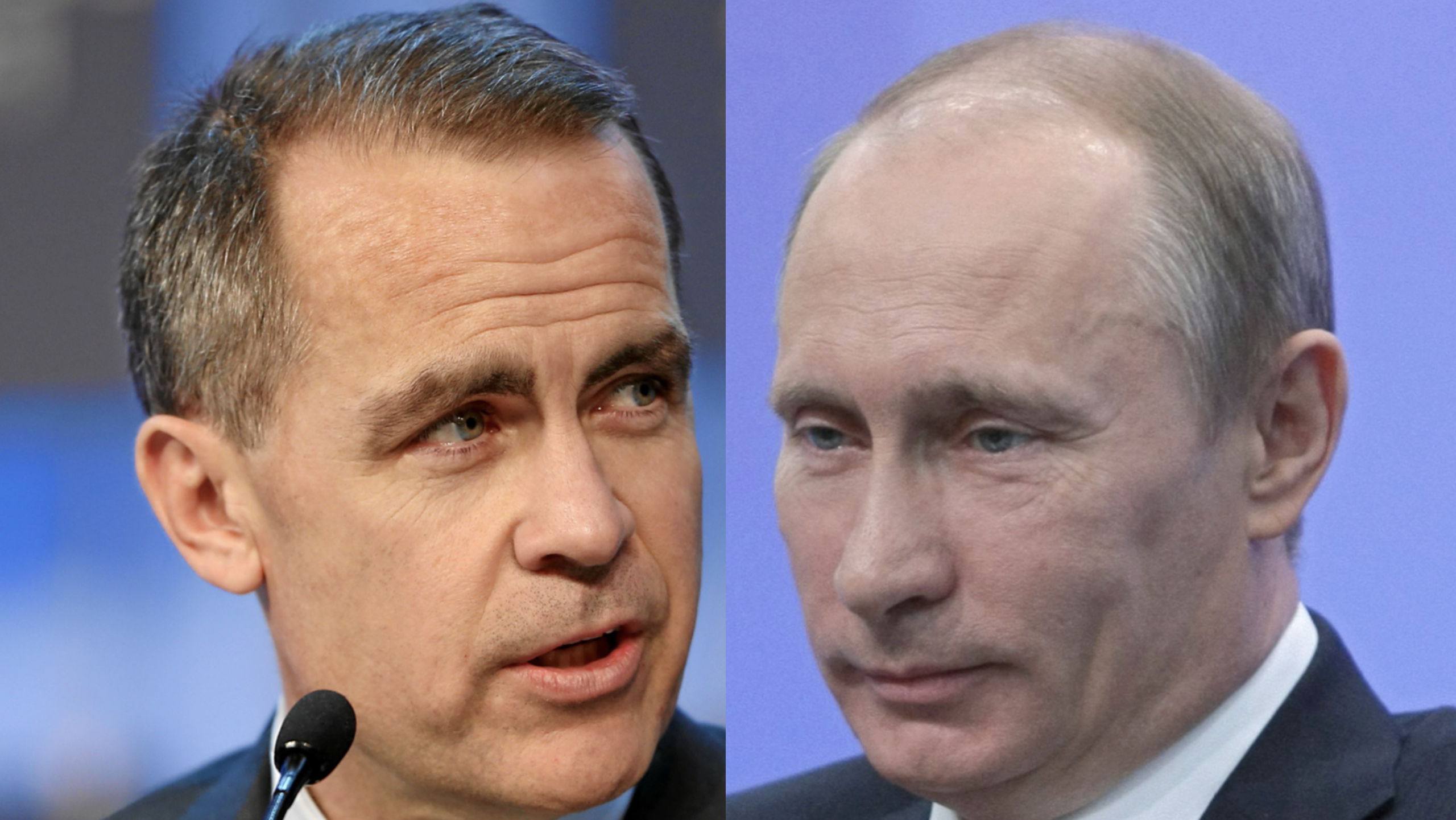
As fires burned across Kyiv’s skyline and rescue workers sifted through the debris of what Ukrainian officials called one of the most devastating single-night attacks of the war, world leaders began speaking. Among the first was Canadian Prime Minister Mark Carney.
“Canada strongly condemns Russia’s launch of large-scale missile and drone attacks on civilian targets in Kyiv tonight,” Carney wrote on X in the early hours of Sunday. “For more than four years since Russia’s illegal invasion, it has greatly underestimated the courage, determination, and strength of the Ukrainian people — even as Putin’s regime has relentlessly bombed Ukrainian energy infrastructure, schools, hospitals, and homes.”
A Night That Demanded a Response
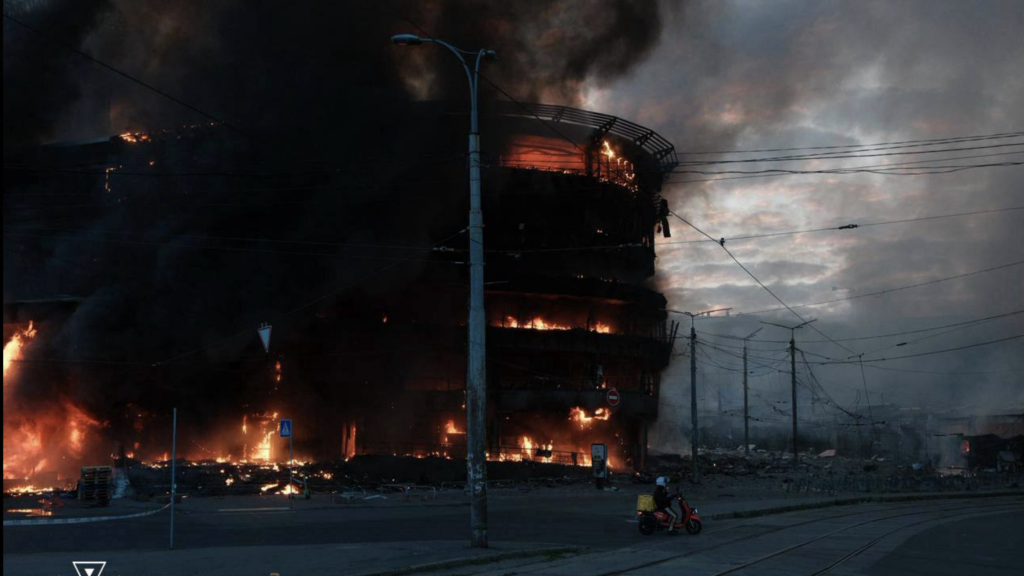
Russia deployed 600 drones and 90 missiles in the attack, including the hypersonic Oreshnik ballistic missile, which is capable of carrying a nuclear warhead. Four people were killed and more than 80 wounded. The Chernobyl museum — destroyed in the strike — had only recently reopened following extensive restoration ahead of the 40th anniversary of the nuclear disaster. One of the city’s oldest markets also burned to the ground.
Carney did not shy away from the stakes. “We call on Russia to immediately cease these strikes and end this illegal war of aggression,” he wrote. “They prolong human suffering and do nothing to change the fact that Russia will lose this war.” He closed with a direct commitment: “Canada will continue working closely with international partners to secure a just and lasting peace for Ukraine and Europe.”
Four Years of Backing Words With Action
Canada’s condemnation carries the weight of a nation that has made Ukraine’s survival one of its defining foreign policy commitments since Russia launched its full-scale invasion in February 2022.
Since February 2022, Canada has committed more than $25.5 billion in overall multifaceted aid to Ukraine, including $8.5 billion in military assistance. That military support has taken tangible forms on the battlefield: Leopard 2 main battle tanks, M777 howitzers and ammunition, anti-tank weapons, armoured vehicles, and advanced surface-to-air missile systems. Canada also renewed Operation UNIFIER for an additional three years to 2029 — the Canadian Armed Forces mission that has trained more than 47,000 members of Ukraine’s armed forces since 2015, over 13,000 of whom have been trained since the full-scale invasion began.
Canada’s financial support has included $11.55 billion in loan resources disbursed through the Administered Account for Ukraine at the International Monetary Fund — a program Canada championed — along with $1.94 billion delivered through multilateral development banks and $500 million in direct bilateral loans.
Ranked Among Ukraine’s Closest Allies
The breadth of Canada’s commitment has drawn recognition internationally. In 2025, Forbes Ukraine named Canada “Ukraine’s top friend,” ranking it first among 21 states providing the most support to Ukraine based on the volume of financial assistance, the number of Ukrainian refugees accepted, reductions in imports from Russia, and the revenues of domestic companies operating in Russia.
In August 2025, Prime Minister Carney announced approximately $680 million — roughly USD $500 million — for the purchase of a NATO Prioritized Ukraine Requirements List package of military equipment sourced from the United States, aimed at strengthening Ukraine’s air defense capabilities.
That investment in air defense now carries renewed urgency. The weapon Russia fired Sunday night — the Oreshnik — travels at more than ten times the speed of sound and, according to Russian President Vladimir Putin, cannot be intercepted by any defense system in existence. Sunday’s attack was the missile’s third deployment in the war. In all three cases, it reached its target.
Carney’s message made clear that Canada views Russia’s escalation not as a turning point to be accommodated, but as one to be answered. “Russia will lose this war,” he wrote — a statement that, in the context of the smoke still rising over Kyiv, read less like a prediction and more like a pledge.