
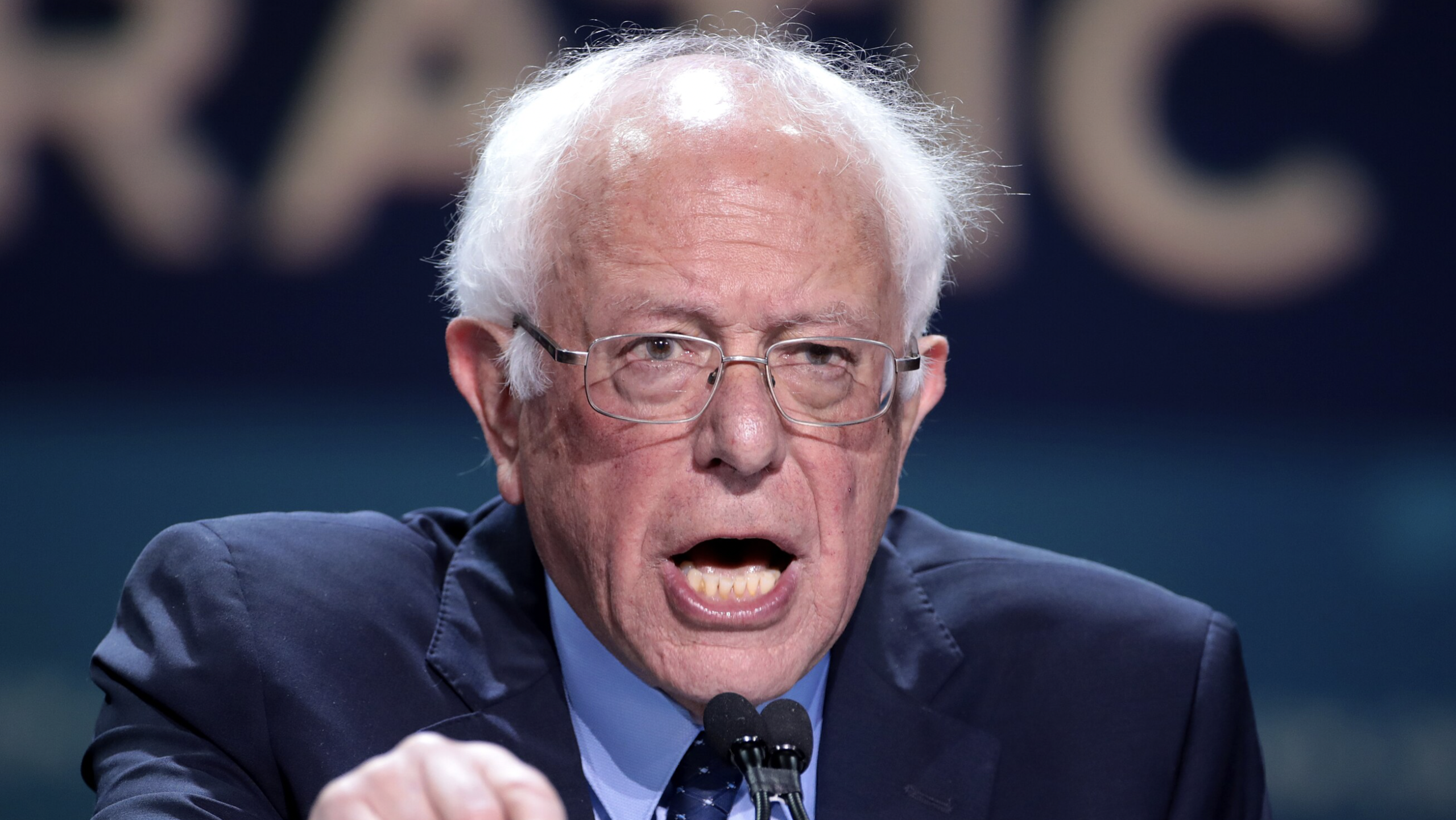
A renewed political clash over the United States’ ongoing war in Iran intensified on May 9, 2026, after U.S. Senator Bernie Sanders publicly challenged the Trump administration’s cost estimates and called for an immediate end to the conflict. In a post published on X, Sanders disputed claims that the war would cost $25 billion, arguing instead that the long-term price tag could exceed $1 trillion and warning that the financial burden would fall heavily on American households.
Sanders wrote in his full post:
“The Trump Administration says the war in Iran will cost $25 billion. That’s a lie.
This war could cost over $1 trillion—thousands of dollars for every household in America.
Invest in housing, education, and health care—not illegal and unconstitutional wars.
END THIS WAR NOW.”
His remarks directly targeted the administration of President Donald Trump, accusing officials of minimizing the true cost of the conflict and framing the war as incompatible with domestic investment priorities.
The post comes amid ongoing debate over the financial impact of the war in Iran, which U.S. officials have begun to quantify publicly. According to a Reuters, a senior Pentagon official told lawmakers that the conflict had already cost $25 billion so far, marking the first official estimate of its military price tag.
That testimony was delivered by Jules Hurst, acting comptroller performing the duties of the office, during a House Armed Services Committee hearing. Hurst stated that most of the spending was directed toward munitions, though he did not specify whether the figure included broader costs such as rebuilding damaged infrastructure in the Middle East.
During the same hearing, Representative Adam Smith, the top Democrat on the committee, responded critically to the lack of transparency around the figures, stating, “I’m glad you answered that question. Because we’ve been asking for a hell of a long time, and no one’s given us the number.”
Despite the official $25 billion estimate, questions remain about the full scope of war-related spending. A separate source cited in the Reuters report indicated that early internal projections suggested at least $11.3 billion had already been spent in the first six days of the conflict alone, highlighting discrepancies in how costs are being calculated.
The economic consequences of the war have also begun to surface in domestic markets. The Reuters reporting noted rising gasoline prices and broader inflationary pressures linked to disruptions in global energy and agricultural supply chains since the conflict began, with the average U.S. gasoline price reaching a near four-year high in April 2026.
Sanders’ criticism aligns with his long-standing anti-war political stance. He has consistently opposed U.S. military interventions, voted against the Iraq War in 2002, and repeatedly argued that federal spending should prioritize domestic needs such as healthcare, education, and infrastructure rather than foreign military engagements.
In his broader policy positions as of 2026, Sanders has also opposed additional war funding for the Iran conflict, rejected expanded military assistance in other foreign theaters, and called for increased congressional oversight of war powers. He has framed the Iran war as part of a wider pattern of what he describes as excessive defense spending and war profiteering.
The administration, however, has defended the military campaign. Defense Secretary Pete Hegseth has argued before Congress that the costs are justified by strategic objectives, asking lawmakers, “What would you pay to ensure Iran does not get a nuclear bomb?” while criticizing opponents of the war as undermining national security.
Sanders’ $1 trillion projection reflects his broader warning that initial Pentagon estimates fail to account for long-term expenses such as reconstruction, sustained troop deployments, and indirect economic impacts. He has argued that these costs ultimately translate into “thousands of dollars for every household in America.”
The war itself began with U.S. strikes on February 28, 2026, and has since escalated into a prolonged military engagement involving significant U.S. force deployment in the Middle East. According to Pentagon figures, thirteen U.S. troops have been killed and hundreds wounded since the start of the conflict.
As the debate continues, analysts note that the political implications extend beyond immediate military spending. With midterm elections approaching, rising inflation and energy prices tied to the conflict have become central issues, with both parties increasingly linking the war’s costs to broader economic concerns.
Sanders’ statement adds to his broader campaign against what he has described as unchecked military spending and weak congressional oversight of war powers. He has repeatedly called for reallocating defense expenditures toward domestic priorities, arguing that continued military engagement abroad diverts resources from critical social programs at home.