
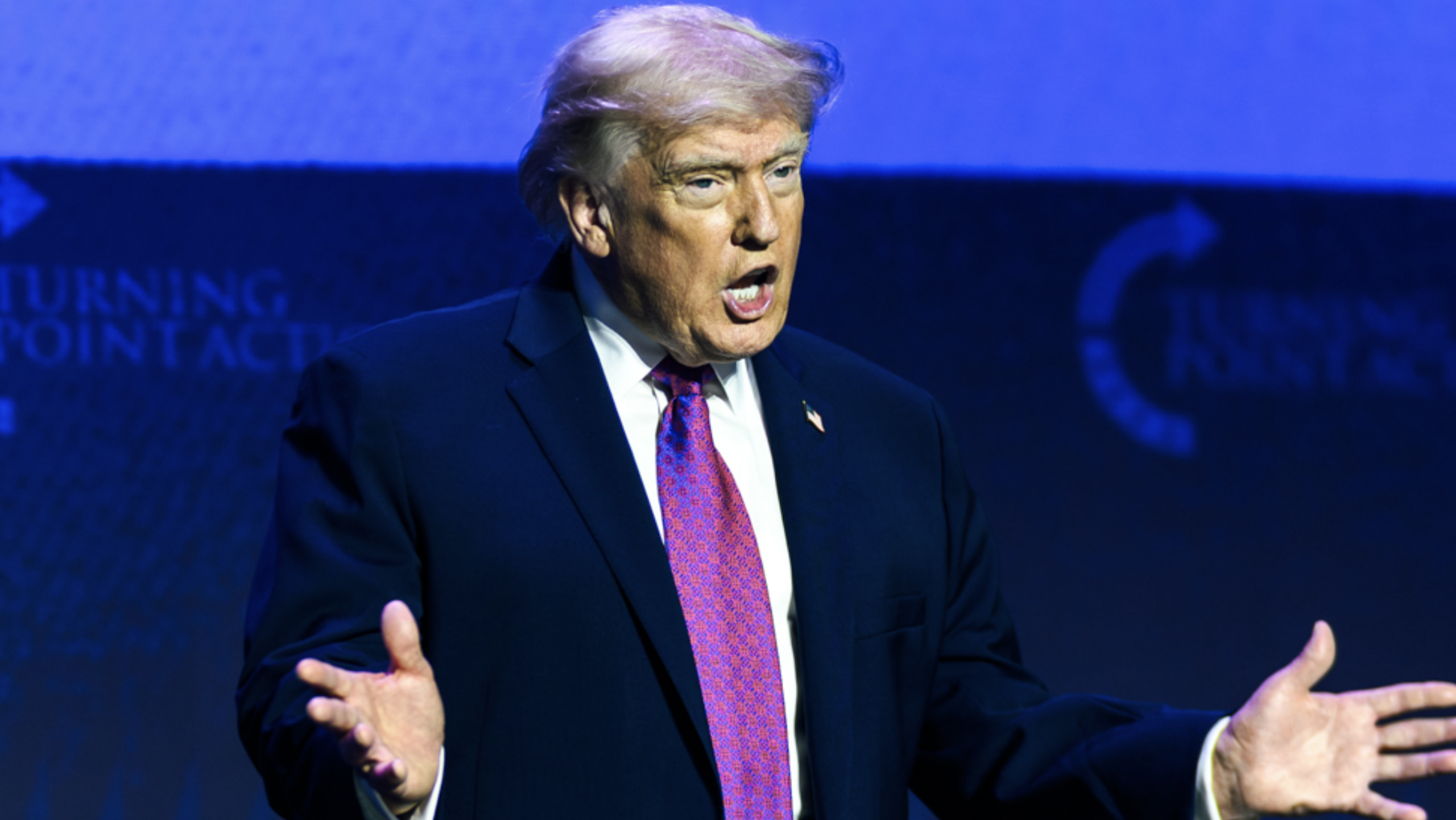
President Donald Trump urged Iran to accept defeat during remarks to reporters on May 4, 2026, arguing that continued resistance was futile given the overwhelming U.S. military advantage demonstrated in recent operations.
Speaking after signing a proclamation restoring the Presidential Fitness Test, Trump described the conflict as one-sided and called for Iran to formally acknowledge the situation through surrender.
“Okay, that’s not the way we play. No, we do it the old-fashioned way,” Trump said. “They should wave the white flag of surrender… They should wave the white the flag. The white flag of surrender in hockey. They say uh uncle, right? When are they going to cry uncle?”
He expressed regret over ongoing losses, particularly in naval engagements where Iranian forces in small boats confronted superior U.S. assets. Trump recounted Apache helicopters quickly neutralizing threats from vessels armed only with light machine guns.
The president highlighted the effectiveness of American forces, noting the minimal risk to U.S. personnel and the precision of responses. He described one incident where a warning shot disabled a ship’s engine from miles away.
Trump pointed to the broader military picture, stating that Iran’s navy, air force, and leadership had been largely eliminated. These successes, he argued, left Iran with little leverage to prolong the fight.
Negotiations remained stalled, with Trump expressing dissatisfaction over Iran’s latest proposals sent via mediators. Reports indicated Iran had shown some flexibility on sequencing steps involving the Strait of Hormuz but sought to defer nuclear discussions.
Despite the ceasefire, incidents involving small Iranian boats persisted in the Strait of Hormuz area. Trump maintained that the U.S. held a position of total dominance and that Iran should recognize this reality.
He emphasized the human cost, calling the continued engagements “so unnecessary” while praising the U.S. military as the greatest in the world. Trump noted that American forces had built a decisive edge during his administrations.
The president’s message framed surrender not as humiliation but as the rational choice to prevent further losses for the Iranian people. He contrasted this with past approaches he viewed as ineffective.
Trump’s comments came amid domestic discussions about the war’s costs and unpopularity, yet he reiterated the necessity of denying Iran nuclear capabilities.