
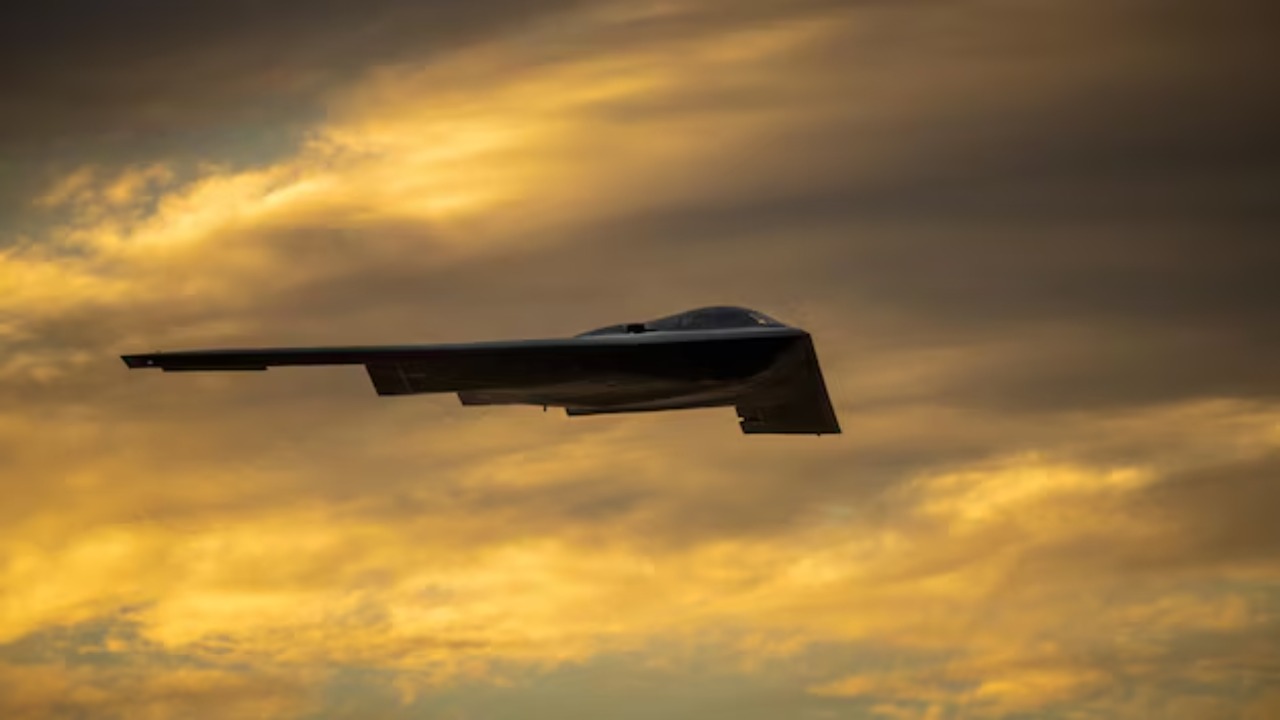
The B-2 Spirit stealth bomber stands as a remarkable feat of contemporary military technology, specifically designed to handle some of the most formidable weapons in the United States arsenal. Among these armaments, the 30,000-pound Massive Ordnance Penetrator (MOP) is particularly notable. This bomb, engineered to obliterate deeply buried and heavily fortified enemy structures, is the heaviest conventional bomb in existence. Here, I delve into why the B-2 bomber remains the sole aircraft capable of delivering such a colossal bunker-buster.
The Unique Design of the B-2 Bomber
The B-2’s stealth technology plays a pivotal role in its ability to carry out missions undetected by enemy defenses. Its radar-evading design is the result of years of innovation in materials and aerodynamics, allowing it to slip past sophisticated air defense systems that protect high-value targets. The aircraft’s unique flying wing design, combined with radar-absorbent materials, reduces its radar cross-section drastically. This stealth capability is crucial when delivering heavy ordnance like the MOP, as it ensures the bomber can reach and engage targets without being intercepted or detected.
Beyond its stealth, the B-2’s structural capacity further distinguishes it from other military aircraft. The bomber’s airframe is specifically engineered to carry and deploy extremely heavy payloads, including the MOP. Its internal bays are designed to accommodate large and heavy bombs, allowing it to maintain aerodynamic efficiency while carrying out its missions. This capability to bear heavy ordnance differentiates the B-2 from other bombers, which may either lack the necessary payload capacity or the design to carry such a unique piece of weaponry.
Capabilities of the Massive Ordnance Penetrator
The Massive Ordnance Penetrator is an engineering marvel in its own right, designed with the express purpose of targeting deeply buried bunkers. Weighing in at 30,000 pounds, the MOP is not only the heaviest conventional bomb but also one of the most powerful. It is capable of penetrating through 200 feet of concrete before detonating, making it ideal for neutralizing hardened underground facilities. The bomb’s sheer weight and explosive power are a testament to its design, intended to achieve maximum impact on fortified targets.
Deploying a bomb as large as the MOP poses significant logistical and technical challenges. The size and weight require an aircraft with both the structural integrity and payload capacity to transport it. The B-2 is uniquely suited to meet these challenges due to its design, which can accommodate the bomb internally, preserving its stealth profile. Additionally, the B-2’s advanced avionics and targeting systems ensure that the MOP can be deployed with precision, maximizing its effectiveness against intended targets.
Operational Advantages of the B-2/MOP Combination
The combination of the B-2’s advanced targeting systems and the MOP’s destructive power represents a formidable strategic asset. The bomber’s precision-guided capabilities allow for pinpoint accuracy, ensuring that the MOP hits its intended target with devastating effect. This precision is crucial for reducing collateral damage and increasing mission success rates. When coupled with the bomb’s sheer destructive power, the B-2/MOP combination is capable of neutralizing some of the most secure and strategically important enemy targets.
Moreover, the B-2’s operational range and refueling capabilities significantly enhance the strategic flexibility of the MOP. The bomber can reach virtually any point on the globe, making it a critical tool in the United States’ strategic arsenal. This global reach, combined with the ability to carry such a powerful weapon, allows for rapid response to emerging threats and provides a significant deterrent to adversaries who may consider developing or using fortified facilities for hostile purposes.
Comparison with Other Bomber Aircraft
Other U.S. bombers, such as the B-52 Stratofortress and the B-1 Lancer, are not suitable for carrying the MOP due to various limitations. The B-52, while capable of carrying a large payload, lacks the stealth capabilities necessary to evade advanced air defense systems. It is a venerable aircraft with a long history of service, but its design does not allow for the same level of penetration into hostile airspace as the B-2. Similarly, the B-1 Lancer, although featuring a higher speed than the B-52, still falls short in terms of stealth and payload capacity for a bomb as heavy as the MOP.
Historically, bomber aircraft have evolved significantly, with each generation bringing new capabilities and features. From the propeller-driven bombers of World War II to the jet-powered strategic bombers of the Cold War, advancements have focused on increasing payload, range, and survivability. The B-2 represents the pinnacle of this evolution, combining stealth, payload capacity, and advanced avionics to create an unmatched platform for strategic bombing missions. It stands as the only aircraft capable of delivering the MOP, a testament to its advanced design and capability.
Implications for Modern Warfare
The ability to deploy the MOP with the B-2 has significant implications for modern warfare, particularly in terms of deterrence and defense. The threat of being able to destroy deeply buried and fortified structures acts as a powerful deterrent against adversaries considering the development of such facilities. This capability enhances the United States’ ability to project power and maintain strategic superiority, influencing global military strategy and potentially discouraging the proliferation of underground bunkers and other hardened facilities.
Looking to the future, advancements in both bomber and ordnance technology could further enhance or replace the current capabilities of the B-2/MOP combination. Developments in materials science, propulsion, and stealth technology may lead to new bombers that offer even greater range, payload capacity, and evasion capabilities. Likewise, innovations in explosives and guidance systems could result in more powerful and precise ordnance. As military technology continues to evolve, the strategic landscape will shift, necessitating ongoing adaptation and innovation in response to emerging threats and opportunities.