
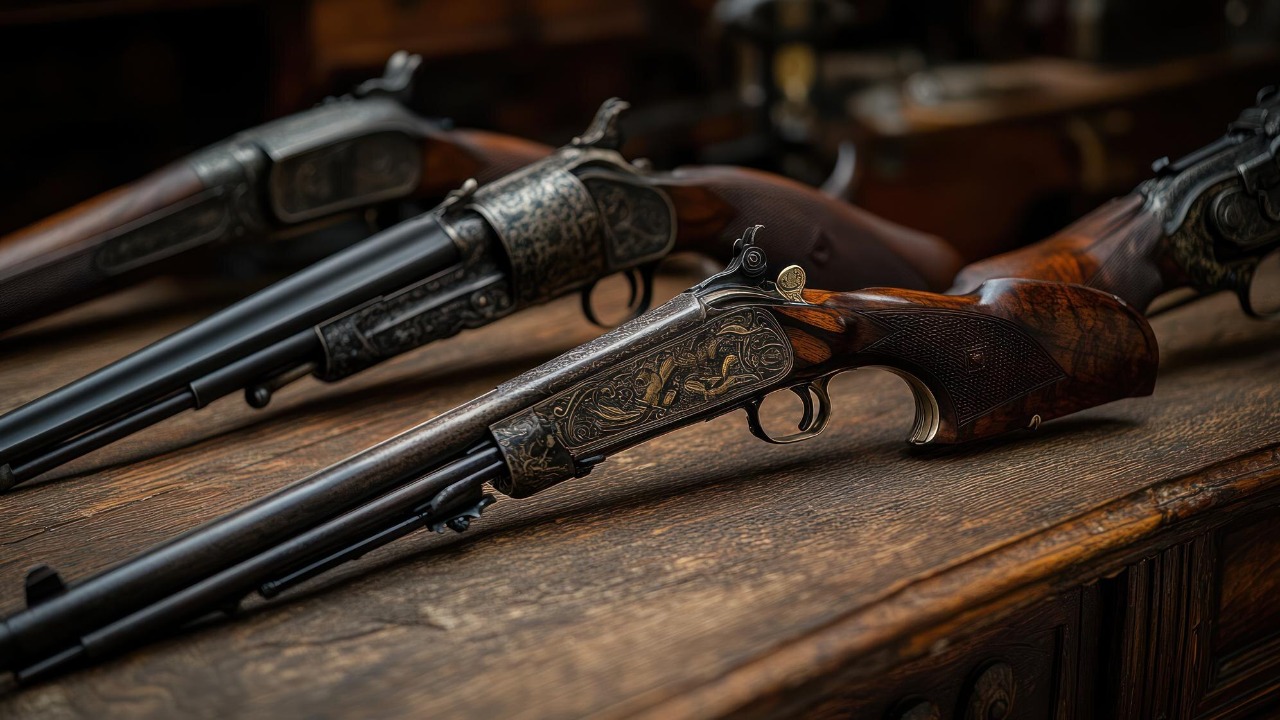
Firearms outlive the firms that build them with a regularity few other products can match. Long after factory gates are locked and brand names slip into the archives, rifles, pistols, and revolvers from those shuttered workshops continue to cycle reliably in fields, on ranges, and in collections. The persistence of these guns turns defunct manufacturers into quiet partners in modern shooting, their designs still shaping how people think about reliability, ergonomics, and power.
That endurance rests on simple mechanical soundness as much as on nostalgia. Classic patterns that proved themselves in war, policing, or civilian use keep finding hands that trust them, even as newer polymers and optics crowd display cases. The result is a living ecosystem in which vanished companies still have a daily presence, embodied in steel and wood that refuse to become obsolete.
Battlefield legends outlasting their makers
Some familiar firearm silhouettes in modern conflicts originate from factories and design bureaus that no longer exist, yet their rifles remain widely used. The AK platform is a prime example: the original AK-47, designed by Mikhail Kalashnikov, has been in circulation for over 75 years and continues to appear in conflicts, crime scenes, and training ranges worldwide. That staying power is not just a matter of volume; it reflects a design that tolerates poor maintenance, rough handling, and crude ammunition, so users in unstable regions keep relying on it even as newer rifles appear in catalogs, a reality captured in detailed examinations of the AK-47.
Older bolt actions tell a similar story of durability outliving corporate structures. The Mosin Nagant, described as the most used firearm in the world in some historical overviews, has reportedly served in over 60 wars since its introduction. This 130-year-old rifle, first designed in 1891 by Sergey Mosin, still appears in hunting camps and militia arsenals where its long barrel and rugged action are trusted. Enthusiasts who document the continued use of the Mosin Nagant often point out that the factories and state systems that produced it have been reorganized, renamed, or shut down, yet the rifle itself continues to function as intended.
Defunct American brands with living legacies
In the United States, the list of shuttered firearms firms reads like a roll call of once-prominent names, yet their guns still anchor safes and gun racks. Historical references catalog companies such as Raven Arms, Remington Arms, Remington Outdoor Company, Remington Rand, Sabre Defence, and Seecamp among defunct manufacturers whose products remain in circulation. Many of these brands supplied sidearms, pocket pistols, or service weapons that owners continue to maintain, and the persistence of those designs keeps collectors and shooters combing auction sites for specific models documented in the category of defunct manufacturers.
Even companies that survive in name only can see their heritage carried forward by successors that borrow branding or design cues. One modern producer explicitly connects itself to the historic Springfield Armory in Massachusetts, which once manufactured firearms for the Revolutionary War and subsequent conflicts. The original government armory has long since been converted to other uses, yet its association with American arms production still influences how a contemporary firm markets its rifles and pistols.
Classic handguns that refuse to fade
Handguns show particularly clearly how a discontinued manufacturer can leave behind a design that never really disappears. Enthusiast guides to older firearms still available on the market point to revolvers such as the Starr 1858 Revolver, described as a rugged and workmanlike selective double-action design that was considered a wonder of its age. Although the original maker no longer competes in the modern handgun business, shooters can still acquire reproductions and surviving originals.
Other pistols live on through both direct use and reinterpretation. The compact fighting pistols associated with brands such as Devel, for instance, have become collectible now that Devel is long gone, with doors closed and machinery sold off, yet their concepts echo in modern carry guns. Commentators describing how Devel pistols became sought-after collector items that fetch premium prices often pair that story with the rise of contemporary makers like Glock, SIG, Beretta, and Heckler & Koch, showing how one company’s closure can coexist with a thriving secondary market and a design lineage that influences current production.
Why old guns stay relevant in a modern market
The continued use of firearms from defunct makers is not simply an exercise in nostalgia; it reflects how well certain mechanical ideas solve enduring problems. Commentators who argue that old weapons are still weapons stress that even an aging rifle or pistol, if well maintained, can perform its core function effectively. In that view, shooters who prioritize reliability and familiarity may see little reason to abandon a proven design for the latest innovation.
At the same time, the broader firearms industry treats this legacy as both inspiration and cautionary tale. Historical surveys of American gun making describe how legendary firearms and technological developments are woven into the nation’s story, noting that successive generations of designers have built upon earlier designs. That lineage runs from early revolvers through the ArmaLite AR-18 machine gun and beyond, showing that even as companies close or consolidate, their ideas feed directly into the next wave of products.