
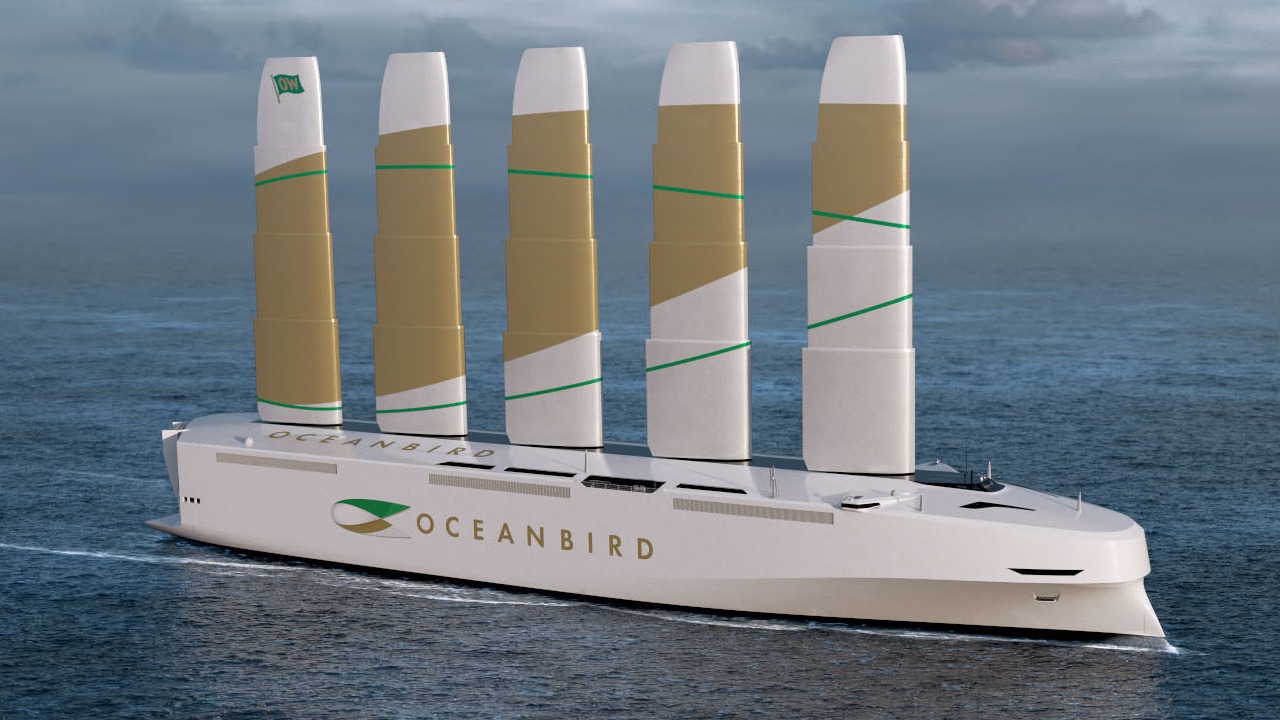
A new generation of wind-assisted propulsion is moving from concept sketches to real hardware on the decks of commercial freighters. At the center of that shift is a giant tilting sail structure of roughly 6,000 square feet that aims to trim fuel use by about 10 percent on long trade routes. For an industry under mounting pressure to cut emissions without sacrificing reliability, that single-digit saving could mark a quietly transformative step.
Unlike the canvas rigs that once drove clipper ships, these modern wings are engineered as rigid foils that can pivot, tilt, and fold to suit changing conditions and port operations. Sized to tower above a cargo vessel’s deck, the latest design is meant to integrate with existing engines rather than replace them, turning wind into a steady assist that cuts both fuel bills and greenhouse gas emissions.
The giant tilting wing sail concept
The new system revolves around a rigid wing that offers roughly 6,000 square feet of surface area, effectively turning the ship into a hybrid between a motor vessel and a wind-powered craft. Reporting on the project describes a single structure that can be tilted down toward the deck, allowing the ship to pass under bridges or enter ports where air draft is restricted while still benefiting from a large aerodynamic profile in open water. By using a smooth foil rather than fabric, the designers aim to generate consistent lift across a wide range of wind angles, which is vital for commercial schedules that cannot simply wait for perfect conditions.
The technology is being developed under the name Oceanbird, described in coverage as a joint venture involving Swedish maritime interests seeking to scale wind assistance for deep-sea cargo trades. In descriptions of the project, the wing is presented as part of a broader family of devices that can be scaled and combined, with the 6,000-square-feet version pitched for large bulkers and car carriers that have the deck space and stability margins to carry such a structure. One report explains that an undisclosed shipowner has already placed an order for a tiltable unit so that the first commercial installation can be evaluated in real service while the company refines performance models for different routes.
From 10 percent savings to higher potential gains
The headline target for the new wing is a reduction in fuel use of about 10 percent on a typical voyage, a figure that has been repeated in several descriptions of the project. That estimate assumes the sail works in concert with the main engine, trimming the load on the propeller rather than trying to drive the vessel on wind alone, which would be impractical for schedules that must hit fixed terminal slots. The promise, therefore, is not a romantic return to sail, but a modest, bankable efficiency gain that can be stacked with slower steaming, hull coatings, and better routing software to deliver meaningful cuts in both fuel costs and emissions.
Other reports suggest that similar tilting wing installations, sized at about 557 m² or 6,000 square feet, could achieve larger savings in favorable conditions, with one analysis citing potential reductions of up to 18 percent in fuel consumption on selected routes. That higher figure reflects scenarios with consistent wind patterns and optimized voyage planning, which are not guaranteed on every passage but illustrate the upside if operators integrate wind assistance into their broader commercial strategies. The same coverage notes that companies are already scheduling installations in Europe from 2027 onward, a timeline that hints at growing confidence that these devices can move from pilot projects to fleet programs once early performance data is in hand.
How the wing fits into the wider wind-assist movement
The Oceanbird project does not stand alone, and its giant tilting foil is part of a wider push to harness wind for modern shipping. One established example is the use of rotor sails, tall spinning cylinders that exploit the Magnus effect to generate lateral force and help push a vessel forward. Providers of these systems highlight average fuel savings in the mid-single digits for suitable routes, and they emphasize that gains can scale when several rotors are installed on the same hull, a pattern that offers a useful benchmark for what a 6,000-square-feet rigid wing might deliver in practice when combined with other upgrades.
There is also a growing track record of charterers and cargo owners backing wind-assisted retrofits on the ships that carry their goods. In one prominent case, a major commodities group partnered with a technology firm to fit a bulk carrier with large rigid wing sails, with the goal of cutting emissions intensity while keeping the vessel on standard commercial rotations. That collaboration has been presented as a proof of concept showing how industrial shippers can use their buying power to support wind technology on chartered vessels, a model that aligns with the undisclosed shipowner investing in the Oceanbird tilting wing as part of its decarbonization plans.
Commercial momentum and what comes next
Evidence of market appetite for very large wing sails can also be seen in separate coverage of a massive 6,000-square-foot wing ordered by a shipowner that intends to deploy it on long-haul routes where wind conditions are favorable. That report describes a device of similar scale to the Oceanbird concept, again targeting up to 10 percent fuel savings and highlighting the appeal of a tiltable design that can be lowered to improve safety in extreme weather or to clear port infrastructure. The same project is framed as a response to tightening efficiency regulations, with the shipowner seeking a relatively quick retrofit that can be installed on an existing hull rather than waiting for a newbuild design.