
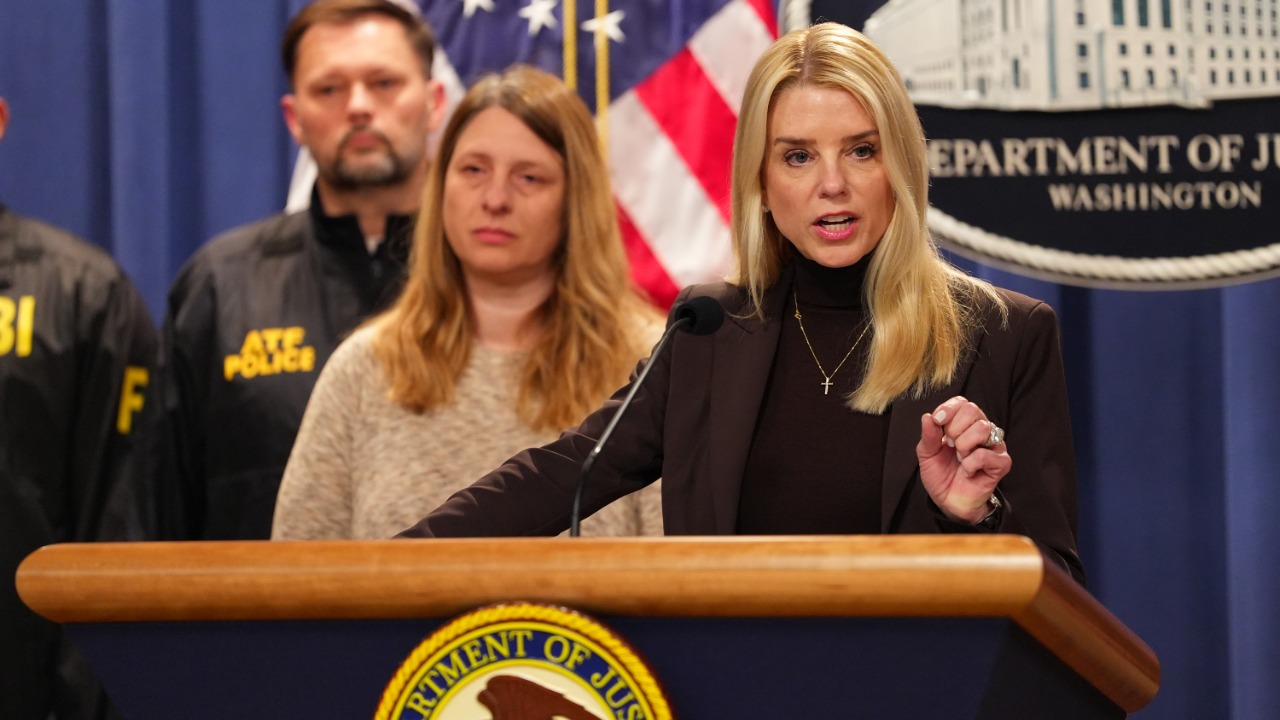
Attorney General Pam Bondi walked into Congress promising transparency on the Jeffrey Epstein files, yet walked out facing accusations that she is hiding the most politically sensitive names. Lawmakers pressed her on why associates and other figures tied to Epstein remain shielded, even as victims and some members of Congress push for fuller disclosure. The clash has turned a long-running scandal over abuse and impunity into a fresh fight about secrecy inside the Justice Department itself.
At the center of the dispute is a basic question of who gets protected when the government controls explosive evidence. Bondi insists that redactions and limited releases are needed to safeguard victims and ongoing cases. Her critics counter that the current approach looks more like protection for the powerful, especially as more details leak out about which high-profile men appear in the records but not in public filings.
Bondi on the defensive over secrecy and redactions
Bondi has tried to frame her handling of the Epstein files as a careful balance between public accountability and legal duty, yet the hearing exposed how little patience many lawmakers now have for that argument. She repeatedly pointed to privacy rules and ongoing inquiries when asked why the public still cannot see the full roster of Epstein associates, even after years of litigation and partial document dumps. Her stance that broad disclosure could retraumatize survivors and jeopardize pending investigations has become the central justification for keeping key names under seal.
That defense ran into a wall once lawmakers began citing specific gaps in the record and pressing her on why certain powerful figures appear to benefit from those gaps. In one exchange highlighted in a short video clip, Bondi insisted that she would not discuss particular associates in an open session, a refusal that only sharpened suspicion that political sensitivity is driving redactions as much as legal constraint. Her reluctance to engage on individual names contrasted with her willingness to speak broadly about Epstein himself, which critics read as an effort to keep the focus on a dead offender rather than living decision makers and enablers.
Clashes with Democrats over victim focus and political influence
The sharpest confrontations came when Democrats accused Bondi of shielding elites instead of centering the people Epstein abused. According to one account, Bondi clashed directly with Democrat Representative Jasmine Crockett and Democrat Representative Ted Lieu after they pressed her on why the department continued to conceal the identities of some Epstein associates while claiming to stand with survivors. Crockett and Lieu argued that the same secrecy that once allowed Epstein to operate is now being repurposed to keep the public from learning which powerful circles enabled him, and they challenged Bondi to explain how that serves any victim-focused mission.
Bondi responded that her priority remained the safety and privacy of those who came forward, and she warned that releasing unredacted material could expose victim information or compromise parallel inquiries. She pointed to internal guidance that she said required restraint and cited unspecified pending investigations as a reason to hold back. Democrats countered that her office has broad discretion to separate victim details from associate names, and they suggested that the department has been far more cautious when disclosure might embarrass high-level figures than when it might vindicate those who were harmed.
House Judiciary tensions and accusations of siding with perpetrators
The hearing inside the House Judiciary Committee captured a wider breakdown of trust between Bondi and key members of Congress who oversee her department. In the packed room, Attorney General Pam Bondi faced a barrage of pointed questions from both parties, but the most searing criticism came from Democrats who see the Epstein saga as a test of whether the Justice Department can police its own past failures. Video from the hearing shows Bondi sitting stiffly as members press her on why the department has not moved faster to unseal records, while she repeats that she is bound by legal and ethical limits that they themselves helped write.
At one point, Maryland Representative Jamie Raskin accused her directly of aligning with the wrong side of the scandal. He told her that, as attorney general, she had sided with perpetrators and ignored the victims, a charge that crystallized the frustration of those who believe the department is still more comfortable protecting institutions than exposing them. That exchange, captured in detail in a congressional recap, underscored how personal the dispute has become, with Raskin casting Bondi as an obstacle to justice rather than its guardian.
The atmosphere was so charged that even procedural questions took on a combative edge. One social media post described how Attorney General Pam asked a line of questioning that blended legal analysis with moral condemnation, as members invoked the long history of institutional failure in the Epstein case. For Bondi, the setting meant every answer was judged not just on legal precision but on whether it signaled a genuine break from that history, and by the end of the session, many lawmakers seemed unconvinced that such a break had occurred.
New revelations, surveillance concerns, and the fight over names
While Bondi tried to focus on process, some members of Congress used the hearing to spotlight new revelations that deepen concern about both secrecy and surveillance. Earlier this year, a US congressman revealed in open session the names of six men whose identities had been redacted in the Epstein files, including a US billionaire and a well-connected figure in British society, and questioned why the Justice Department continued to keep those names from the public record. That disclosure, described in detail in an account of six, undercut Bondi’s claim that secrecy is essential, since at least some of the redacted names are now already circulating in official transcripts.