
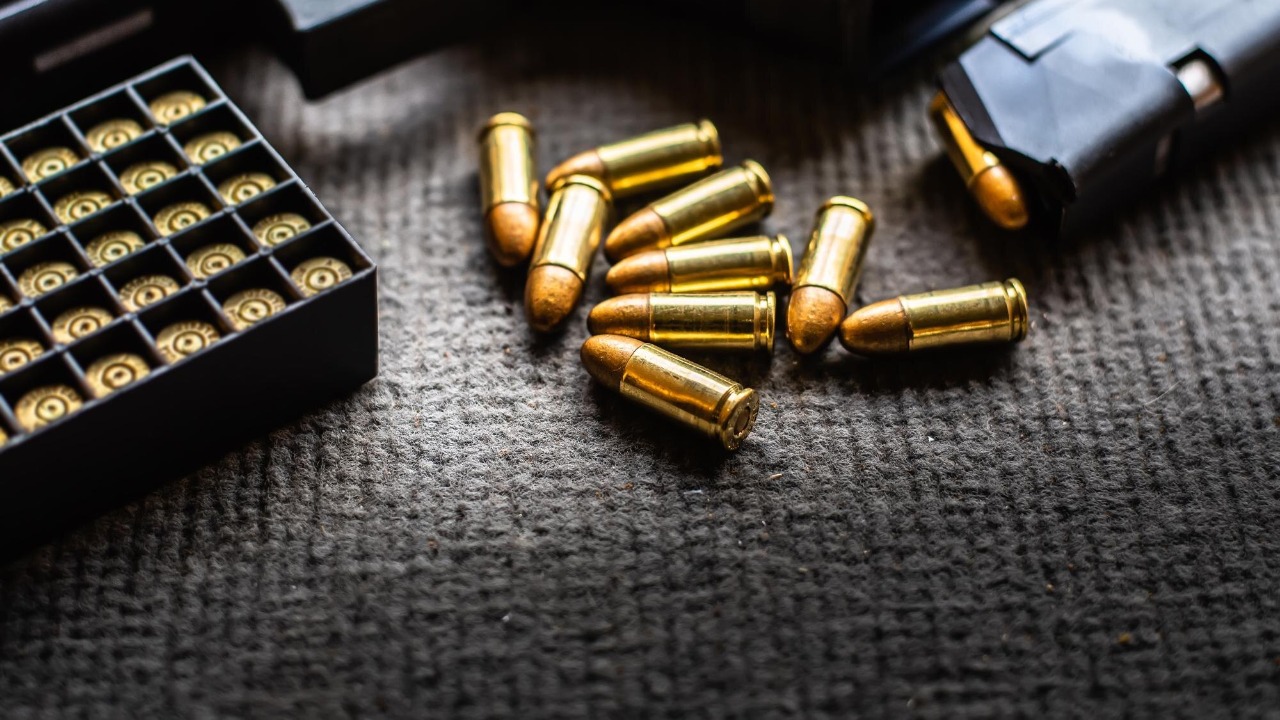
Handgun owners argue endlessly over whether 9mm or .45 ACP ends violent encounters more decisively, but modern testing paints a more clinical picture than caliber folklore. When the focus shifts from campfire stories to measurable performance, the question becomes how quickly each round can create fight‑stopping damage that a shooter can deliver on target under stress.
Ballistics data, law‑enforcement testing, and expert analysis now converge on a clear theme: both cartridges can be lethal, yet their real‑world effectiveness depends less on raw size and more on penetration, shot placement, and the shooter’s ability to fire accurate follow‑up rounds. The myth of a magic “one‑shot stop” gives way to a more nuanced comparison of how each caliber helps, or hinders, a defender trying to survive a few chaotic seconds.
Size, energy and the myth of “stopping power”
The .45 ACP has long traded on its reputation as a big, slow hammer, and that image starts with simple dimensions. The .45 ACP is bigger than the 9mm, which means a wider bullet and a larger frontal area cutting through tissue, a fact highlighted in many Quick Facts comparisons that list .45 as a heavier, larger‑diameter option. Traditional loads send that heavier projectile at moderate velocity, while 9mm typically relies on a lighter bullet moving faster, so on paper the two look like very different tools.
Yet when modern hollow points are tested in ballistic gel, the gap in terminal performance shrinks dramatically, and there is no appreciable ballistic or stopping power advantage that clearly separates one from the other in controlled conditions. Contemporary law‑enforcement style testing, including structured Ammo Testing Results overseen by the Federal Bureau of Investigation, shows that quality 9mm and .45 loads both penetrate to the depths agencies want and expand reliably. Once bullets reach the same vital structures, the body does not care whether the expanded diameter started life as 9mm or .45.
Capacity, recoil and how fast hits actually land
If raw “stopping power” is closer than legend suggests, the next question is how quickly a shooter can put effective rounds on target. Here, 9mm’s smaller cartridge size and lower recoil impulse translate into higher magazine capacity and faster, more controllable strings of fire. In side‑by‑side comparisons of Pros and Cons, analysts routinely list 9mm’s Pros as “Higher magazine capacity” and softer recoil, while .45 ACP is flagged for reduced round count and a heavier push in the hand, a tradeoff that becomes critical when a defender must fire multiple shots in a hurry, as detailed in one widely cited Pros and Cons breakdown.
That extra capacity is not about spraying bullets, it is about buying more chances to land the hits that matter when adrenaline spikes and fine motor skills erode. A compact 9mm that holds several more rounds than a comparable .45 ACP gives the defender more opportunities before a reload, and the milder recoil lets many shooters track their sights and press the trigger again without disturbing alignment. In practical terms, that means a higher likelihood of multiple accurate impacts in the first seconds of a confrontation, which is what actually ends fights faster than any theoretical edge in single‑shot damage.
What modern testing really says about 9mm and .45 ACP

Law‑enforcement protocols have quietly settled a debate that gun counters keep alive. When the Federal Bureau of Investigation and other agencies revisited caliber performance with modern ammunition, they found that 9mm, .40, and .45 all produced remarkably similar wound channels in calibrated gel once bullet design was held to the same standard. Photographs and measurements from structured Ammo Testing Results show that the expanded cavities and penetration depths of service 9mm and .45 ACP loads are entirely consistent with each other, reinforcing the conclusion that caliber alone does not dictate how quickly a threat is incapacitated in real life.
That finding dovetails with broader ballistic analysis that stresses penetration to vital organs over sheer diameter. If both 9mm and .45 ACP can reach the same depth through clothing and intermediate barriers, and both expand to comparable sizes, then the deciding factor becomes how reliably a shooter can place those rounds where they count. In that context, the larger .45 ACP, while still fully capable, no longer looks like a guaranteed shortcut to faster stops, but rather one of several viable choices that must be weighed against recoil, capacity, and shooter skill.
The enduring appeal of .45 ACP and what “Grandpa” got right
The cultural weight behind .45 ACP is hard to ignore, and much of it is rooted in its early reputation for Stopping Power and Ballistics Performance. Advocates point to the cartridge’s heavy, slow‑moving bullet and the confidence that comes from carrying a round long associated with military sidearms and classic 1911 pistols. Detailed discussions of .45 ACP’s history emphasize that the standard load was designed to push a substantial projectile at moderate speed, a combination that many shooters still trust instinctively.
Where “Grandpa” was arguably right is in insisting that a defensive handgun should fire a cartridge the user can control and handle confidently under stress, and for many experienced shooters that still means .45. The broad, heavy bullet can deliver impressive performance when placed accurately, and some find the slower, rolling recoil of .45 ACP easier to manage than the snappier impulse of smaller, higher‑pressure rounds. For those who train regularly and accept lower capacity in exchange for that familiar push, .45 remains a legitimate choice that can absolutely end a fight quickly when paired with modern expanding ammunition and disciplined marksmanship.
So which caliber really ends fights faster?
When all the data points are stacked together, the answer is less about caliber rivalry and more about context. Modern gel testing shows that There is no appreciable ballistic or stopping power gap between well‑designed 9mm and .45 ACP loads, so the cartridge that ends a confrontation sooner is usually the one that lets the defender deliver multiple accurate hits the fastest. For many shooters, that advantage tilts toward 9mm, thanks to higher capacity, softer recoil, and quicker follow‑up shots, especially in compact carry pistols where every round and every fraction of a second matters, a conclusion echoed in several Feb era comparisons that list 45 and 9mm side by side in Quick Facts tables.
At the same time, .45 ACP’s larger bullet and long track record still appeal to those who prioritize maximum individual round size and who are willing to trade capacity for that comfort. In capable hands, a .45 can be just as decisive as a 9mm, and both cartridges have proven lethal when used with modern hollow points that meet Federal Bureau of Investigation style penetration benchmarks. The practical takeaway is that caliber choice should follow the shooter’s ability to control recoil, place shots accurately, and carry a handgun that fits their body and training habits, because in the critical seconds of a real defensive encounter, it is hits, not headstamps, that actually stop the fight.