
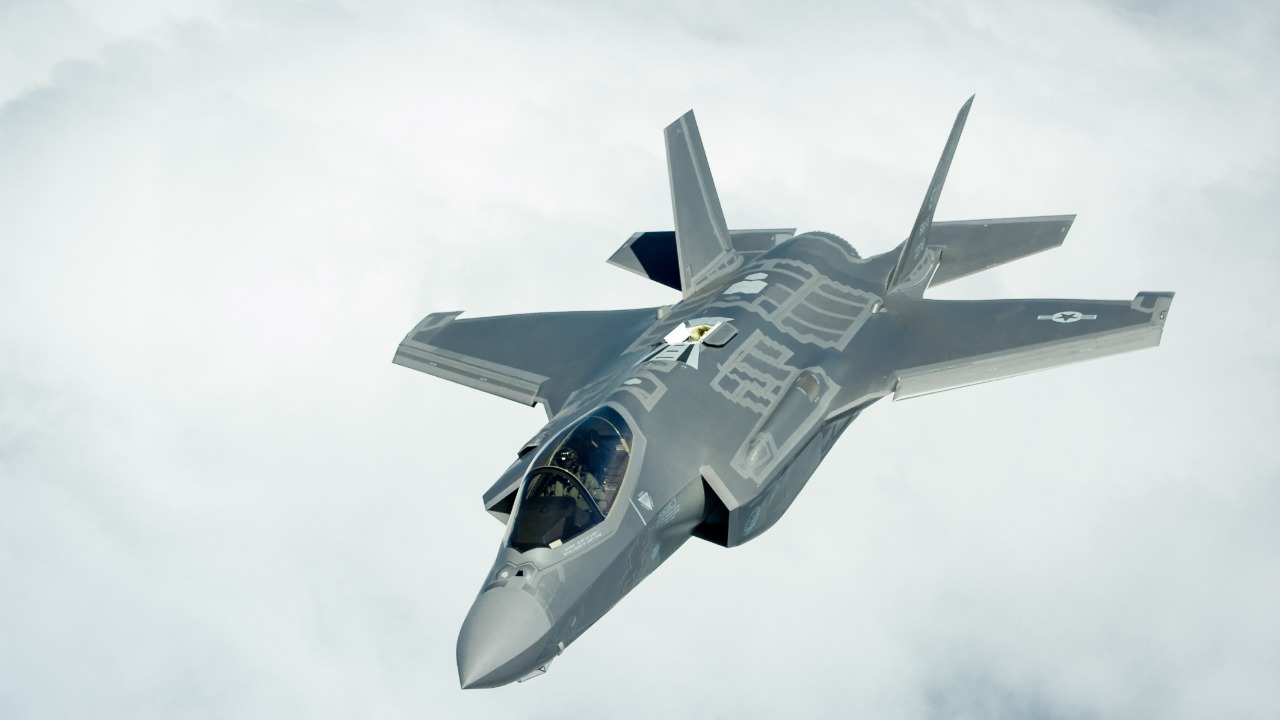
The United States has moved a major piece of its Gulf security architecture forward, clearing a potential $9 billion sale of Patriot PAC-3 interceptors to Saudi Arabia shortly after giving the green light for advanced F-35 warplanes. The package deepens a defense relationship that already makes the kingdom one of Washington’s most important security partners and largest arms customers. It also signals how the Trump administration intends to balance deterrence, alliance politics, and regional rivalries at a moment of intense scrutiny over American weapons transfers.
The Patriot decision, framed as a Foreign Military Sale to the Kingdom of Saudi Arabia, is formally justified as a way to bolster air and missile defense against regional threats. Yet the timing, coming on the heels of the F-35 approval and alongside large new sales to Israel, underlines a broader strategy to harden friendly states while preserving Israel’s qualitative military edge. The result is a layered, high-end arsenal that will shape the balance of power across the Middle Eastern theater for years.
The $9 billion Patriot package and what it buys
The State Department has determined that a possible Foreign Military Sale to the Kingdom of Saudi Arabia for Patriot Advanced Capability-3 Missile Segment Enhancement interceptors is in the interest of United States security, with an estimated cost of $9.0 billion. The formal notification from WASHINGTON describes a package of PAC-3 missiles and associated equipment that would significantly expand the kingdom’s ability to counter ballistic and cruise missile threats, using hit-to-kill technology that destroys incoming targets through kinetic impact rather than explosive proximity. The determination stresses that the transfer will not alter the basic military balance but will strengthen a partner that already fields Patriot batteries across key sites.
Officials describe the deal as part of a broader effort by the State Department to reinforce integrated air and missile defense in the Gulf, where Saudi Arabia has faced repeated attacks on energy infrastructure and urban centers. Reporting on the approval notes that the US has cleared the potential sale of Patriot interceptors worth approximately $9 billion to Saudi Arabia, characterizing the PAC-3 configuration as a core element of the kingdom’s layered shield. The notification to Congress frames the package as a way to improve defense readiness and protect critical facilities, while the underlying documentation on the Foreign Military Sale underscores that the estimated cost of $9.0 billion covers both missiles and support.
From F-35 approval to major non-NATO ally status
The Patriot move follows a landmark decision to provide F-35 stealth aircraft to Saudi Arabia after the kingdom was designated a major non-NATO ally of the United States. That designation, which President Donald Trump hailed as an elevation of the military partnership, opened the door to the same fifth-generation platform that has transformed air power for other close partners. The F-35 approval signaled that Washington is prepared to trust Riyadh with some of its most sensitive aviation technology, even as debates continue over human rights and the conduct of regional conflicts.
Earlier reporting detailed how Saudi Arabia was formally recognized as a major non-NATO ally and secured a deal for F-35 warplanes, a step that placed it in a select group of states with access to that aircraft. The status change was framed as a way to deepen interoperability with NATO forces while reinforcing deterrence against shared adversaries. In parallel, other coverage noted that Saudi Arabia has eyed a fleet of 48 F-35s, with analysts observing that, until now, Israel remains the only Middle Eastern country to operate F-35s. The combination of the new fighter deal and the Patriot package, therefore, marks a significant leap in capability for Saudi Arabia, even as the United States reiterates that Israel’s edge will be preserved.
Congressional review, industrial scale-up, and regional optics
Under United States law, major arms transfers of this kind require notification to the legislature, and the Patriot case is no exception. The Defense Security Cooperation Agency has informed Congress of the proposed PAC-3 sale and is awaiting approval to execute, giving lawmakers a defined window to raise objections or seek conditions. Parallel reporting notes that the US State Department has approved the potential sale of Patriot interceptor missiles to Saudi Arabia and that the Pentagon has emphasized the contribution to defense readiness, while the News Department and Author accounts describe the package as part of a wider set of approvals that also include systems for Israel.
The industrial backdrop is equally important. Earlier in the year, DOD was reported to be spearheading a deal to more than triple the number of Patriot PAC-3 interceptors through a long-term arrangement with industry, with the Pentagon and Lockheed Martin working on a seven-year framework for thousands of new missiles. That production push provides the capacity needed to support both United States forces and large foreign customers such as Saudi Arabia. At the same time, regional observers have highlighted that the US State Department has approved potential sales worth over $15 billion to Israel and Saudi Arabia in separate but nearly identical statements, while other analysis points out that the Trump administration has said the Gaza ceasefire should not come at the expense of Israel’s military edge in the region. The optics of approving large packages for both Israel and Saudi Arabia, including the $9 billion Patriot deal, are therefore inseparable from the broader political debate over American policy.
Layered cooperation: helicopters, training, and the evolving Gulf security framework
The Patriot and F-35 decisions sit atop a wider lattice of cooperation that includes rotary aviation, training, and sustainment. Earlier approvals covered $1B in Saudi Helicopter Support, Training, and associated services, with documentation noting that the US approves that package as the Kingdom Renews its F-35 Push. Those cases, which gave Congress days to review the files, show how Washington has been building Saudi capacity across multiple domains rather than relying solely on marquee fighter and missile programs. They also underscore that the relationship is as much about training pipelines and logistics as about hardware.