

Throughout history, tanks have been the backbone of armored warfare, demonstrating resilience and power on the battlefield. Some tanks, known for their durability and engineering, have withstood direct impacts and continued to perform their duties under fire. Below, I explore nine such tanks that left a lasting impression with their battlefield tenacity.
Sherman Firefly

The Sherman Firefly, a British variant of the American M4 Sherman tank, gained a formidable reputation during World War II. Fitted with a powerful 17-pounder anti-tank gun, it proved its mettle against German armor. Notably, during the Battle of Normandy, Sherman Fireflies were instrumental in countering the feared Tiger tanks.
Despite its relatively thin armor, the Firefly’s ability to survive direct hits was aided by its strategic use in mixed formations with other Shermans, providing a blend of firepower and survivability. Its battlefield resilience was crucial in achieving Allied objectives in Europe.
T-34
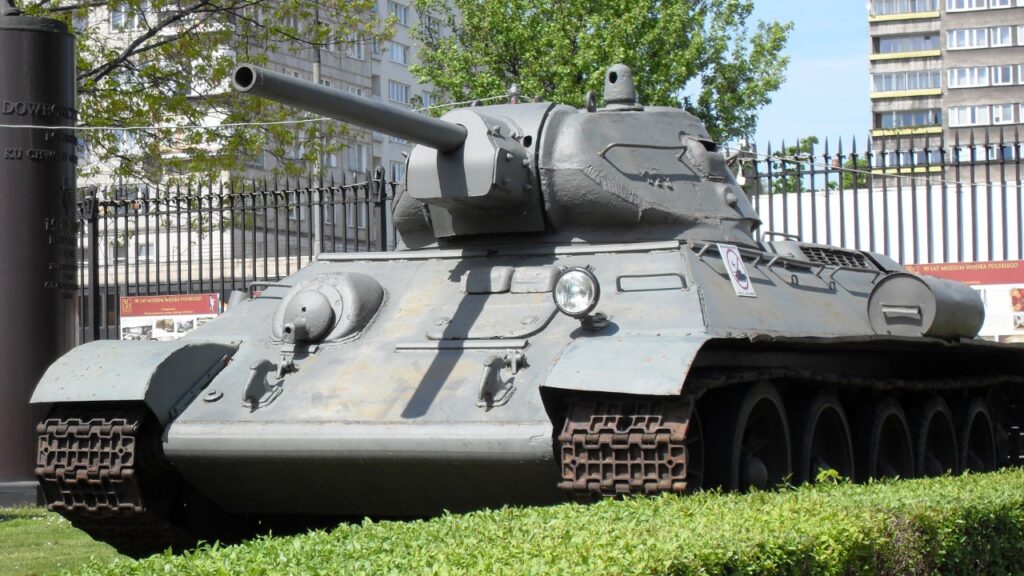
The Soviet T-34 is often lauded as one of the greatest tanks of World War II, thanks to its robust armor and mobility. It played a pivotal role on the Eastern Front, often surviving engagements with superior German tanks. The sloped armor design enhanced its defensive capabilities, allowing it to deflect enemy fire effectively.
One famous incident in 1941 involved the T-34s of the 4th Tank Brigade, which held their ground against a larger German force at the Battle of Mtsensk. Their ability to withstand punishment and continue fighting exemplified the T-34’s resilience and contributed to the Soviet’s eventual victory.
Tiger I
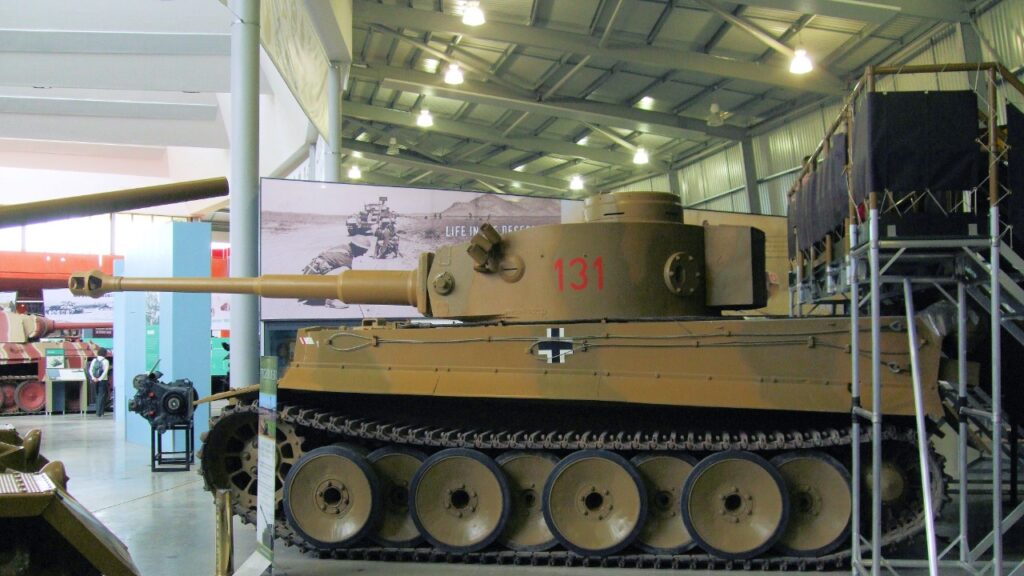
The German Tiger I tank was a symbol of fear for Allied forces during World War II. It was renowned for its thick armor and powerful 88mm gun, which allowed it to both absorb and deliver significant damage. Despite its heavy weight, the Tiger I’s engineering allowed it to withstand direct hits from many Allied tanks.
One such example occurred during the Battle of Villers-Bocage in 1944, where a single Tiger I, commanded by Michael Wittmann, managed to disable numerous British armored vehicles while surviving multiple hits, showcasing its remarkable battlefield resilience.
M1 Abrams

The M1 Abrams, the main battle tank of the United States Army, has been a key player in conflicts from the Gulf War to the present day. Its composite armor, including depleted uranium layers, provides exceptional protection against enemy fire. The Abrams has demonstrated its durability in numerous engagements, often sustaining hits that would incapacitate other tanks.
During the 2003 invasion of Iraq, Abrams tanks were frequently reported to have survived direct RPG and anti-tank missile strikes, continuing to operate effectively on the battlefield. Its robust design and advanced technology have kept it at the forefront of modern armored warfare.
Challenger 2

The British Challenger 2 tank is known for its outstanding protection and firepower. Its Chobham armor is among the most advanced in the world, providing exceptional resistance to enemy projectiles. The Challenger 2 has seen action in various conflicts, notably in Iraq.
In 2003, a Challenger 2 was famously hit by 14 RPGs and a MILAN anti-tank missile during the Battle of Basra and survived, continuing its operation without any crew casualties. This incident underscores the tank’s impressive survivability and the effectiveness of its design.
Merkava Mk. IV
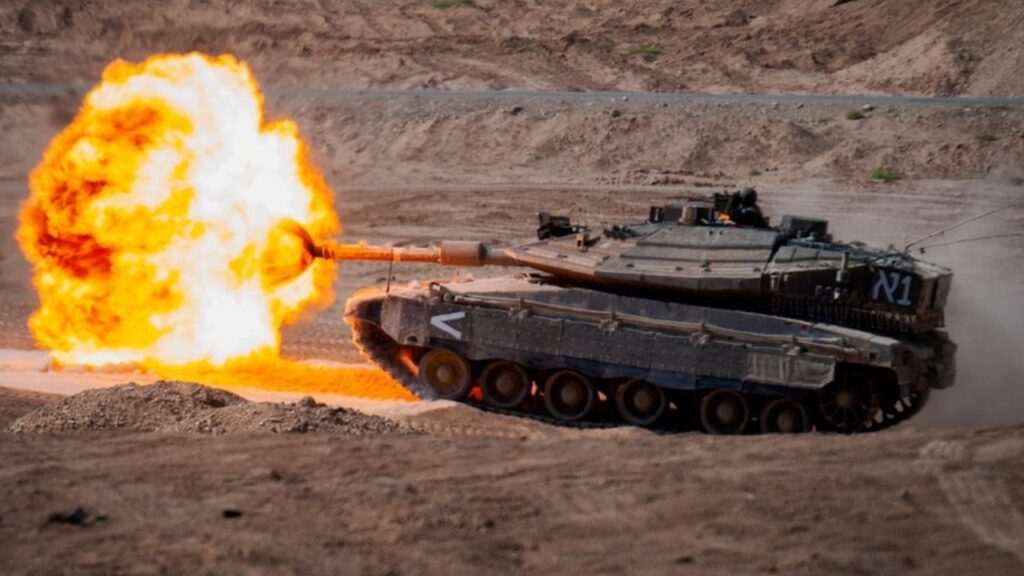
Israel’s Merkava Mk. IV is a marvel of modern tank design, emphasizing crew protection and survivability. Its modular armor can withstand direct hits from a variety of anti-tank weapons. The Merkava has been extensively used in conflicts involving Israel, where its resilience has been well-documented.
During the 2006 Lebanon War, Merkava Mk. IV tanks were subjected to numerous anti-tank missile attacks. Despite these challenges, they continued to provide effective support, showcasing their ability to endure and adapt under fire, a testament to their advanced engineering.
Panzer IV

The Panzer IV was a workhorse of the German army during World War II, serving on all fronts throughout the conflict. Its versatility and durability were key to its success. The Panzer IV’s armor was continually upgraded throughout the war, allowing it to withstand direct hits that would have destroyed earlier models.
One notable incident occurred during the Battle of Kursk, where Panzer IVs faced off against Soviet T-34s. Despite being outnumbered, many Panzer IVs survived direct engagements, demonstrating their capacity to both take and deal damage effectively.
Centurion

The British Centurion tank has seen service in numerous conflicts since its introduction in the post-World War II era. Its design emphasized balanced armor and firepower, making it highly effective in various combat situations. The Centurion has a history of surviving direct hits and continuing to fight.
During the Korean War, Centurions were praised for their ability to withstand attacks from North Korean and Chinese forces. Their resilience in harsh conditions and under enemy fire made them a valuable asset, contributing to their long service life and widespread use.
Leopard 2

The German Leopard 2 tank is considered one of the best main battle tanks in the world, renowned for its firepower, protection, and mobility. Its advanced composite armor gives it a high level of survivability against modern threats. The Leopard 2 has been used by many countries in various conflicts.
In Afghanistan, Leopard 2s deployed by Canadian forces demonstrated their resilience by surviving multiple IED and RPG attacks, continuing to support infantry operations effectively. The tank’s robust design and adaptability have cemented its reputation as a formidable force on the battlefield.