
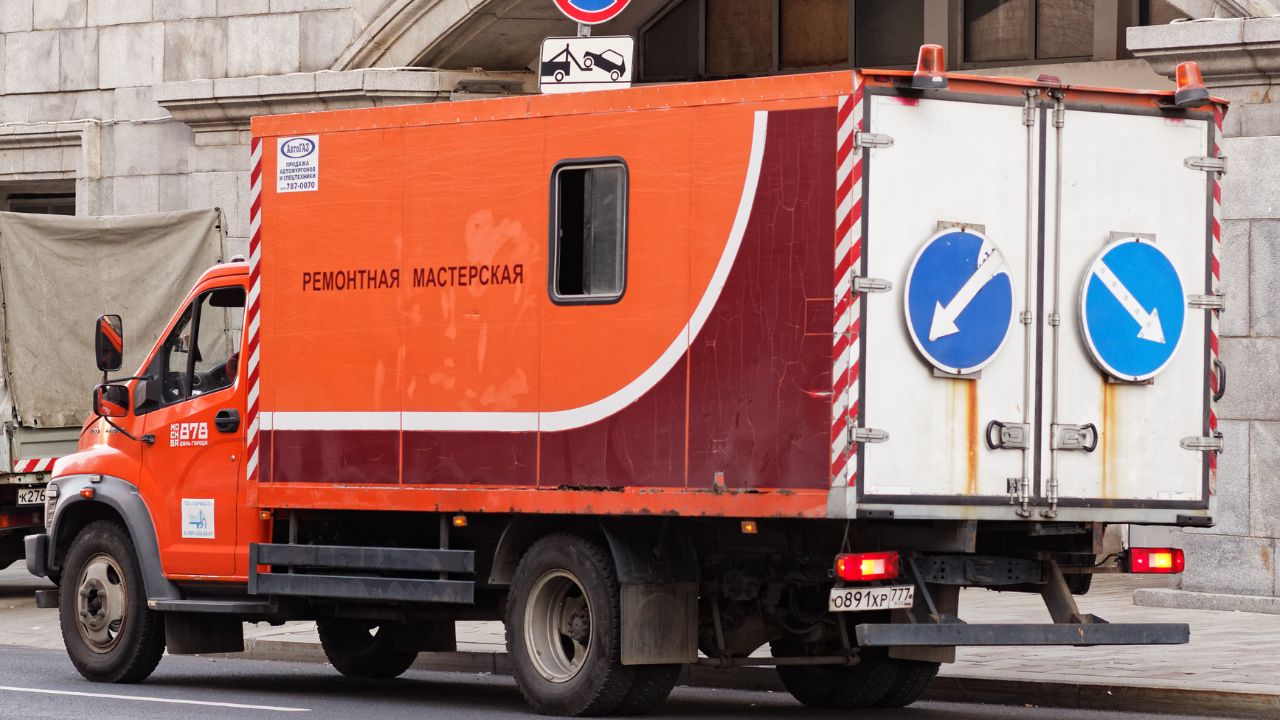
The biggest military vehicle stories tend to spotlight the newest protected platforms, digital backbones, and sensor integration. But behind every high-tech kill chain is a lower-tech constant: ammunition, fuel, spare parts, and food still move on trucks. When roads are poor, spares are limited, units are dispersed, and maintenance is done under stress, straightforward engineering can help keep a convoy moving—and keep a unit supplied.
This isn’t nostalgia, and it isn’t a claim that older designs are automatically better. Modern threats—mines, drones, precision fires—often drive armies toward armor kits, electronic countermeasures, and more networked fleets. Those additions can improve survivability and coordination, but they also add weight and maintenance burden. That’s why certain rugged logistics trucks, or truck families built around common parts and accessible repairs, continue to show up in service, storage, and second careers worldwide.
What “simple engineering” really buys you
In military logistics, readiness is a combat multiplier. A truck that’s easier to diagnose, recover, and keep supplied with common components can sustain artillery, air defense, and maneuver units when support is stretched. That matters even more in high-intensity conflict, where attrition and dispersed operations punish fragile maintenance concepts.
Simplicity also supports mobilization and stockpiling. If a vehicle family is mechanically straightforward and shares parts across variants, it can be easier to train maintainers quickly and hold spares in depth. The trade-offs are real: simpler designs can be less efficient, may struggle with modern emissions and fleet-management requirements, and offer limited protection unless upgraded.
1) M35 “Deuce-and-a-Half” (U.S.)
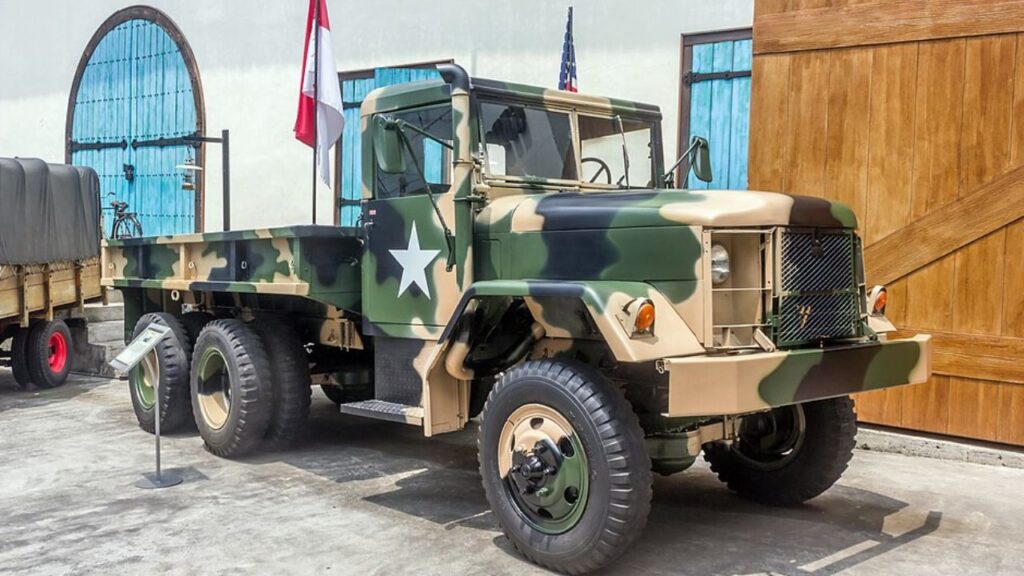
The M35 series is a classic logistics workhorse, remembered more for durability and maintainability than for electronics or sophistication. The fact that the “Deuce-and-a-Half” label is widely recognized says something about how deeply this truck family embedded itself in U.S. military logistics culture.
The lesson isn’t that old trucks are inherently superior. It’s that fleets designed around repairability and practical support can keep moving under rough handling and imperfect conditions. The M35’s long shadow reinforces a simple point: longevity can be a deliberate outcome of design priorities, not just an accident of history.
2) AM General HMMWV “Humvee” (U.S.)

The Humvee became ubiquitous across U.S. Army and U.S. Marine Corps formations in large part because it was flexible and generally maintainable. It also illustrates a key limitation of “simple and light” thinking: a base vehicle optimized for mobility and utility can face protection shortfalls when threats change.
That tension shaped how militaries think about upgrades. As armor kits and added mission equipment accumulate, the original concept can be strained by added weight and sustainment demands. The Humvee’s story is a reminder to separate the virtues of the base design from the realities of retrofit packages that can fundamentally change performance and maintenance burden.
3) Oshkosh HEMTT family (U.S.)
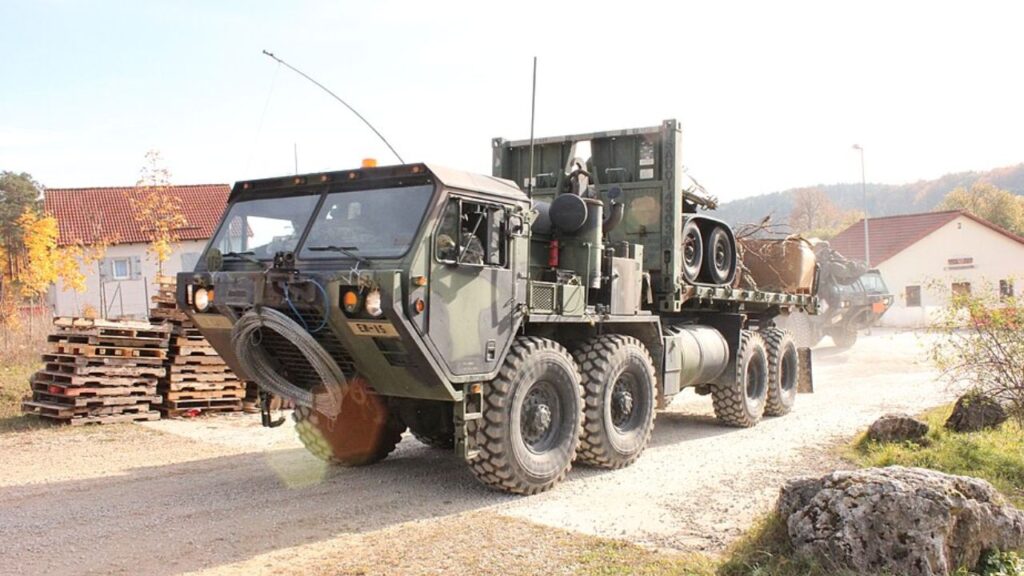
Heavy logistics is where rugged, maintainable engineering can matter most, because these trucks move bulk supplies and support specialized missions. The Oshkosh HEMTT family is a widely recognized U.S. example of a heavy tactical truck lineage used across multiple roles.
In this context, the value is less about any single specification and more about the family approach. Shared design DNA across variants can simplify training, maintenance practices, and spares planning—advantages that become more important as operations stretch out and repair capacity is pushed forward.
4) Ural-4320 (Soviet/Russian)

The Ural-4320 is often discussed in open reporting and public analysis as a rugged, field-repairable truck associated with Soviet/Russian logistics. Its reputation centers on operating in harsh climates and rough terrain with a design philosophy that favors straightforward repairs.
Vehicles in this mold highlight a practical reality: you can’t assume perfect diagnostics support or abundant spares at the point of need. A platform that can be kept running with basic tools and experience can help sustain dispersed units longer. That doesn’t make it survivable in a modern sense, but it can reduce the odds of logistics stalling for purely maintenance reasons.
5) GAZ trucks (Soviet/Russian)

GAZ trucks are another commonly referenced example when discussing widely distributed, serviceable designs in the Soviet/Russian ecosystem. Because “GAZ” spans multiple models and generations, it’s best treated here as a category rather than a single truck with fixed attributes.
The operational idea is scale and familiarity. When a vehicle type is common, parts knowledge spreads, workarounds are easier to share, and availability can improve—even when conditions are uneven. The downside is that older, simpler designs can bring costs in efficiency and may require additional measures to operate in high-threat environments.
6) Mercedes-Benz Unimog (Germany/NATO Europe)

The Mercedes-Benz Unimog is frequently cited for versatility and mechanical straightforwardness, which can make it useful across a wide range of support roles. In a European context—where terrain and infrastructure can vary sharply—vehicles that can handle diverse tasks without excessive complexity tend to keep their appeal.
In near-peer scenarios, that versatility can translate into resilience. A truck that can be adapted for multiple duties helps units improvise when planned supply flows break down. The familiar caveat still applies: versatility and maintainability don’t equal protection, and add-on equipment can quickly complicate sustainment.
7) MAN SX (Germany/NATO Europe)
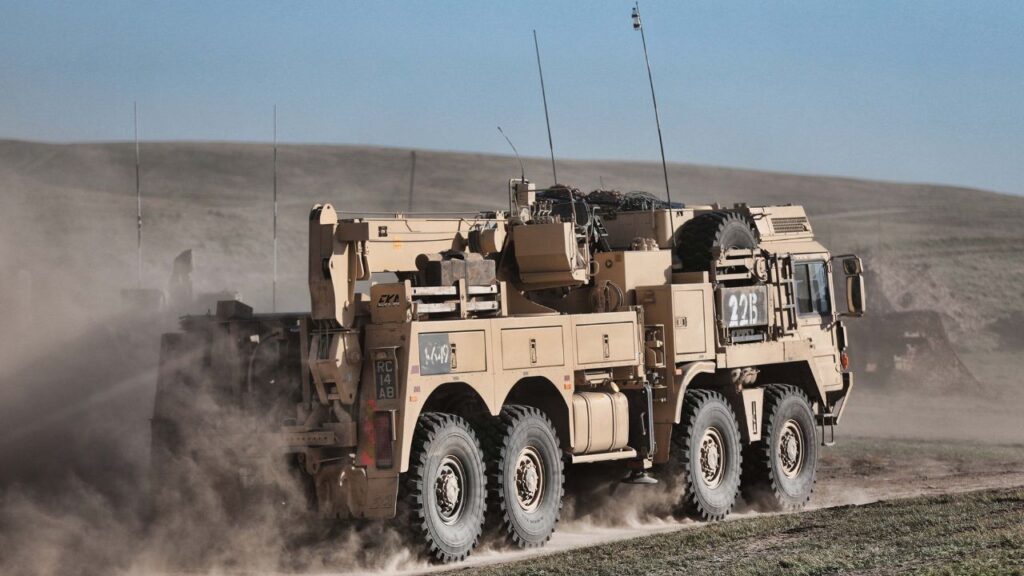
The MAN SX family is a commonly referenced European example of a heavy tactical truck aligned with NATO-style sustainment needs. In this lineup, it represents the ongoing demand for robust trucks that can shoulder logistics tasks without depending on an overly delicate support ecosystem.
It also underscores a procurement balancing act. As militaries pursue modularity and digital integration, they still need vehicles that can be kept running when networks are degraded and parts pipelines are stressed. The MAN SX fits the “serious truck engineering” theme precisely because uptime remains the goal.
8) Leyland/DAF-type tactical truck families (UK/Commonwealth)

In the UK/Commonwealth context, Leyland/DAF-type tactical truck families are often discussed as practical, service-focused logistics vehicles, even if exact model naming varies across fleets and eras. The common thread is an emphasis on dependable trucks that can be supported without an overly specialized maintenance culture.
This category also points to an unglamorous truth: fleets live or die by supportability. Designs that emphasize parts commonality and accessible repairs can deliver long service lives and steadier day-to-day availability—traits that matter when stockpiles must be maintained and surge capacity is more than a planning assumption.
Why it matters now: contested logistics and the return of “availability first”
Modern forces increasingly buy modular, networked, and emissions-compliant trucks, and those priorities can bring real benefits in efficiency and fleet management. At the same time, the strategic environment is shifting toward contested supply chains, dispersed operations, and rapid replacement needs. In that setting, militaries are relearning an old lesson: a truck that is “good enough” and running can be more useful than a better truck waiting on parts or specialized support.
What comes next is unlikely to be a return to the past. Instead, expect a sharper focus on balance—maintainability preserved even as survivability and electronic protection requirements grow. Armor, communications, and countermeasures can add weight and complexity; the challenge is preventing those additions from making fleets unfixable at the tactical edge. In modern war, logistics isn’t just support. It’s combat power, and it often rides on the least glamorous vehicle in the formation.