

Warships are built to deter, to fight, or at least to be ready. But naval history is also full of projects that arrived after the shooting stopped, lost the political argument at home, or existed mainly to test an idea rather than to join a fleet. The result is a small, fascinating category of vessels that looked like combat power on paper but never fired a shot in anger—or never even became operational.
These cases aren’t just oddities. Each one highlights a constraint that can outweigh pure engineering: schedule, budgets, technology risk, or inter-service politics. Put together, they show how quickly a “must-have” ship can become irrelevant—or unfinished.
HMS Vanguard (Royal Navy battleship, commissioned 1946)
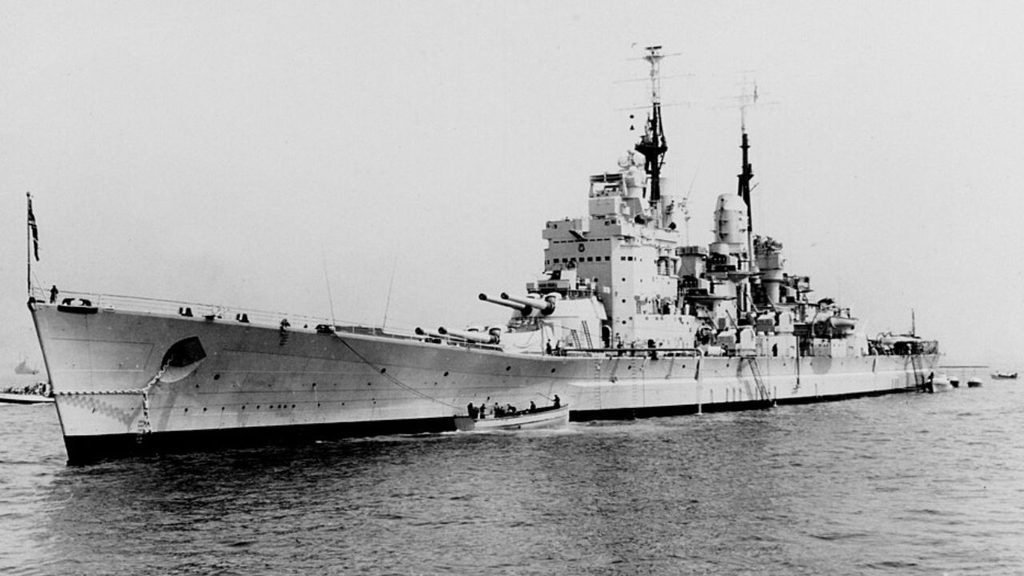
HMS Vanguard was Britain’s last battleship, commissioned in 1946 after World War II had ended. The Naval Historical Foundation notes that Vanguard “never saw combat,” even though she was a working, active warship. The distinction is important: she served, but she didn’t fight.
Her best-known deployment, according to the same source, was a 1947 tour of South Africa carrying the Royal Family—prestige duty that fit her postwar role. Vanguard is a clean example of a capital ship built for a conflict that ended before it could justify itself, and a reminder that procurement tempo can decide relevance as much as design does.
USS Kentucky (BB-66) (U.S. Navy Iowa-class battleship, never completed)

USS Kentucky (BB-66) is famous as the near-ship: an Iowa-class hull that captured attention without ever becoming an operational battleship. The Naval History and Heritage Command (NHHC) states that she was built at Norfolk Navy Yard but was never completed. While there were later ideas to convert her to a guided-missile ship, the core point remains unchanged—she never reached completion as a battleship.
Kentucky shows how easily “progress in the yard” can be mistaken for real capability. A partially built hull can consume resources and still never translate into a deployable combatant when requirements, budgets, or strategy shift midstream.
USS United States (CVA-58) (U.S. Navy aircraft carrier, canceled 1949)
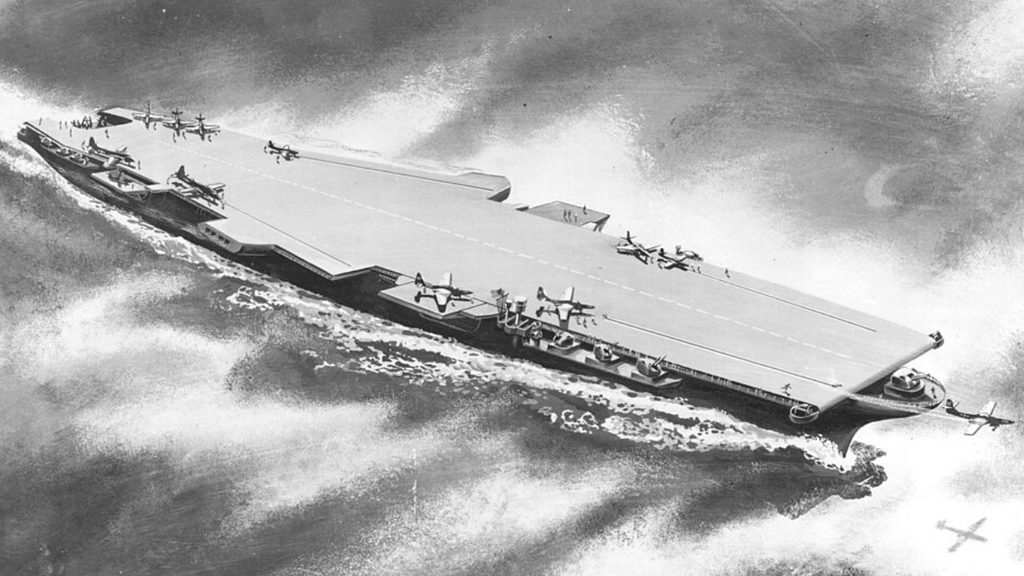
USS United States (CVA-58) is best understood as a program shaped by politics as much as by naval design. Conceived as a carrier for strategic strike, it became central to the “Revolt of the Admirals,” a civil-military showdown over roles, missions, and defense priorities. As summarized in the provided context, the project ended abruptly: the ship was canceled on 23 April 1949 and was not completed.
The takeaway is not that the concept couldn’t be imagined, but that it couldn’t survive a national-level decision about priorities. In this case, the ship’s story is a reminder that major naval programs can be stopped by mission disputes and budget choices long before a hull has any chance to prove itself at sea.
Sea Shadow (IX-529) (U.S. Navy/Lockheed stealth demonstrator vessel)
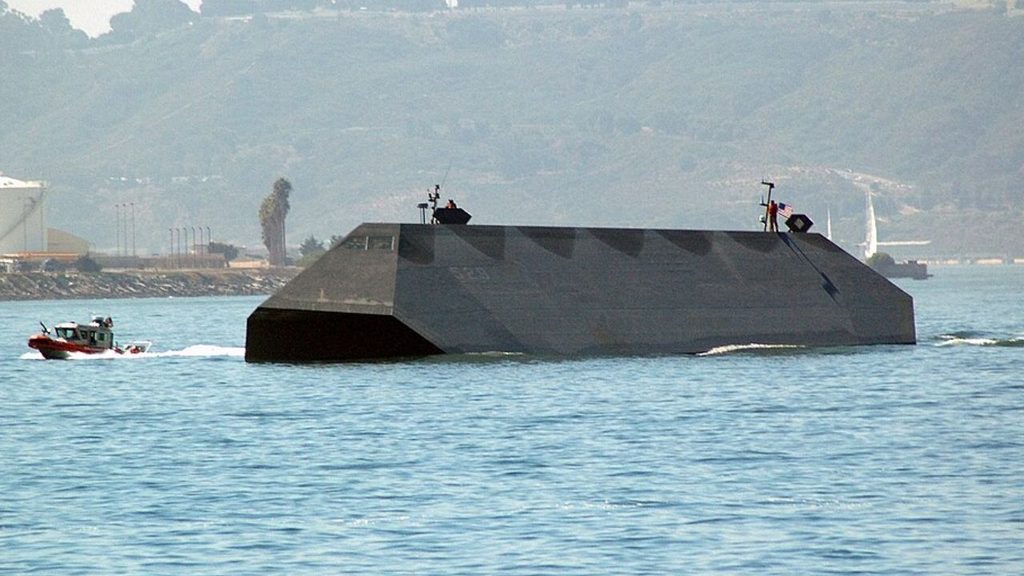
Sea Shadow (IX-529) belongs in a different bucket: it was built and tested, but not as a combatant. The Los Angeles Times reported the Navy’s statement that Sea Shadow “was never intended for combat,” and noted it was never designated “USS.” That absence is a simple but telling signal of intent.
What makes Sea Shadow notable is what it represented—an effort to explore low-observable ship shaping in a Cold War “black project” style. At the same time, details of its work are limited in the provided reporting, and it’s important not to overstate what is known. Its value lies in experimentation, not combat service.
United States floating battery Demologos (later renamed Fulton) (1814)
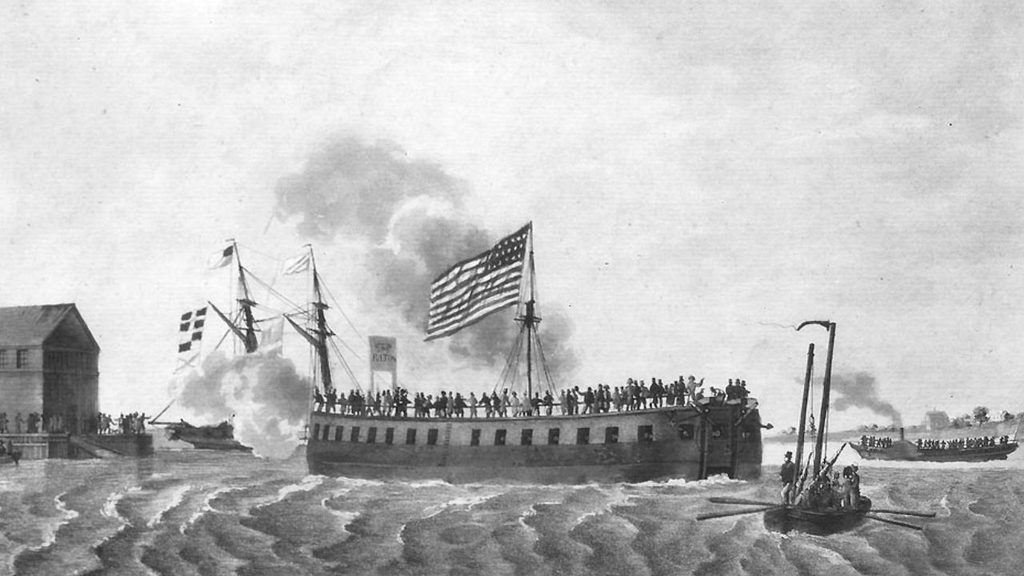
The United States floating battery Demologos—later renamed Fulton—is an early example of an innovative warship that missed the war it was built for. Intended for harbor defense during the War of 1812, it was completed too late to matter. As noted in the provided context, because the war ended before completion, Demologos never saw action.
It’s a useful historical counterpoint to modern procurement problems: even in 1814, timelines could outrun strategic need. A sound idea can still arrive after the moment that demanded it.
USS Squando (Casco-class monitor) (U.S. Navy Civil War-era monitor)

USS Squando represents a broader program outcome—the troubled Casco-class of shallow-draft monitors. In the provided summary, the class-level conclusion is blunt: less than half were completed before the Civil War ended, and none saw combat. That framing matters, because it describes the program’s overall result rather than a single event unique to Squando.
This example shows how timing and design controversy can converge. A class can consume shipyard effort and still fail to deliver wartime utility if the conflict ends before the ships are ready—or if problems prevent timely readiness in the first place.
Stevens Battery (Civil War-era U.S. experimental warship project, uncompleted)
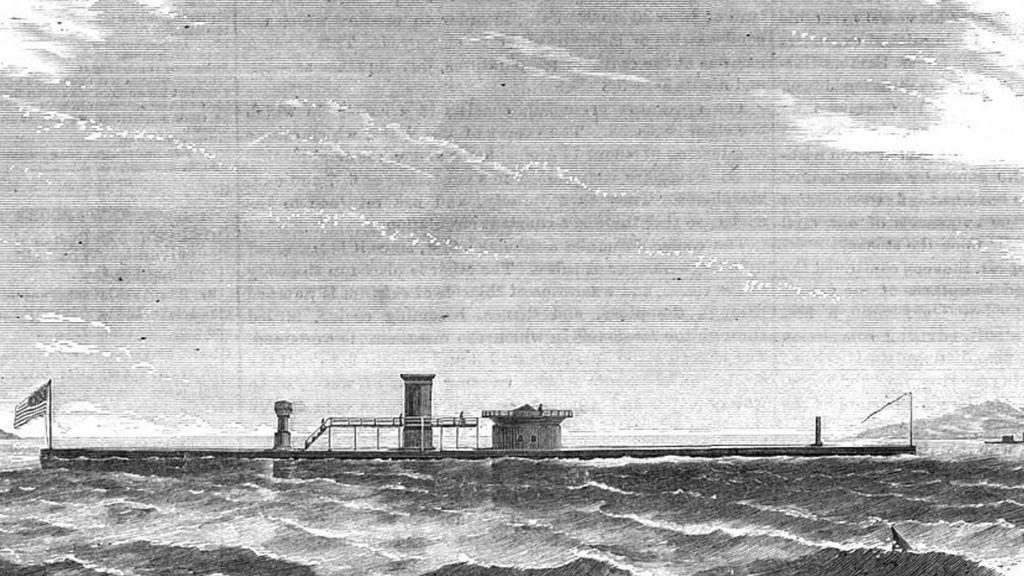
The Stevens Battery is a long-running experimental ironclad concept that never became an operational warship. The central fact in the provided context is its extended, unresolved lifespan: it sat uncompleted at its building site for decades, from the mid-1850s to 1881. That duration is the story—an idea that persisted without producing a deployable ship.
As a case study, it underscores how engineering risk and institutional momentum can keep a project alive long after circumstances change. The consequence is straightforward: a ship that can’t be finished can’t fight, and an “almost” program can absorb attention and resources without delivering combat power.