
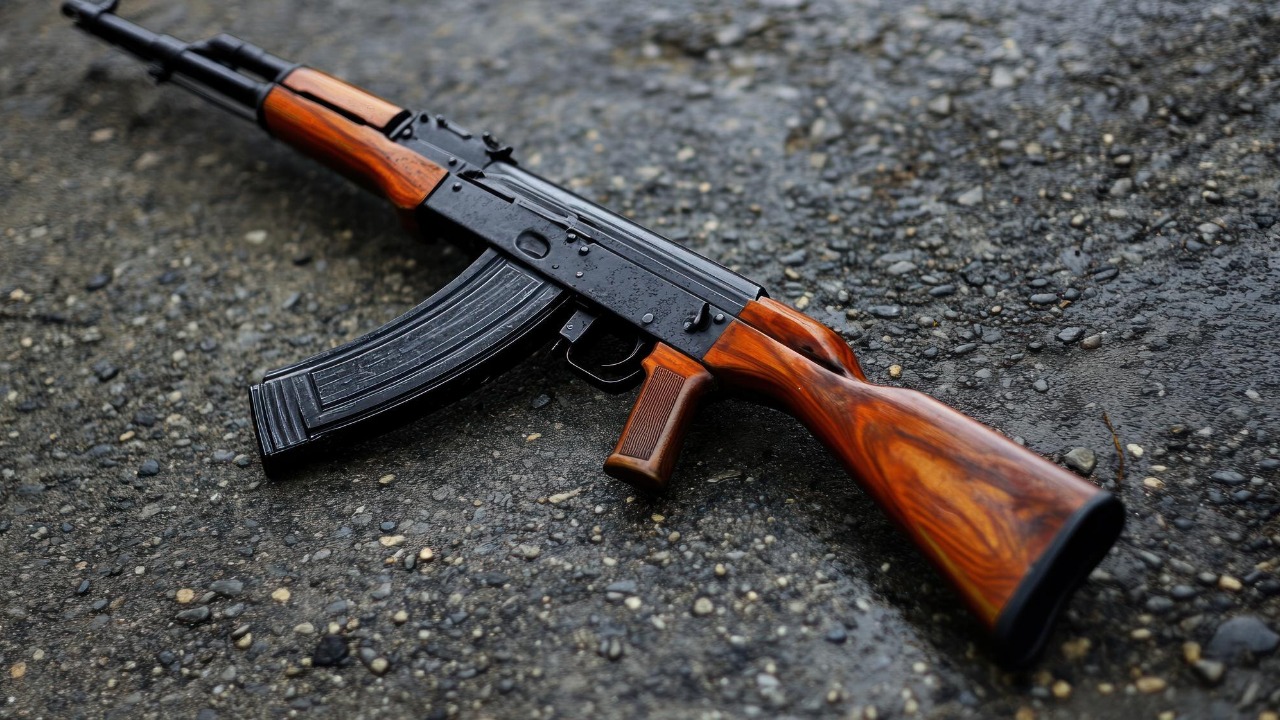
Some rifles do more than win battles. They shape doctrine, define eras, and linger in the public imagination long after newer designs take the field. The seven rifles below earned reputations so durable that collectors, soldiers, and historians still argue about them as if they were current issue.
Each became a benchmark for reliability, firepower, or innovation, and their stories explain how infantry weapons evolved from black‑powder repeaters to modern assault rifles without ever fully leaving these legends behind.
M1 Garand: The rifle that reset the standard
The M1 Garand sits at the center of any serious discussion about enduring rifle reputations because it changed what frontline firepower looked like for a major army. Chambered in .30-06 Springfield and named for its Canadian and American designer John Garand, it gave U.S. infantry a semi‑automatic rifle when many opponents still relied on bolt actions. That shift meant a higher practical rate of fire, faster follow‑up shots, and a psychological edge for troops who suddenly felt they could dominate an engagement instead of trading single rounds. The rifle’s eight‑round en‑bloc clip and gas‑operated action were not just technical features, they were force multipliers that reshaped small‑unit tactics.
Combat experience cemented that reputation. Accounts of the M1’s performance in World War II and Korea describe a weapon that was rugged, accurate, and forgiving enough for a new recruit to master quickly, a combination that led one famous general to call it “The Greatest Battle Implement Ever Devised.” Later analysis of its battlefield record highlights how its reliability under mud, snow, and rough handling helped American units sustain fire in situations where a jam or misfeed could have been fatal, reinforcing its status as a true Iconic Battle Rifle for America.
The Garand’s legend did not end when it left front‑line service. It continued to see wide‑spread use through military aid programs, with other nations fielding it in conflicts long after newer designs appeared, a pattern detailed in assessments of what made it great. Popular culture and veteran memory reinforced that staying power, and modern retrospectives still describe how it was Adopted as the first standard‑issue semi‑automatic service rifle and how its reputation for reliability and accuracy still anchors debates about what a battle rifle should be.
AK‑47: The World’s Most Famous Rifle
If the Garand defined mid‑century American firepower, the AK‑47 became the global shorthand for the modern rifle. Designed shortly after World War II, it emerged as a simple, stamped‑steel answer to the need for a rugged automatic weapon that conscript armies could maintain with minimal training. Its profile is instantly recognizable, and modern overviews describe the AK‑47 as “The World’s Most Famous Rifle,” crediting it with helping rebuild the USSR’s armed forces and spreading to an estimated 100 million examples worldwide. That scale of production alone would guarantee a long afterlife, but the rifle’s reputation rests even more on what it can endure.
Accounts of its history emphasize that History of the AK is really a story of how it Became History’s Deadliest Weapon, with Few objects as recognizable worldwide as its silhouette. The rifle’s loose tolerances, long‑stroke gas piston, and forgiving magazines allow it to function in sand, jungle humidity, and arctic cold where more finely tuned designs might fail. That reliability, combined with the 7.62×39 mm intermediate cartridge, made it the default arm of insurgencies, national armies, and militias across continents, ensuring that images of conflict from the late twentieth century almost always include someone carrying an AK‑47.
Its cultural impact rivals its battlefield record. From national flags and propaganda posters to video games and films, the AK‑47 became a symbol of revolution, resistance, and, in some contexts, state power. Analyses of The World market for iconic firearms note that its simplicity and low production cost allowed it to outlast political systems that first fielded it. Even as newer Kalashnikov variants and rival platforms appear, the original pattern’s reputation for being almost impossible to kill, both mechanically and symbolically, keeps it at the center of any conversation about rifles that never fade from view.
Mauser 98 and Lee‑Enfield: Bolt‑action legends that refuse to retire
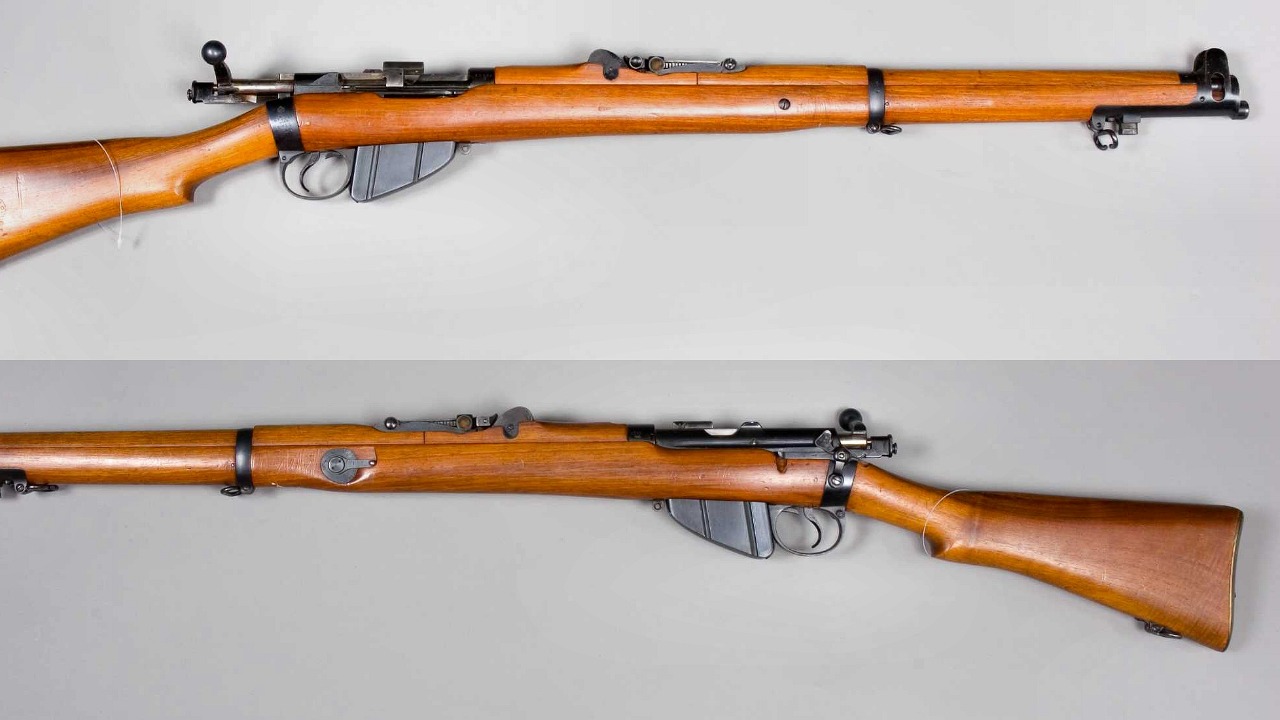
Long before intermediate cartridges and stamped receivers, two bolt‑action designs set standards that modern rifles still follow. The German Gewehr 98, better known as the Mauser 98, introduced a controlled‑feed bolt with a massive non‑rotating claw extractor and strong gas handling that made it both safe and reliable at high pressures. Its influence is visible in countless sporting and military actions that copied its layout, and its wartime service turned it into a benchmark for accuracy and durability. Contemporary discussions of Legendary Rifles That Changed the Face of War routinely place the Mauser 98 at the center of the story, noting how its design principles still guide modern bolt‑gun engineering.
On the other side of the trenches, the British Lee‑Enfield built a different kind of legend. Its rear‑locking bolt and 10‑round magazine allowed trained riflemen to fire so rapidly that German troops sometimes mistook the volleys for machine‑gun fire. The rifle’s smooth action and generous capacity made it ideal for the “mad minute” drills that defined British marksmanship, and its long service life across the British Empire turned it into a symbol of imperial infantry power. Analyses of the evolution From Firesticks to modern Firepower describe the Lee‑Enfield and Mauser 98 as twin pillars in The Evolution of the Rifle, and their continued use by hunters, collectors, and ceremonial units shows how thoroughly they transcended their original wars.
M16 family: From controversy to modern template
Few rifles have traveled as far from rocky beginnings to global standard as the M16 and its civilian cousin, the AR‑15. When it first appeared, the platform’s lightweight construction, small‑caliber high‑velocity cartridge, and modular layout represented a sharp break from wood‑and‑steel battle rifles. Modern comparisons of the AR‑15 and M16 note that When enthusiasts debate iconic modern rifles, these two sit near the top because their shared architecture allows extensive customization while still reflecting the original Rifle Comparison between military and civilian roles. The direct‑impingement gas system, aluminum receivers, and synthetic furniture made the rifle lighter and more controllable in automatic fire than its 7.62 mm predecessors.
Early fielding in Vietnam exposed serious reliability problems, but subsequent changes to ammunition, cleaning protocols, and design refinements transformed the M16 into a trusted service rifle. Historical accounts of its adoption point out that The AR-15 arrived for the United States military at a moment when lighter weapons and higher ammunition loads were urgently needed, and Initial testing suggested it surpassed older rifles in close‑range lethality. Over time, the platform’s adaptability, from carbine variants to designated marksman configurations, turned it into a template for modern 5.56 NATO service rifles worldwide, ensuring that its reputation, once tarnished, now anchors debates about what a contemporary infantry rifle should be.
StG44 and FN FAL: The bridge to the modern era
Long before the term became marketing shorthand, the Sturmgewehr 44 created the basic concept of the assault rifle. By pairing a select‑fire mechanism with an intermediate cartridge, it offered controllable automatic fire at typical combat ranges without the weight and recoil penalties of full‑power rounds. Histories of infantry weapons credit the StG44 with proving that a soldier armed with such a rifle could dominate engagements between 100 and 300 meters, a lesson that later designers on both sides of the Cold War absorbed. Its limited production and late‑war deployment kept it from reshaping World War II, but its influence on later designs, including the AK‑47 and various Western rifles, gives it an outsized legacy compared with its numbers.
Where the StG44 was a proof of concept, the FN FAL became a Cold War workhorse. Chambered in 7.62 NATO and built around a reliable gas‑operated system, it earned the nickname “the free world’s right arm” as more than 66 countries adopted it as a standard or primary service rifle. Analyses of Key Takeaways from twentieth‑century rifle development often highlight how the FAL’s ergonomics, adjustable gas system, and battlefield record made it the Western counterpoint to the AK‑47 in conflicts from Africa to South America. Even as many militaries transitioned to lighter 5.56 mm platforms, the FAL’s reputation for hard‑hitting reliability kept it in reserve roles and special applications, extending its service life and preserving its status as a classic battle rifle.
Why these seven reputations endure
What binds these seven rifles together is not just technical merit but the way they captured the realities of their eras. The M1 Garand embodied industrial‑age mass production and semi‑automatic firepower, the AK‑47 and StG44 distilled the logic of intermediate cartridges and automatic fire, the Mauser 98 and Lee‑Enfield perfected the bolt‑action form, and the M16 family and FN FAL bridged the gap between heavy battle rifles and lighter modern carbines. Each solved a specific tactical problem so effectively that later designs either copied them outright or defined themselves in opposition.
Their reputations also survive because they remain visible in training, media, and historical work. Modern video primers on World War I rifles, for example, still dissect the Primer on French Berthiers at War and the German Gewehr as part of a broader History of WWI Primer, reinforcing how foundational those designs were to everything that followed. Curators, armorers, and shooters continue to preserve and study these rifles, a pattern reflected in guides on How to Preserve Your Rifles, because they are not just artifacts but reference points for ongoing debates about accuracy, reliability, and combat effectiveness.
In that sense, their reputations are self‑sustaining. Each new generation of soldiers and enthusiasts encounters these rifles not as museum pieces but as living standards against which newer designs are measured. Whether the discussion starts with a nostalgic nod to “Garand thumb,” a technical breakdown of the AK‑47’s gas system, or a comparison of modern carbines to the original M16, the same conclusion emerges: some rifles solved their era’s problems so convincingly that their names, and the myths around them, are not going anywhere.