
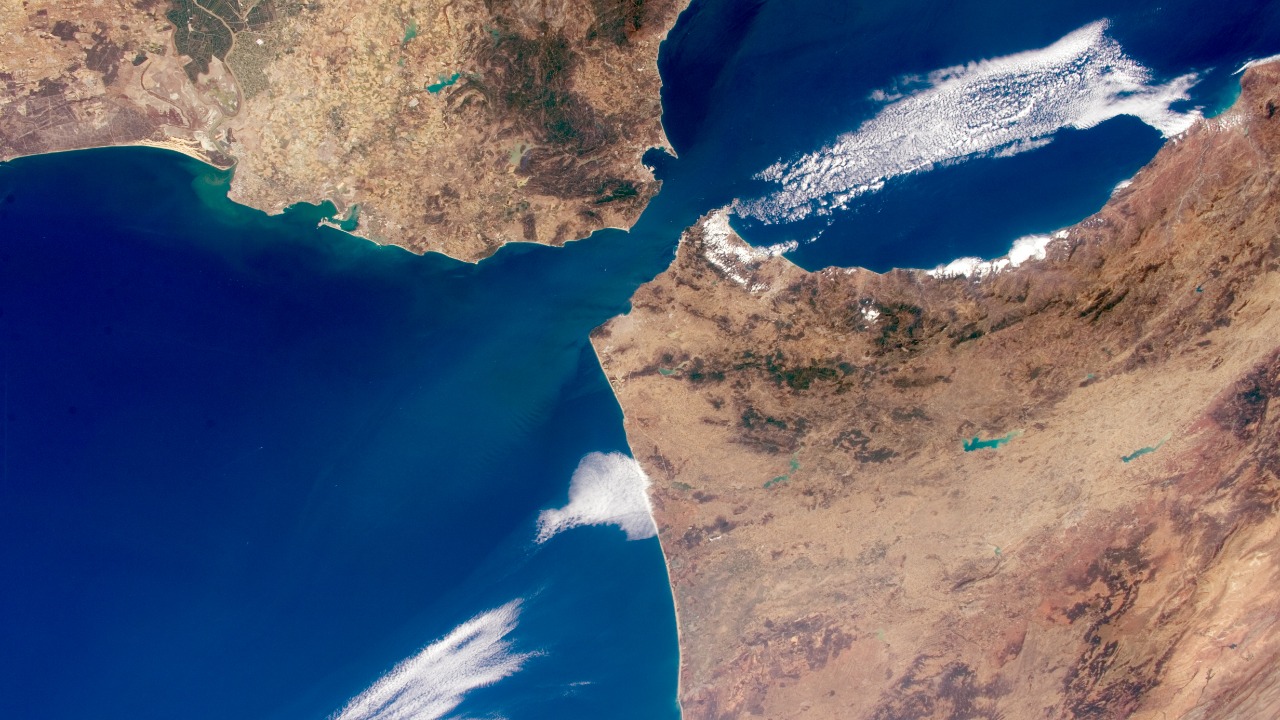
A long-discussed dream of physically linking Europe and Africa has just moved from a political talking point to a concrete engineering program. A proposed £7.4 billion rail tunnel under the Strait of Gibraltar has cleared a key feasibility hurdle, giving planners in Spain and Morocco a clearer path to connect two continents by a permanent undersea link. If it proceeds on the current trajectory, the project would reshape travel, trade, and migration patterns between the Mediterranean’s northern and southern shores.
Engineers now describe a fixed link beneath the narrow waterway between Spain and Morocco as technically achievable rather than speculative. With a preferred route, depth profile, and cost envelope emerging from recent studies, the focus is shifting from whether such a tunnel can be built to how it will be financed, governed, and integrated into wider European and African transport networks.
The mega project that would redraw the map
The current plan envisions a rail tunnel running beneath the Strait of Gibraltar, creating a direct land-based connection between Europe and Africa for the first time. Studies describe a total alignment spanning 42 kilometers, with 27.8 kilometers of that distance running under the sea. On the European side, the line would start near Punta Paloma close to Tarifa in Spain, then dive beneath some of the most complex seabed geology in the region before emerging on the Moroccan coast. The budget is framed around a price tag of £7.4 billion, a figure that places the scheme among the largest cross-border infrastructure projects in the world.
Unlike a road bridge, which would have to contend with heavy shipping traffic, high winds, and deep water, the tunnel would carry trains in both directions and is being designed to handle passenger and freight services. Reporting suggests that more than 12 million people could use the link each year once it is fully operational, a volume that would rival established corridors such as the Channel Tunnel between Britain and mainland Europe. Journey times between key hubs in Europe and Africa are expected to fall sharply, with some projections indicating that cross-strait trips that now involve ferries could be cut to around half an hour by high-speed train, according to recent coverage of the Europe and Africa scheme.
From the 1970s vision to the technical green light
The idea of a fixed link under the Strait of Gibraltar is not new, and proposals first surfaced in the 1970s as both Spain and Morocco explored ways to narrow the gap between their economies. For decades, however, the concept remained stuck in the realm of political declarations and high-level memoranda, largely because engineers could not be sure that the geology of the seabed would allow a safe and cost-effective tunnel. Recent work commissioned by the Spanish state-owned company Secegsa has changed that picture, with detailed surveys describing a viable route through what one analysis calls a “Modern Heavenly Road in the Geological Maze”.
Scientists now state that a TUNNEL connecting Europe and Africa beneath the Strait of Gibraltar is technically possible, with route, depth, and construction methods mapped out in far greater detail than in earlier decades. One assessment cited in regional reporting suggests that preliminary works could begin as early as 2027, although full completion is not expected before the mid 2030s at the earliest. Other analyses point to a longer horizon, indicating that regular services may not run until sometime between 2035 and 2040, reflecting the complexity of boring under deep water and through unstable rock layers.
Engineering through a geological maze
The Strait of Gibraltar is only about 14 kilometers wide at its narrowest point between Spain and Morocco, yet the conditions beneath the surface are far more challenging than the raw distance suggests. The seabed drops into a deep trench, currents are strong, and the tectonic setting where Europe and Africa meet has created a patchwork of rock types that complicates tunneling. Technical studies describe the project as a kind of Geological Maze, and they note that the tunnel will need to reach significant depths to pass through more stable strata. One widely cited outline suggests that the underwater section could extend for around 28 kilometers and reach roughly 475 meters below sea level at its deepest point, figures that would place it among the most demanding subsea rail projects attempted to date.
To manage these risks, planners are drawing on experience from other long undersea tunnels while tailoring designs to local conditions. Boring machines will have to cope with high water pressure and variable rock, and emergency systems must be robust enough to handle incidents far from the portals on either continent. The Spanish side of the project is being led by Spanish engineers at Secegsa, while Moroccan specialists are working on the African portal and inland connections, reflecting a joint effort by Spain and Morocco to turn a long-standing aspiration into a functioning piece of infrastructure.
Economic stakes for Europe and Africa
Beyond the engineering spectacle, the tunnel’s backers frame it as a strategic investment in trade and mobility between Europe and Africa. A fixed rail link would shorten supply chains for goods moving between factories and ports on both continents, and it would give exporters in North and West Africa more direct access to the European market. Analysts describe the project as an extension of the European transport network into Africa, with the potential to channel freight that now moves by ship through a faster rail corridor under the Strait of Gibraltar. The expected flow of more than 12 million passengers a year, highlighted in coverage of the MAJOR scheme, would also reshape tourism and business travel.