

Tank museums tend to tell big stories with big hardware—but a handful of vehicles matter precisely because almost none remain. In some cases, what you can see today is a lone survivor; in others, just a pair split between collections. For historians and restorers, these machines are rare, physical evidence of where wartime and Cold War ambitions collided with logistics, doctrine, and the limits of what could be fielded at scale.
Below are six rare tanks (and closely related assault vehicles) where survival is measured in ones and twos—and where the preserved examples you can visit often matter as much for what they reveal about design direction as for what they ever achieved in combat.
Panzer VIII Maus (Porsche Type 205)

Nazi Germany’s “super-heavy” Maus program ended at the prototype stage, with no meaningful wartime fielding. According to Wikipedia, only one surviving Maus remains today, preserved at Kubinka. Its reputation as the archetypal “too big to be practical” tank is intensified by that near-total absence: it’s famous partly because it almost disappeared.
One important caveat is that the surviving vehicle is widely described as a reconstructed/composite example assembled from prototype parts. That makes some “as-built” specifics less straightforward than with a single, untouched production vehicle, even if it remains a rare and instructive artifact of extreme design thinking.
Sturmtiger (Sturm-Mörserwagen 606/4)
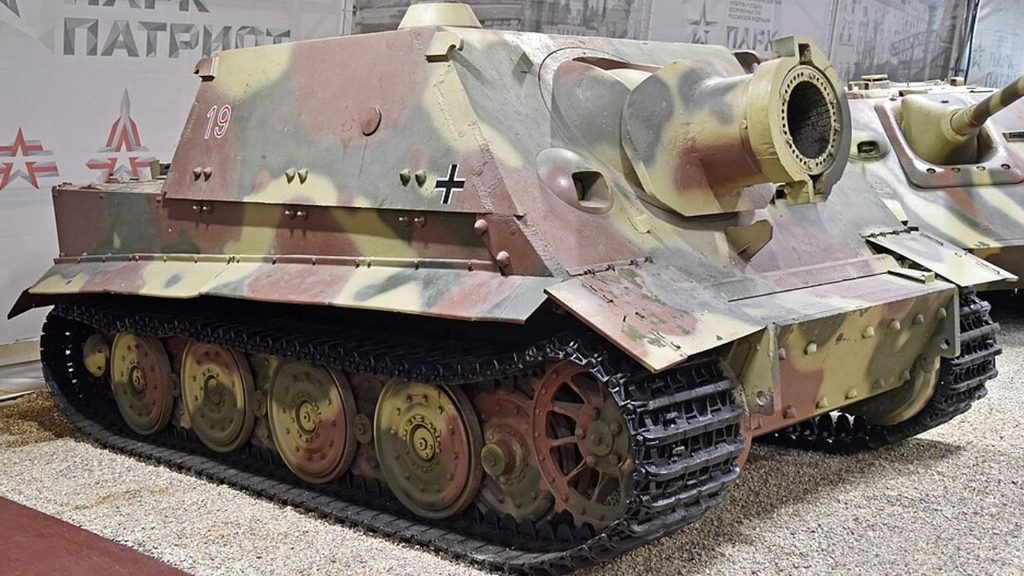
The Sturmtiger was a Tiger I–chassis assault gun built around an enormous rocket mortar—effectively a siege weapon on tracks. It’s iconic, visually unmistakable, and scarce in preserved form. A War Thunder Wiki article on the vehicle says only two Sturmtigers are cited as surviving: one at the Deutsches Panzermuseum (Munster) and one at Kubinka.
Because that survival claim comes from a game-adjacent source, it’s best treated as a count to verify against museum inventories rather than a last word. Even with that caution, the bigger point stands: with so few surviving examples, small differences in manufacture, field changes, and restoration history can heavily shape what the public and researchers think they “know” about the type.
A43 Black Prince (Infantry Tank, Black Prince)
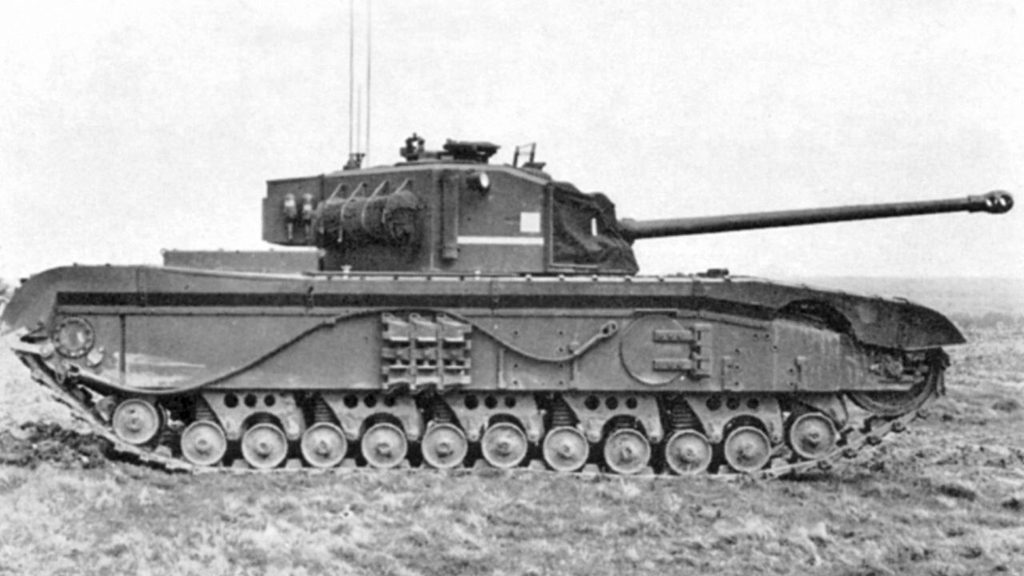
Britain’s A43 Black Prince was a late-war development path from the Churchill line, reflecting infantry-tank thinking as broader “universal tank” ideas began to take over. Wikipedia states the only intact Black Prince is held by The Tank Museum (Bovington).
The wording matters. “Only intact” is not the same as “only one survives,” and the survival count is sometimes described differently elsewhere. Framing it carefully keeps the rarity claim accurate while still underscoring why the Bovington vehicle is so important: it preserves a near-endpoint of a design approach that was rapidly being left behind.
TOG II* (The Old Gang / “landship” concept tank)

TOG II (often written TOG II*) is Britain’s famously odd “landship” concept—an ultra-long experimental tank shaped by WWI trench-warfare logic, revived during WWII, and then overtaken by faster armored doctrine. Wikipedia says only a single TOG 2 prototype was built, and that single TOG II* survives at The Tank Museum.
Here, being precise about the name helps. The “TOG 2” versus “TOG II*” wording varies by configuration, and museum labels influence how visitors interpret what they’re looking at: a one-off curiosity, or a specific prototype state in a short-lived experimental track. Either way, its survival makes it a tangible reminder that a concept can be buildable yet still mismatched to where doctrine is heading.
Super Heavy Tank T28 / 105mm Gun Motor Carriage T95 (USA)

The US T28/T95 was a super-heavy assault vehicle concept intended for attacking fortifications, and it’s notorious for confusing nomenclature because it was renamed and redesignated multiple times. Part of its lasting hook is the preservation story: one prototype was lost and later rediscovered. Wikipedia, echoed by widely cited summaries, states only one T28 survives—held by the Army Armor & Cavalry Collection at Fort Benning, Georgia, with supporting context also referenced from an Army Armor & Cavalry Collection YouTube restoration video.
Because the T28 and T95 designations are tightly tied to redesignation history, it’s worth keeping the wording clear: don’t imply they are separate vehicles without explaining the name changes. In a program where labels shifted, the surviving vehicle becomes the most stable reference point for what the project actually was.
Object 279 (Obiekt 279) – Soviet experimental heavy tank (1959 era)
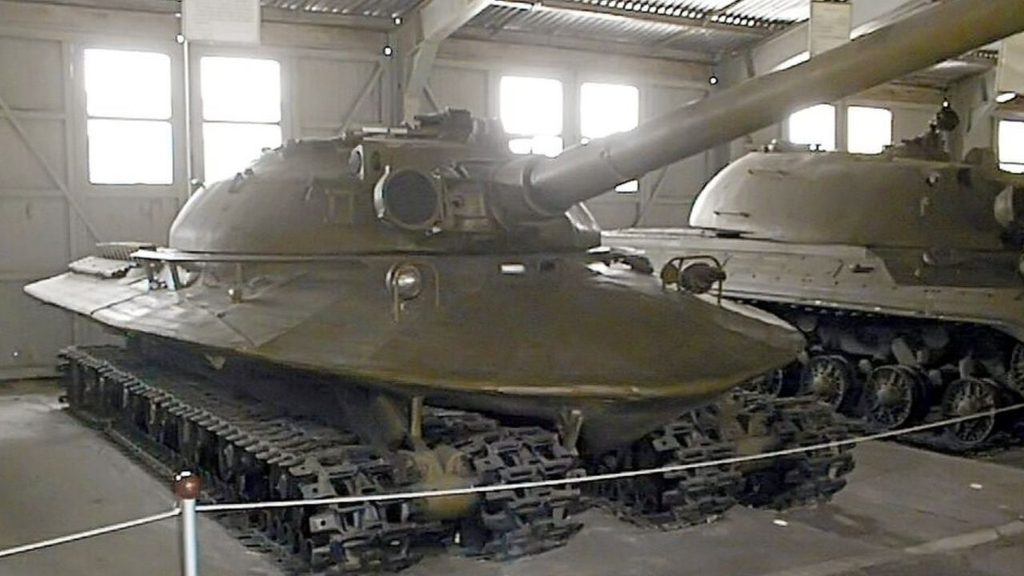
Object 279 is a Cold War-era Soviet experimental heavy tank associated in popular memory with operating in extreme conditions, and it’s instantly recognizable for its four-track layout. The War Zone reports that most sources indicate the Kubinka example is the only surviving Object 279—and that it has been restored to running condition.
At the same time, the survival count is disputed: some references describe it as “one of three.” Given that conflict, it’s better to present the “only one” claim as reported rather than absolute. Even with that nuance, the preserved vehicle remains a rare window into a line of heavy-tank experimentation that did not translate into a lasting fleet reality.