
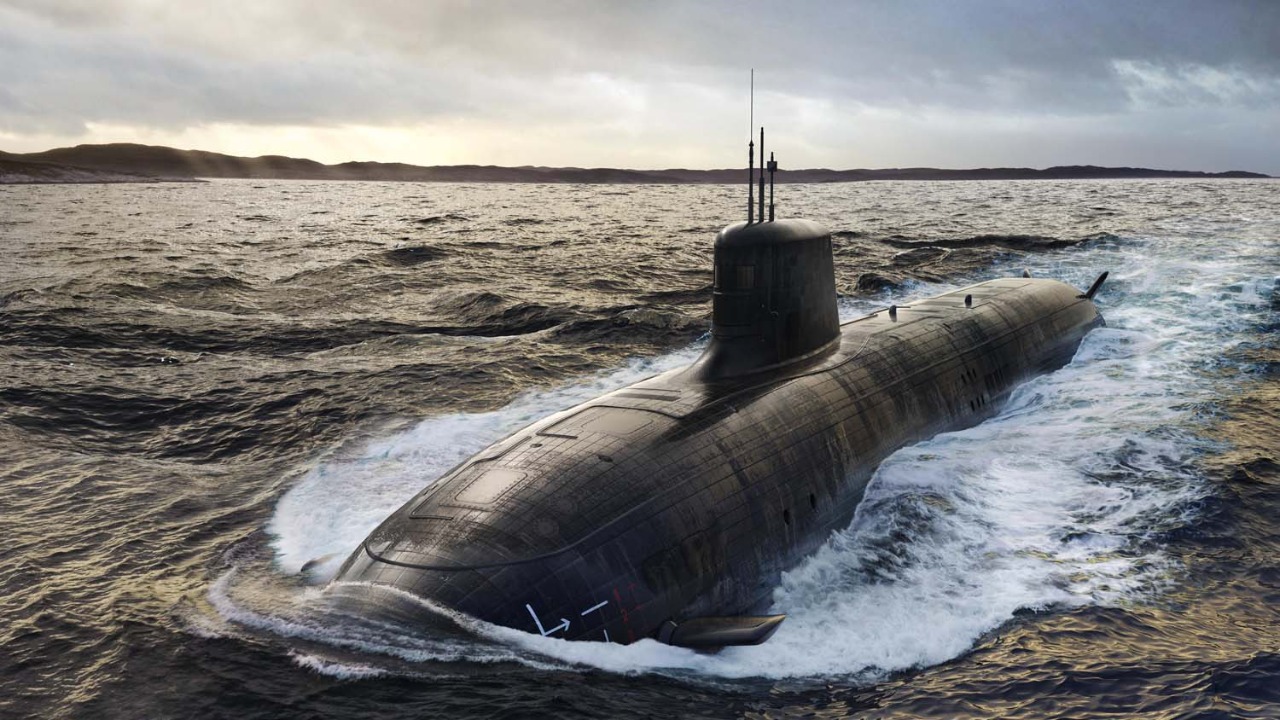
Australia’s $368 Billion commitment to nuclear-powered submarines was sold as a once-in-a-century bet on undersea deterrence, yet the political and industrial ground under that plan is shifting fast. As doubts grow over whether the AUKUS boat pipeline can deliver on time, Canberra’s strategists are testing a different proposition: trading some of that undersea ambition for long-range stealth bombers aimed squarely at deterring China. The debate now turns on whether nuclear submarines or aircraft like the B-2 and B-21 offer the more credible shield in the narrow window before the 2030s.
The stakes are not abstract. Australian planners must decide if they double down on a complex trilateral shipbuilding scheme or pivot toward high-end airpower that could arrive sooner and project force across the Pacific. That choice will shape not only the country’s defence posture but also its alignment with the United States and the United Kingdom as the regional balance tilts toward Beijing.
AUKUS under strain and a $368 BILLION question
The AUKUS agreement was framed as a transformational upgrade for Canberra, with nuclear-powered submarines promised as a leap beyond the country’s existing diesel-engine fleet. For Australia, the deal was meant to deliver boats that could stay submerged longer, travel farther, and integrate seamlessly with the United States and the United Kingdom’s undersea capabilities, a step that would make it only the second nation after the UK to receive such technology from Washington. That ambition came with a staggering price tag, with one prominent critic highlighting that a few years ago, Australia made a deal to pay $368 BILLION for just three submarines, a figure that has become shorthand for the political risk attached to the project.
Pressure on the program has intensified as the practical hurdles of building and crewing nuclear boats have become clearer. The US Admiral in charge of Virginia submarines, which Australia needs for AUKUS, has already warned that American shipyards are not producing anywhere near enough hulls to meet existing US Navy demand, let alone export commitments, and that those yards will not meet the goal of three boats a year by the end of the decade. That shortfall feeds into broader concerns that the UK and US part of the bargain is constrained by limited industrial capacity and a shortage of skilled people, a problem that even the most generous funding cannot quickly fix.
Leadership churn and rising doubts about AUKUS delivery
Institutional turbulence has added to the sense that the submarine plan is less assured than its architects once claimed. The first boss of the Australian Submarine Agency, Vice Admiral Jonathan Mead, has already signalled that he will retire in mid-2026, even as the agency’s work on the AUKUS transition is described as being in its final stages. Leadership turnover at such a formative moment raises questions about continuity in a program that must coordinate Australian shipyards, US nuclear expertise, and UK design input over decades.
Across the Pacific, the picture is no calmer. An admiral overseeing a major US nuclear-powered submarine program has exited five years into the job, a departure that underscores how fragile senior leadership can be in a sector grappling with cost overruns, schedule slips, and workforce shortages. At the political level, President Donald Trump has used high-profile AUKUS meetings to urge partners to move ahead on what one participant described as “Orcus” full steam ahead, yet even that rhetorical push cannot conjure welders, nuclear engineers, and dry docks out of thin air. Critics inside Australia now argue that it is time to stop pretending AUKUS automatically makes the country safer, pointing out that the arrangement deepens dependence on the United States undersea capabilities without guaranteeing the timely delivery of sovereign boats.
From undersea to air: the B-2 and B-21 tempt Canberra
As confidence in the submarine timeline erodes, attention has shifted to long-range stealth bombers that could give Australia a different path to deterrence. One influential argument is that Australia could use the B-2 as a bridge bomber, exploiting its significant payload capacity and extreme low observability to hold distant targets at risk while the AUKUS fleet remains on the drawing board. Advocates note that the B-2 is still one of the stealthiest bombers in the world, not counting the emerging B-21, and that its ability to carry both conventional and potentially nuclear-armed munitions would give Canberra a flexible tool for signalling resolve in a crisis.
Supporters of this shift stress that ongoing upgrades to the B-2 fleet suggest it could remain in service into the late 2030s or early 2040s if needed, which aligns with the period when AUKUS submarines are supposed to arrive. With China looking to expand its reach across a wide swath of the vast Pacific, Australian defence strategists are already considering how such capabilities can be integrated as part of a modern long-range strike posture. Some in Washington have gone further, arguing that the United States should give Australia its old B-2 fleet outright, on the logic that a close ally operating those aircraft from northern bases would complicate Chinese planning and buy time for both countries to build new platforms.
The elusive B-21 Raider and industry caution
The allure of the next-generation B-21 Raider has also captured Canberra’s imagination, but reality has proved more sobering. The Australian non-profit research organisation, the Institute for Public Affairs, has recommended that Australia acquire the US B-21 stealth bomber as part of a deeper integration with the US and the UK, arguing that such an aircraft would give the Royal Australian Air Force a genuine long-range strike option against a peer adversary. Yet industry has been careful to dampen expectations, with Northrop Grumman executives describing it as premature for Australia to buy the B-21 and pointing out that the US Air Force must first field and stabilise its own fleet before any export can be contemplated.
US officials have echoed that caution. Secretary of Defence Lloyd J. Austin III, in a strategic review that touched on force posture and alliances, did not address a B-21 sale to Australia at all, a silence that many in Canberra read as a polite but firm “not yet.” Reporting in the United States has been even more blunt, stating that Australia will not be buying the B-21 Raider and that America’s super stealthy next-generation bomber will remain off the export list for the foreseeable future. That leaves Australian planners in a bind: the most advanced bomber is politically and industrially out of reach, while the older B-2 fleet is small, with the United States itself having only 19 B-2s in service, and any transfer would require Washington to accept a reduction in its own inventory at a time of rising tension with Beijing.
Strategic trade-offs and the politics of risk
The emerging debate is not simply about hardware; it is about how Australia chooses to share risk with its allies. Some Australian defence thinkers argue that, with AUKUS Virginia-class submarines squeezed by US production limits, Canberra should pivot toward a mix of B-2 aircraft and other long-range strike systems that can be fielded faster and maintained with less dependence on foreign nuclear infrastructure. Others counter that submarines remain the most survivable leg of any deterrent posture and that walking away from AUKUS would squander decades of political capital invested in persuading Washington and London to share their most sensitive undersea technology. Domestic critics, including those who argue that AUKUS does not automatically make the country safer, warn that either path could entrench Australia even deeper inside US war planning against China.