
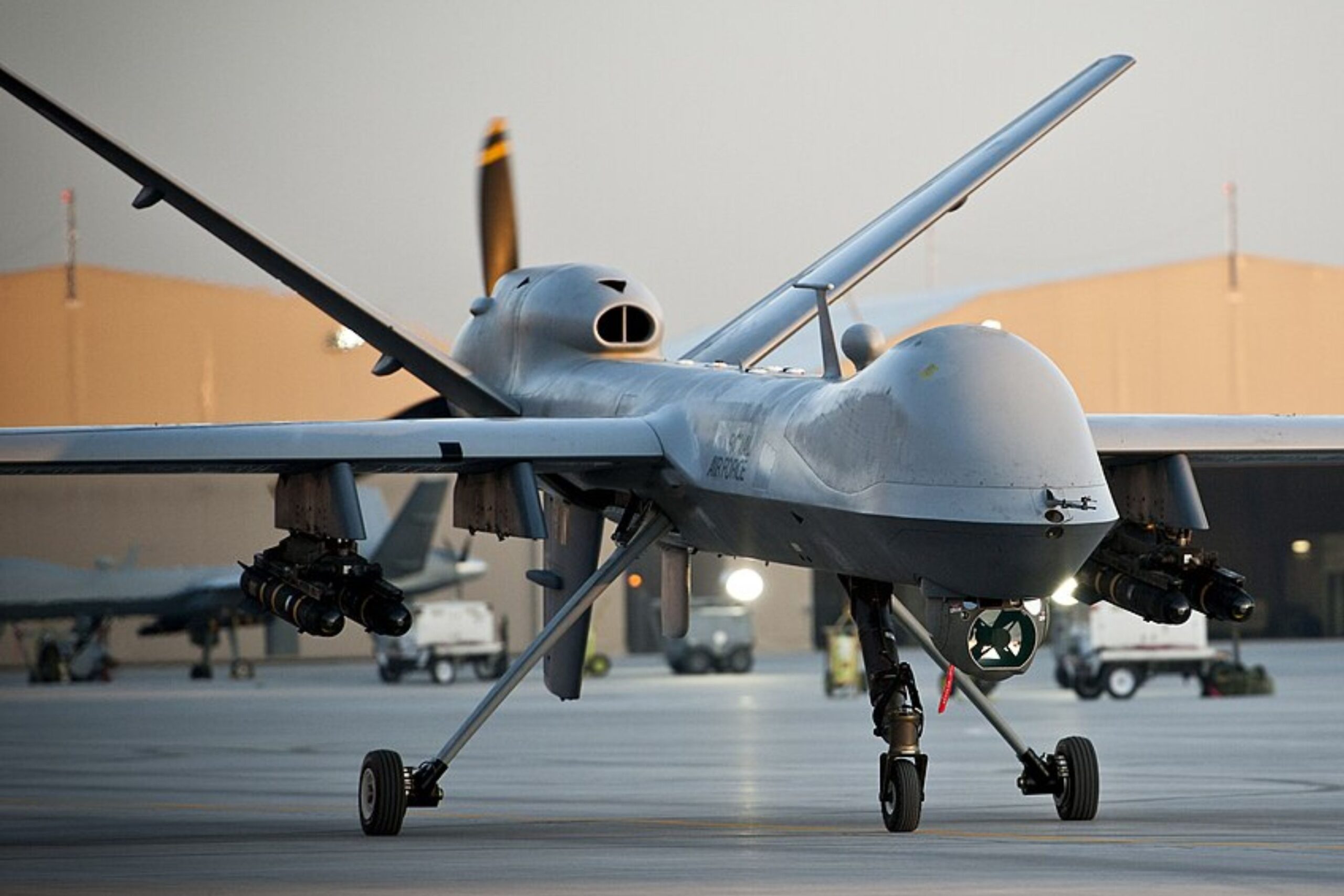
Military history is full of moments when the decisive advantage wasn’t a new weapon or a bigger army, but a better picture of reality—one side’s ability to shape what the other believed long enough to misplace forces, delay decisions, or expose a vulnerability. Military deception can include lawful ruses such as feints, decoys, camouflage, and false signals. It appears in every era because it exploits a constant: commanders must act on imperfect information.
The examples below are illustrative rather than definitive. In most cases, deception did not “win” by itself; it worked because it was paired with logistics, intelligence, disciplined execution, and an opponent operating under pressure, limited reconnaissance, or faulty assumptions. That caveat matters even more today, as modern battlefields are saturated with ISR—satellites, drones, SIGINT, and cyber collection. Deception hasn’t disappeared; it has shifted toward signature management, EMCON, decoys, spoofing, and electronic warfare (EW) designed to manipulate sensors and decision cycles.
1) Troy (mythic but instructive): the Trojan Horse as a lesson in belief
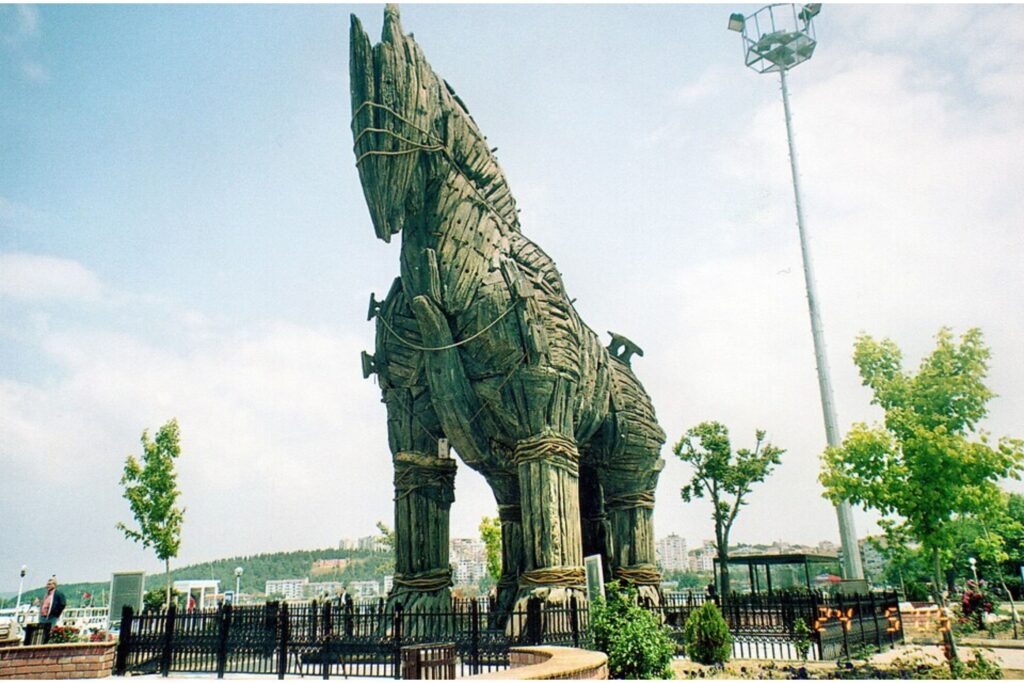
The Trojan Horse sits between legend and metaphor, but it endures because the mechanism is easy to recognize: a believable story delivered in a trusted form, accepted because it fits what the target wants to be true. Whether the event occurred as described is less important than the operational lesson—access and perception can matter as much as walls and mass. Modern parallels are often discussed in the context of deception that arrives under a familiar appearance, including in cyber and supply-chain security.
2) Cannae (216 BCE): apparent weakness that shapes an enemy’s advance

Cannae is taught as a tactical masterclass, but it also illustrates how an opponent’s expectations can be steered through formation and tempo. A center that appears to give ground can invite an overcommitment and set conditions for envelopment. The broader takeaway is that deception can be embedded in how forces present themselves and fight, not only in decoys or fake units.
3) Trasimene (217 BCE): concealment, timing, and a collapsing picture
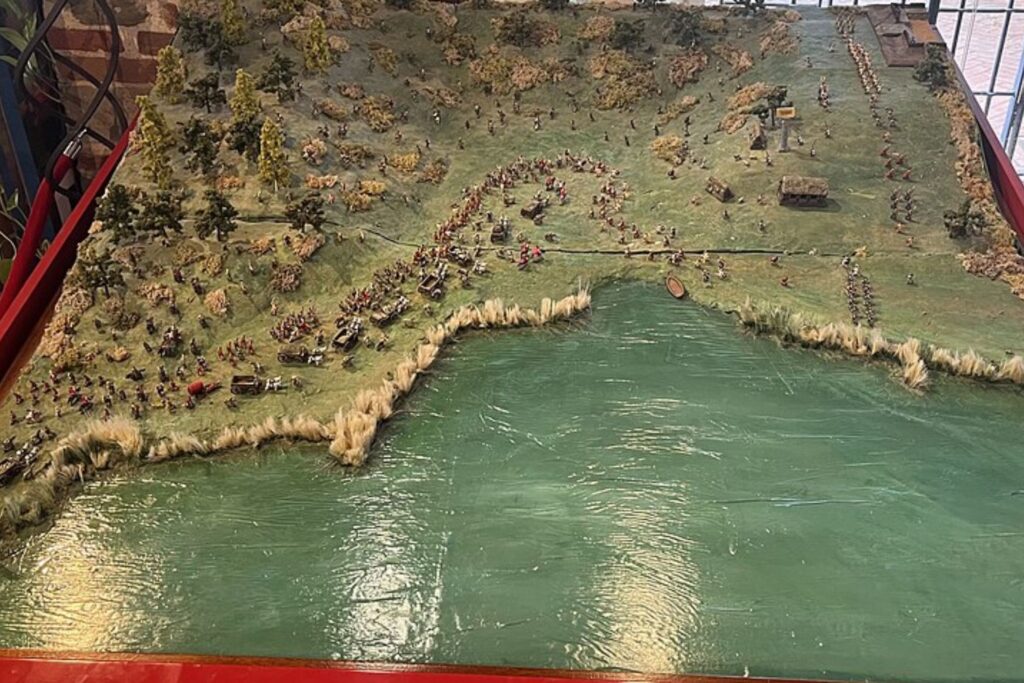
At Lake Trasimene, concealment and timing helped turn a Roman movement into a fight the Romans struggled to interpret in time to respond coherently. The method is straightforward: use terrain to limit visibility, strike when the enemy is stretched or disorganized, and deny a clear understanding of where contact is coming from. Modern ISR makes this harder, but terrain, obscurants, emissions discipline, and EW can still degrade an opponent’s picture at critical moments.
4) Hastings (1066): feigned retreat as a behavioral trap
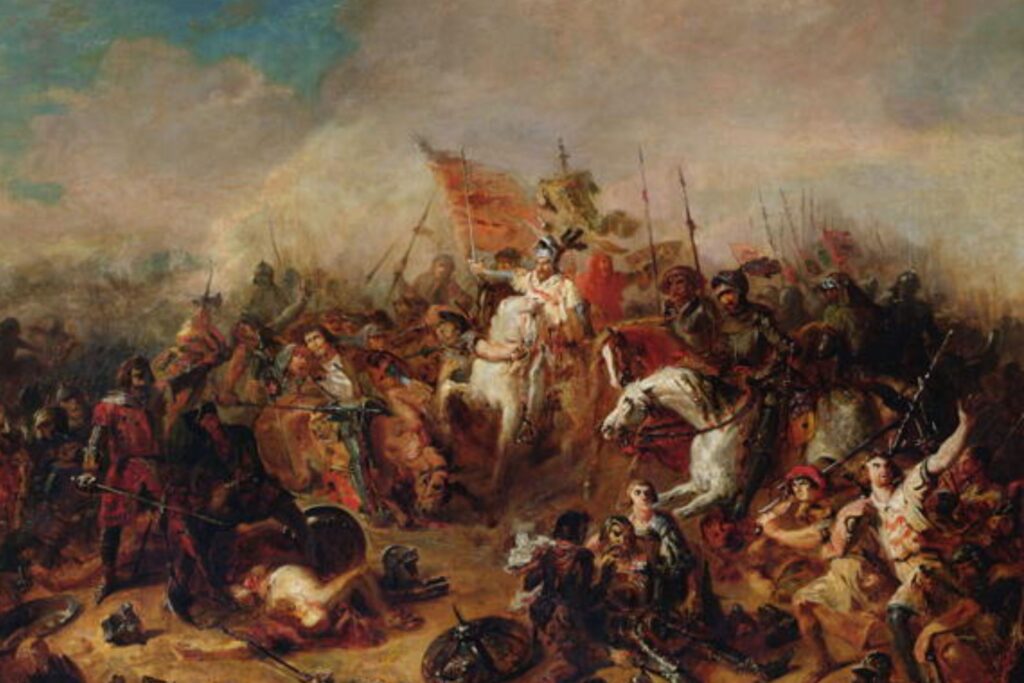
Many accounts of Hastings emphasize episodes where apparent withdrawal drew opponents out of position and into pursuit, loosening cohesion. Historians debate how deliberate versus opportunistic these moments were, but the “behavioral exploit” is familiar: encourage the enemy to act against discipline. In modern terms, this is about shaping the decision, not simply hiding forces.
5) Agincourt (1415): narrowing the problem until the enemy misreads it

Agincourt is remembered for longbows and mud, but it also shows how positioning and preparation can constrain an opponent’s options and encourage costly choices. That is not deception in the narrow sense of decoys or false messages, but it can function similarly by channeling the enemy toward an expected response and punishing it. The modern lesson is that restricting choices—through terrain, fires, and information—can be as effective as misdirection.
6) Saratoga (1777): confusion, rumor, and operational misreading
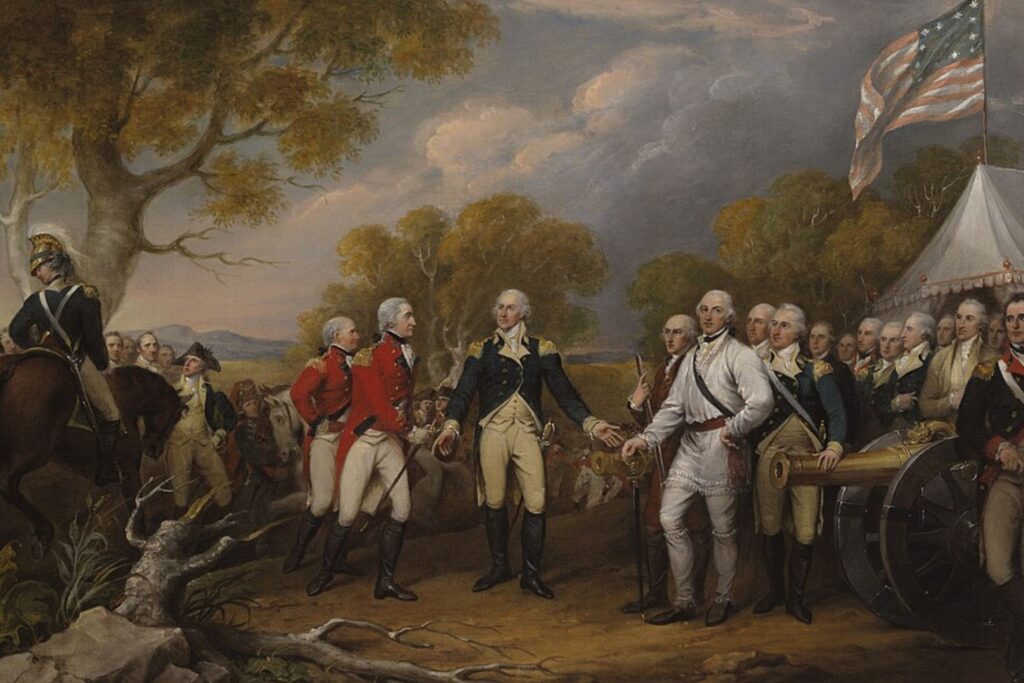
In Revolutionary War campaigning, limited reconnaissance and uneven communications often meant commanders acted on partial or misleading reports. At Saratoga, contested movement and unclear understanding of dispositions contributed to a British predicament that ended in surrender. The strategic point is that “information advantage” can come from denying clarity and forcing guesswork, not from perfect awareness.
7) Yorktown (1781): concealing the main effort until the trap closes
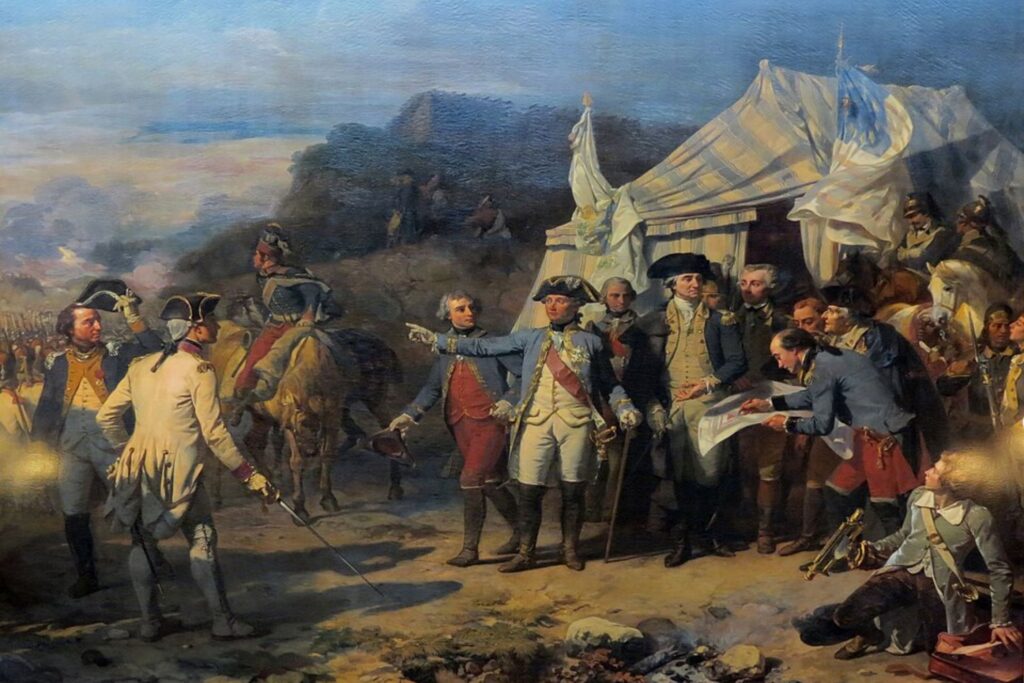
Yorktown depended on coordination and timing, and deception played a role in obscuring operational intent and movement as pressure built. Even where accounts differ on specifics, the pattern is consistent: hide the main concentration and axis long enough that the opponent cannot reposition in time. In modern operations, the same logic appears in dispersed posture, deceptive basing, and signature management intended to delay an adversary’s recognition of the true main effort.
8) Trafalgar (1805): breaking expectations to force rushed decisions
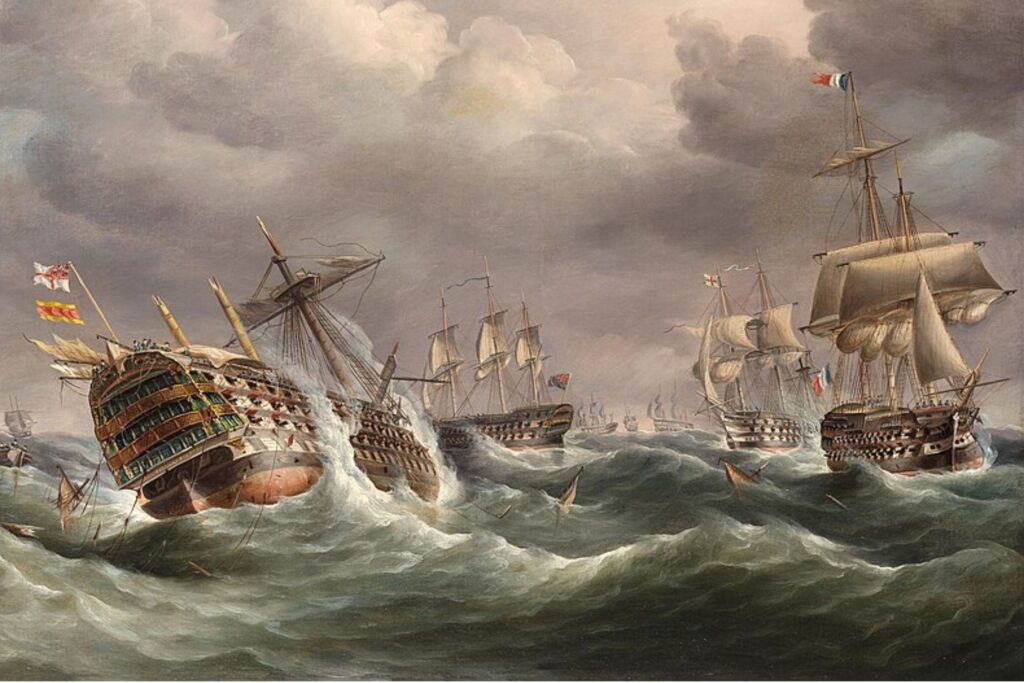
At sea, deception can be less about decoys and more about disrupting the enemy’s mental model of how an engagement will unfold. Trafalgar is often discussed in terms of an approach that challenged prevailing expectations and created decision shock. The enduring lesson for modern maritime operations is that predictability creates exploitable patterns—especially when an opponent is watching for templates.
9) The American Civil War’s “Quaker guns”: decoys that buy time
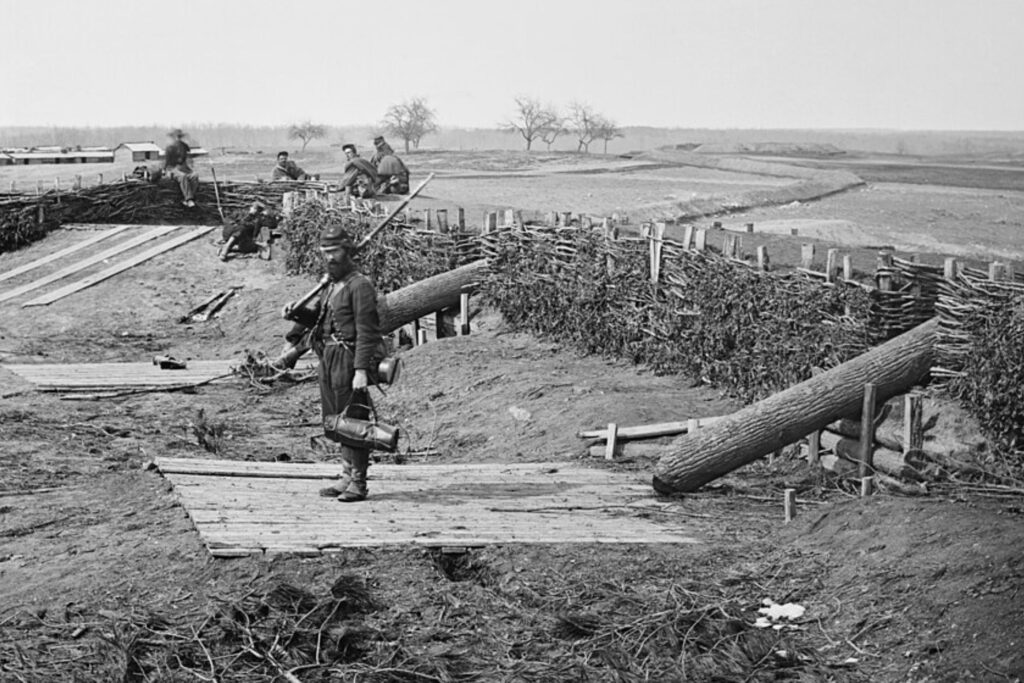
During the American Civil War, both sides used decoys—logs painted as artillery, dummy positions, and false camps—to exaggerate strength or mask weakness. These measures were not magic; they influenced reconnaissance, encouraged caution, and sometimes bought time for movement or reinforcement. Modern equivalents include visual decoys and false emitter networks intended to dilute enemy targeting and protect real combat power.
10) Gallipoli (1915) evacuations: deception to disengage under pressure
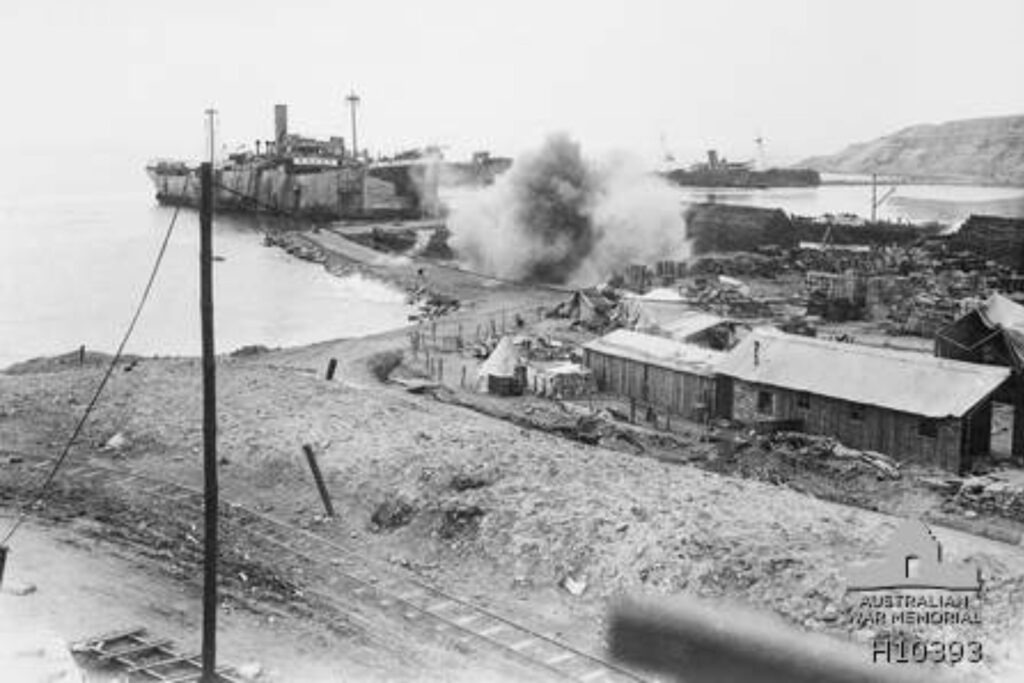
Some of the most consequential deception supports withdrawal rather than attack. A disengagement can collapse if the enemy detects it early and presses at the moment a force is most vulnerable. Successful evacuations depend on disciplined routine, staged activity, and controlled signatures that look “normal” until the last possible moment. The template remains relevant for expeditionary forces that may need to retrograde under drone and SIGINT observation.
11) World War II, Operation Fortitude: selling the wrong main landing
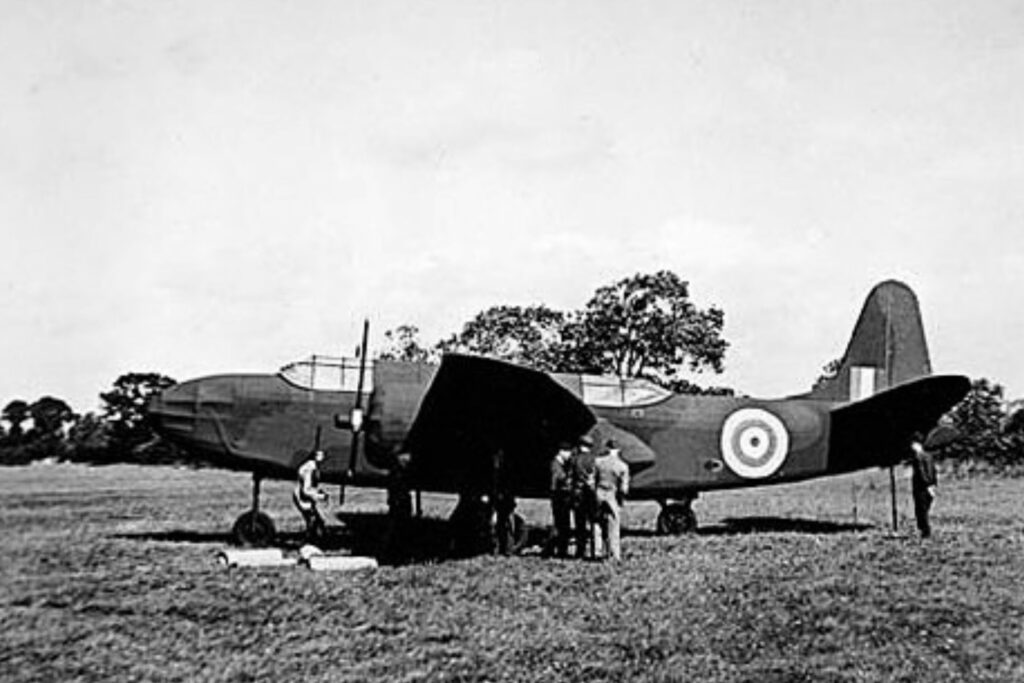
Operation Fortitude is among the best-known modern deception efforts: a coordinated plan using decoys, false signals, controlled leaks, and misdirection to convince Germany that the main Allied landing would come somewhere other than Normandy. The goal was not to make the enemy blind, but to keep key forces misallocated long enough for the real assault to succeed. Its strategic lesson is that effective deception is a joint enterprise, combining intelligence, communications discipline, and believable operational “noise,” not simply fake equipment.
12) World War II, El Alamein: misdirecting attention in open terrain

In the desert, camouflage and dummy activity can be especially influential because distance and visibility shape what observers think they see. Deception plans aimed to mask preparations and mislead about the timing and direction of attack. Even where narratives differ in detail, the operational logic is consistent: push the enemy to defend the wrong place and react too late to the right one. In modern maneuver warfare, the parallel is misleading ISR about where reserves, breaching assets, and the main effort will appear.
13) World War II, Midway: intelligence, counter-deception, and what you reveal

Midway is often framed as an intelligence-driven turning point, but it also highlights the interplay of deception and counter-deception—how each side tried to protect plans, exploit assumptions, and act under uncertainty. One practical takeaway carries into modern operations: “knowing” an enemy plan is rarely enough; forces must still act in ways that do not unnecessarily reveal what they know, or how they know it.
14) The Cold War: EMCON and signature discipline as operational tools
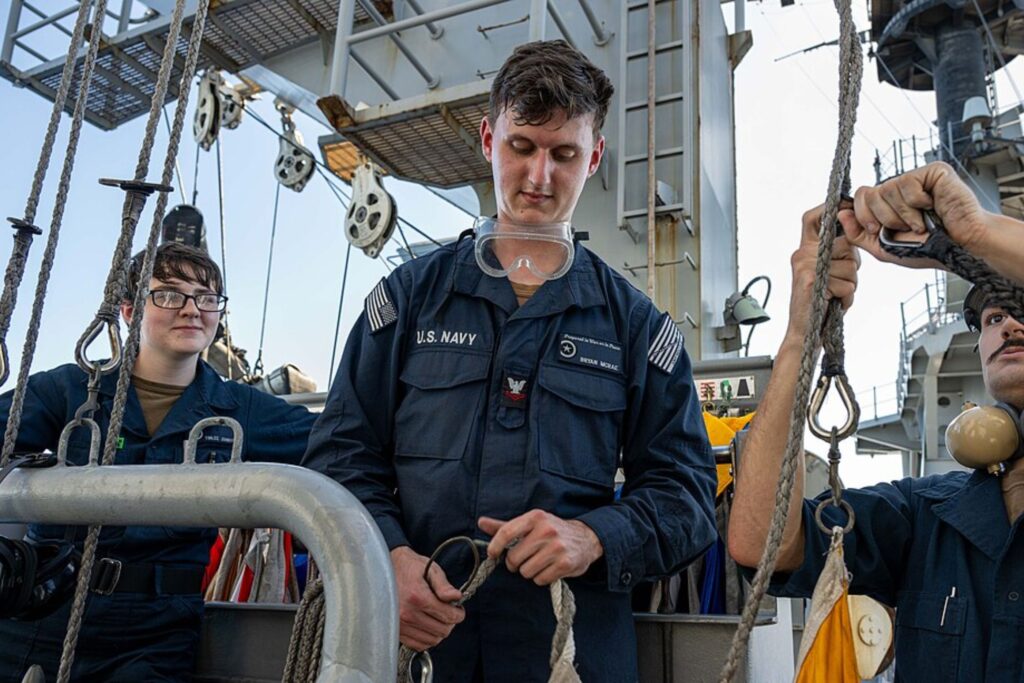
During the Cold War, deception increasingly meant managing emissions and signatures—radar, radio, and other indicators that could cue surveillance and targeting. Concepts such as EMCON, false tracks, and spoofing evolved alongside SIGINT and early warning networks, reinforcing that perception is an operational domain. The modern implication is that readiness is not only about platforms; it also depends on units trained to operate with disciplined communications and rehearsed deception routines.
15) The modern ISR era: drones, cyber deception, and contested truth
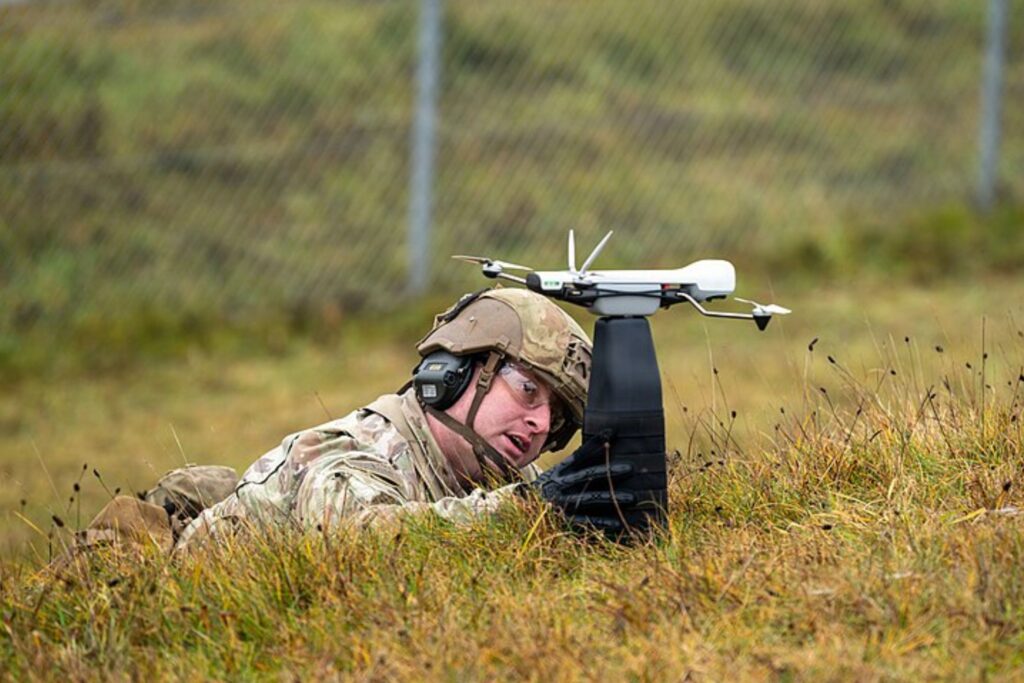
In contemporary conflicts, deception increasingly targets sensors and decision timelines: decoys meant to draw precision munitions, EW intended to generate false positives or obscure real ones, cyber deception such as honeypots, and information effects that complicate attribution and intent. The purpose is often to delay targeting, split fires, and protect real stockpiles and maneuver forces rather than to create perfect invisibility. In public reporting on modern ISR contests, deception is frequently described as tightly coupled to EW, cyber, and rapid kill chains instead of standalone “trickery.”
Why deception still matters—and what changes next
Deception buys one of the most valuable commodities in modern war: time. When drones, satellites, and SIGINT can compress decision cycles, the side that can present multiple plausible “truths” can force hesitation, waste enemy munitions, and preserve freedom of action. That is why deception is also a readiness issue: it requires training time for camouflage and deception (C&D), disciplined EMCON, and integration with EW and intelligence teams—not just more sensors and shooters.
There are practical cost dynamics as well. When inexpensive decoys or false emitters can absorb expensive precision weapons or consume scarce targeting bandwidth, deception becomes a form of attrition that can favor the side that manages expenditure and replenishment better. The flip side is equally modern: deception failures can be costly when a single lapse in signatures or communications discipline cues long-range fires.
Finally, the legal and ethical boundary matters. Lawful ruses of war—decoys, feints, camouflage, and misinformation aimed at enemy forces—are distinct from perfidy, including misuse of protected status or symbols under the law of armed conflict. Professional forces take that distinction seriously because it affects legitimacy, alliances, and reciprocity. Looking ahead, the next evolution of deception is likely to be less about one-off “master plans” and more about repeatable systems—decoy inventories, signature-management doctrine, cyber deception cells, and EW-enabled spoofing—built into day-to-day operations rather than reserved for a single dramatic moment.