

Modern air travel sells itself on convenience: book in minutes, fly through weather, arrive close to schedule, and do it with a safety record that would have seemed out of reach in the early jet age. Beneath that routine experience is a long list of engineering and operational advances shaped, in part, by military aviation requirements—long-range navigation, all-weather capability, lighter structures, and systems designed to keep working under stress. Many of these developments also progressed through civil research and commercial competition; what defense funding and procurement often added was urgency, scale, and a willingness to push immature concepts toward operational use.
That overlap matters for more than trivia. Dual-use “spin-offs” are one visible way defense spending can translate into broader economic value: deeper aerospace supply chains, shared manufacturing know-how, and a larger pool of engineers and maintainers. Below are 10 military aviation innovations—mainly associated with U.S. and European R&D ecosystems, with contributions from elsewhere—that helped shape the passenger experience people now take for granted.
1) Jet propulsion and the long march to efficient turbofans

Jet propulsion is the foundational shift that turned air travel from a propeller-limited business into a global mass market. Early military demand for speed and high-altitude performance helped accelerate jet development, and later defense requirements for endurance, payload, and mission flexibility pushed continual improvements in reliability and efficiency. Today’s airliners fly behind turbofan architectures refined over decades across both defense and commercial portfolios, with major engine makers like GE, Pratt & Whitney, and Rolls‑Royce operating in both worlds.
The takeaway for passengers is indirect but real: engines that are more dependable, easier to maintain, and better understood over their service lives. The lineage is not a straight line from one program to one airliner; it is the cumulative effect of many generations of design, testing, and field experience.
2) Pressurization and environmental control systems

High-altitude flight is only commercially useful if passengers can breathe and remain comfortable, which makes pressurization and environmental control systems fundamental rather than optional. Military aircraft operating at altitude pushed early solutions, while civil certification and airline utilization pushed those systems to become consistent, maintainable, and predictable at scale. The result is the everyday expectation of stable cabin pressure, temperature control, and ventilation.
Passenger aircraft are not simply fitted with “military-grade” components. The practical influence is more about engineering discipline: treating air management as a safety-and-reliability problem with tight design margins and clear maintenance practices.
3) De-icing and anti-ice for real-world dispatch reliability

All-weather operation has long been a military priority, and icing remains one of aviation’s most persistent hazards. Techniques and systems for de-icing and anti-ice—covering airframes, engine inlets, and critical sensors—benefited from defense aircraft that often could not afford to wait for perfect conditions. Commercial aviation then scaled those concepts into standardized certification requirements, procedures, and ground operations suited to high-frequency service.
For travelers, the benefit is visible when winter weather hits: fewer avoidable disruptions and safer operations when icing risk is present. Behind the scenes, it also means maintenance planning and crew procedures designed to manage risk without turning every marginal day into a shutdown.
4) Radar heritage, including airborne weather radar

Radar’s military lineage is well known, and aviation benefited as radar technology expanded from detection and tracking into safer civil operations. Airborne weather radar is a particularly direct example: it supports route planning and helps crews avoid hazardous weather cells. The civil versions airlines use are shaped by certification and cockpit human-factors design, but the broader evolution of sensors and signal processing was accelerated by defense investment.
There is also an industrial angle. Shared avionics and sensor supply chains can remain healthier when they serve both defense and civil markets, which supports long-term product improvement and fleet supportability.
5) Inertial navigation and the civil integration of GPS

Long-range navigation is where Cold War-era priorities—global reach, all-weather operation, and precision—overlapped strongly with commercial needs. Inertial navigation systems matured through demanding military use and became an important capability for civil aircraft seeking accuracy independent of ground-based aids. GPS has well-known military roots, but the everyday civil benefit comes from integration, augmentation, procedures, and certification layers that make navigation dependable for airline operations.
The payoff is practical: more consistent navigation in poor visibility and more efficient routing when airspace and procedures allow. It also highlights a strategic dependency, because civil aviation relies on a small number of high-end navigation ecosystems and the policy choices that shape them.
6) Fly-by-wire and flight-control computers
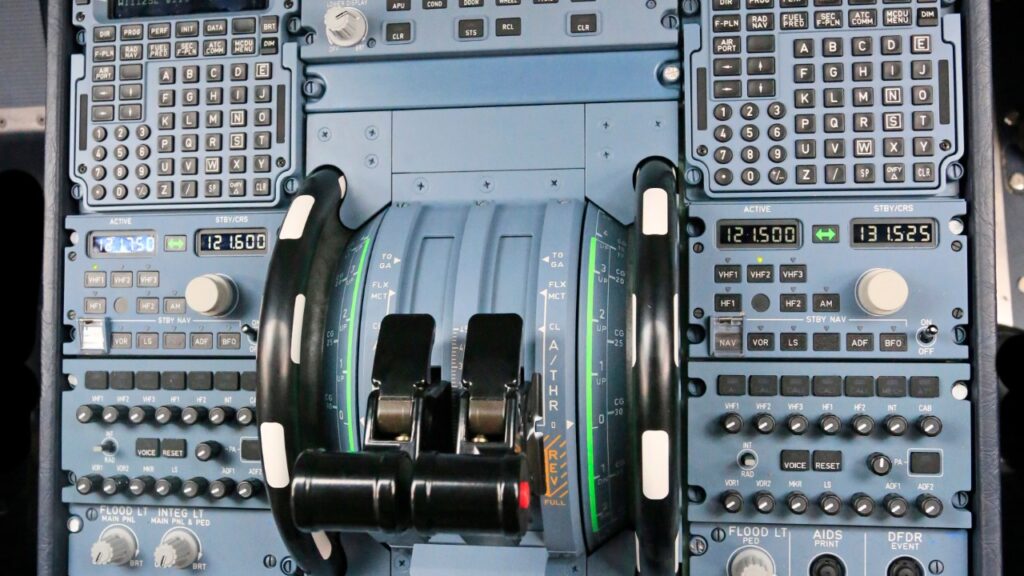
Replacing heavy mechanical linkages with electronic flight control—fly-by-wire—was strongly associated with performance and handling goals that featured prominently in military development. U.S. and European aerospace ecosystems both contributed, and civil adoption required a careful certification approach focused on redundancy, failure modes, and human factors. In commercial service, fly-by-wire supports more precise control and allows airframes to be optimized around efficiency and handling targets rather than around the constraints of purely mechanical systems.
It also changes how aircraft are built and supported. Software-heavy control architectures create new training and maintenance demands, but they can also enable clearer diagnostics, tighter configuration control, and upgrade paths that do not require redesigning large mechanical assemblies.
7) Composites, adhesives, and weight-saving structures

Military aviation’s push for lighter, stronger structures helped accelerate the use of composite materials and advanced bonding methods. Civil manufacturers—including Boeing and Airbus—adopt composites where the operational tradeoffs make sense, because lower weight can improve efficiency and expand range options. This is not a defense-only story; civil programs also drove composites forward as manufacturing processes matured and certification practices caught up.
The broader implication is ecosystem depth. Composites are not just materials; they depend on specialized manufacturing, inspection, repair techniques, and trained labor—capabilities that are easier to sustain when demand exists across both defense and commercial markets.
8) Fatigue understanding, crashworthiness thinking, and fire-safety lessons

Aviation safety is built on accumulated lessons, and military flying has historically generated significant operational experience that informed engineering approaches to fatigue and survivability. Commercial aviation translated related insights into strict certification frameworks, inspection regimes, and cabin safety standards. Fire safety and crashworthiness are areas where combat needs do not map neatly onto passenger aircraft, but analytical tools, test cultures, and design thinking have often crossed between sectors.
For passengers, the benefit is largely invisible: structures managed for long service lives, maintenance programs aimed at known fatigue risks, and cabin materials and procedures shaped by industry learning. For operators, those same disciplines help control lifecycle costs and reduce disruptive inspection findings and unscheduled downtime.
9) Reliability engineering, health monitoring, and the maintenance revolution
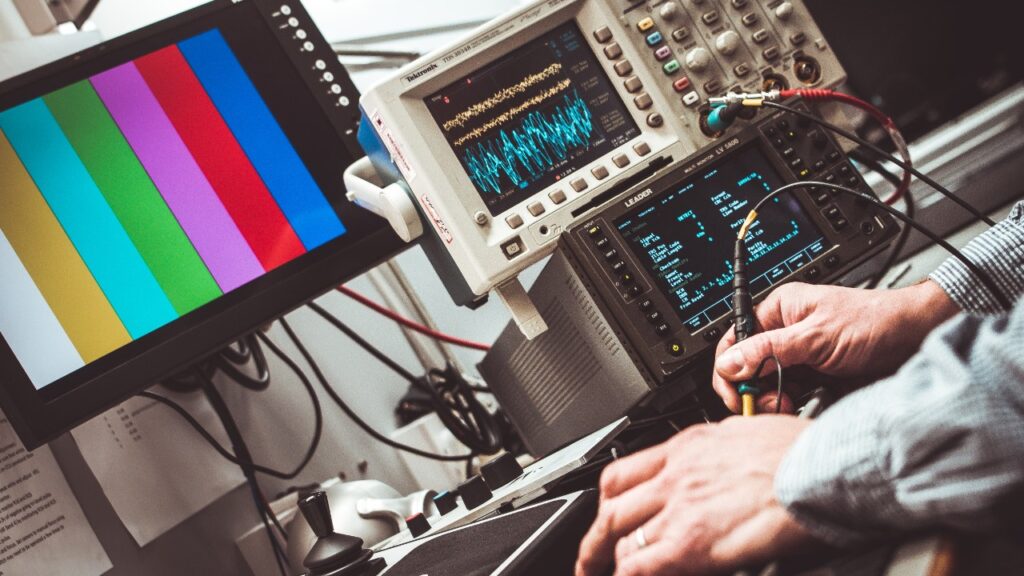
Keeping aircraft ready is a defense readiness problem and an airline profitability problem. Military aviation’s focus on reliability and maintainability helped normalize the idea that design must account for inspection access, component life management, and fast troubleshooting. Commercial fleets then scaled that mindset into sophisticated maintenance planning and, increasingly, health-monitoring approaches intended to flag issues before they cascade into cancellations or long delays.
This is one of the clearest areas where priorities align even when missions differ. Airlines want dispatch reliability; militaries want mission-capable rates. Both depend on supply chains that can provide spares, repair capacity, and predictable turnaround.
10) Air traffic management concepts and data link lineage

Modern air travel depends on coordinated airspace management, and parts of today’s air traffic management and digital communications culture evolved alongside military needs for controlled, interoperable operations—especially in NATO-aligned environments. Civil air traffic control is its own system with distinct governance and safety cases, but the long-term direction toward standardized procedures, shared situational awareness, and greater use of digital data links reflects decades of parallel learning and technology exchange.
The practical outcome is a system better able to move aircraft through crowded skies while protecting safety margins. The next steps are less about a single breakthrough and more about scaling: more flights, constrained airspace, and pressure to improve efficiency without compromising safety—areas where defense and civil aviation are likely to remain closely connected.
No single service, country, or company can fairly be credited with “inventing” most of these technologies, and it would be misleading to suggest passenger aircraft simply inherit military systems unchanged. The more accurate pattern is shared evolution: defense aviation often helps push capabilities toward operational maturity, while civil aviation’s certification and airline operations force them to become standardized, supportable, and scalable. The result is a commercial air system that feels routine precisely because so much demanding engineering has been absorbed into the background.