
Some military aircraft have become legends in their own right due to their enduring service and remarkable capabilities. These aircraft have not only made history but continue to serve in modern militaries around the world. Let’s explore ten legendary military aircraft that are still flying today, showcasing their sustained importance and unique features.
Boeing B-52 Stratofortress

The Boeing B-52 Stratofortress is a long-range, subsonic jet-powered strategic bomber, which has been a critical component of the United States Air Force since its introduction in the 1950s. Known for its impressive range and payload capacity, the B-52 can carry both conventional and nuclear weapons. It has seen action in a variety of conflicts, including Vietnam and the Gulf War.
Despite its age, the B-52 continues to be a vital part of the U.S. military, thanks to ongoing upgrades that keep it relevant in modern warfare. Its ability to carry out strategic bombing missions and provide close air support makes it indispensable. The B-52 is expected to remain in service until the 2050s, a testament to its enduring design and adaptability.
Lockheed C-130 Hercules

The Lockheed C-130 Hercules is a versatile military transport aircraft that has been in service since the 1950s. Known for its ruggedness and reliability, the C-130 is used for a wide range of missions, including troop transport, medical evacuation, and humanitarian relief operations. Its ability to take off and land on short and unprepared runways makes it invaluable in diverse environments.
The C-130 has seen numerous upgrades over the years, leading to variants like the C-130J Super Hercules shown here, which features improved engines and avionics. Countries around the world rely on the C-130 for its adaptability and performance, ensuring its continued use in military operations globally.
McDonnell Douglas F-15 Eagle

The McDonnell Douglas F-15 Eagle is a twin-engine, all-weather tactical fighter aircraft designed to gain and maintain air supremacy in aerial combat. Introduced in the 1970s, the F-15 has an impressive combat record, with over 100 aerial combat victories and no losses. Its powerful engines and advanced avionics make it a dominant force in the skies.
The F-15 remains a cornerstone of air forces around the world, including the United States Air Force. Continuous upgrades, such as the F-15EX variant, ensure that it remains a formidable opponent in aerial combat. Its longevity and combat effectiveness affirm its legendary status among military aircraft.
General Dynamics F-16 Fighting Falcon

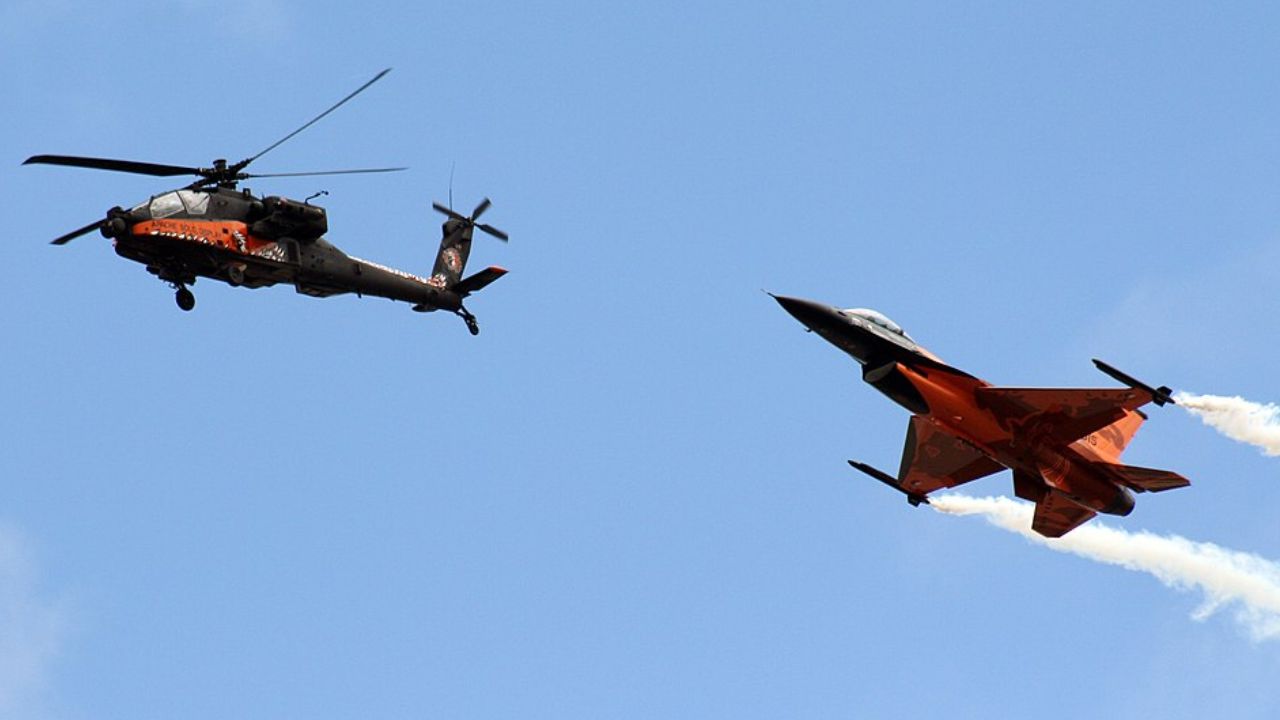
Introduced in the late 1970s, the General Dynamics F-16 Fighting Falcon is a single-engine multirole fighter aircraft known for its agility and versatility. The F-16 has been used by numerous countries and is renowned for its ability to perform a wide range of missions, from air-to-air combat to ground attack.
The F-16 is continuously upgraded with advanced avionics, weapon systems, and improved engines, keeping it competitive in modern air combat scenarios. Its widespread use and adaptability have solidified its place in aviation history, with thousands still in service worldwide.
Boeing AH-64 Apache

The Boeing AH-64 Apache is an attack helicopter designed for close air support and anti-tank warfare. First introduced in the 1980s, the Apache is equipped with advanced sensors and weaponry, including a 30mm chain gun and Hellfire missiles, making it highly effective in combat.
The AH-64 has seen action in numerous conflicts, providing critical support to ground forces. Its robust design and ability to operate in various environments have made it a staple in the arsenals of many countries. Ongoing upgrades ensure that the Apache remains a key asset in modern warfare.
Northrop Grumman B-2 Spirit

The Northrop Grumman B-2 Spirit is a stealth bomber known for its distinctive flying wing design and radar-evading capabilities. Introduced in the late 1980s, the B-2 is capable of carrying both conventional and nuclear payloads, providing strategic deterrence.
Despite its high cost, the B-2’s ability to penetrate dense anti-aircraft defenses makes it a critical asset in the U.S. Air Force. Its stealth features and long-range capabilities allow it to perform precision strikes, maintaining its relevance in modern military strategy.
Lockheed Martin F-22 Raptor
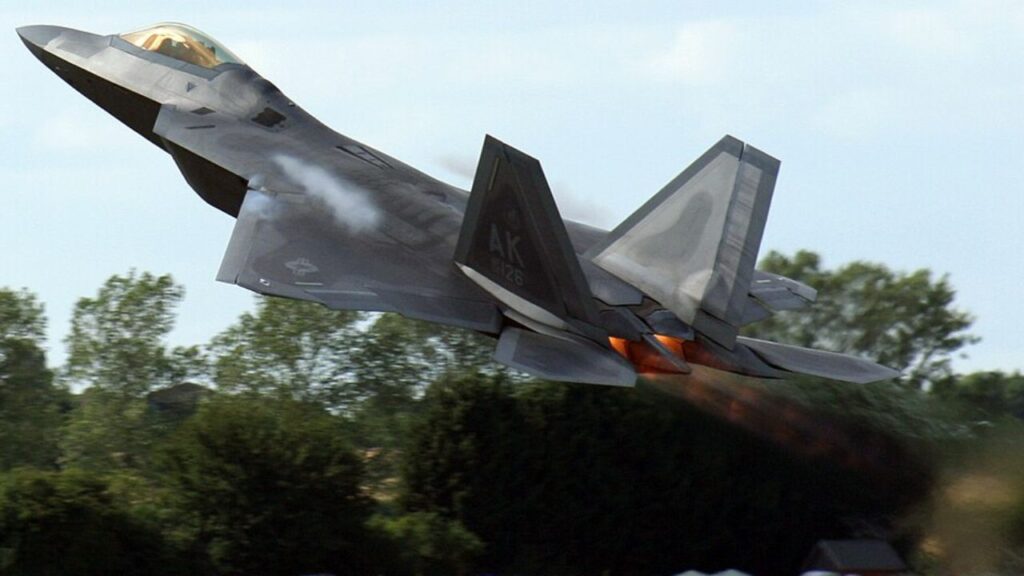
The Lockheed Martin F-22 Raptor is a fifth-generation fighter aircraft known for its stealth, speed, and agility. Introduced in the early 2000s, the F-22 sets the standard for air superiority, with advanced avionics and supercruise capability allowing it to dominate the skies.
While production has ceased, the F-22 remains a vital component of the U.S. Air Force, thanks to its unmatched performance and cutting-edge technology. Regular updates and maintenance ensure that it continues to be a formidable presence in aerial combat.
Boeing E-3 Sentry
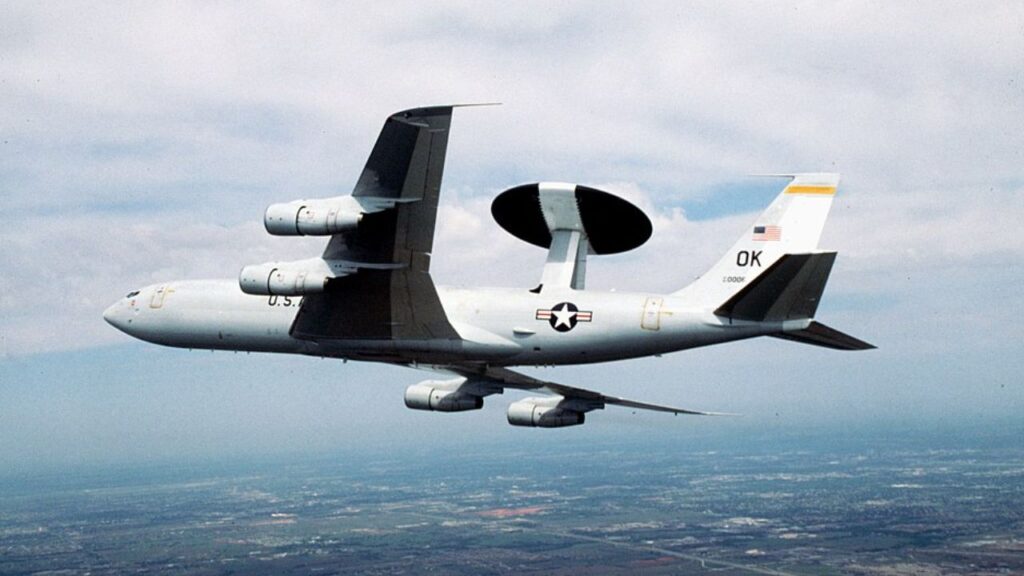
The Boeing E-3 Sentry, commonly known as AWACS (Airborne Warning and Control System), is an airborne radar system designed to provide all-weather surveillance, command, control, and communications. Introduced in the late 1970s, the E-3 has been pivotal in modern warfare, offering critical situational awareness.
With its distinctive rotating radar dome, the E-3 can track both friendly and enemy aircraft, coordinating air operations effectively. It remains in service with several air forces, thanks to periodic upgrades that enhance its radar and communication capabilities, ensuring its continued relevance in contemporary conflicts.
McDonnell Douglas AV-8B Harrier II

The McDonnell Douglas AV-8B Harrier II is a vertical/short takeoff and landing (V/STOL) aircraft known for its unique ability to hover and land in confined spaces. Introduced in the 1980s, the Harrier II provides close air support and ground attack capabilities to various military forces.
Its versatility and maneuverability make it ideal for operations from amphibious assault ships and forward operating bases. Despite being replaced by newer aircraft in some roles, the Harrier II continues to serve in several countries, highlighting its enduring utility and adaptability.
Fairchild Republic A-10 Thunderbolt II
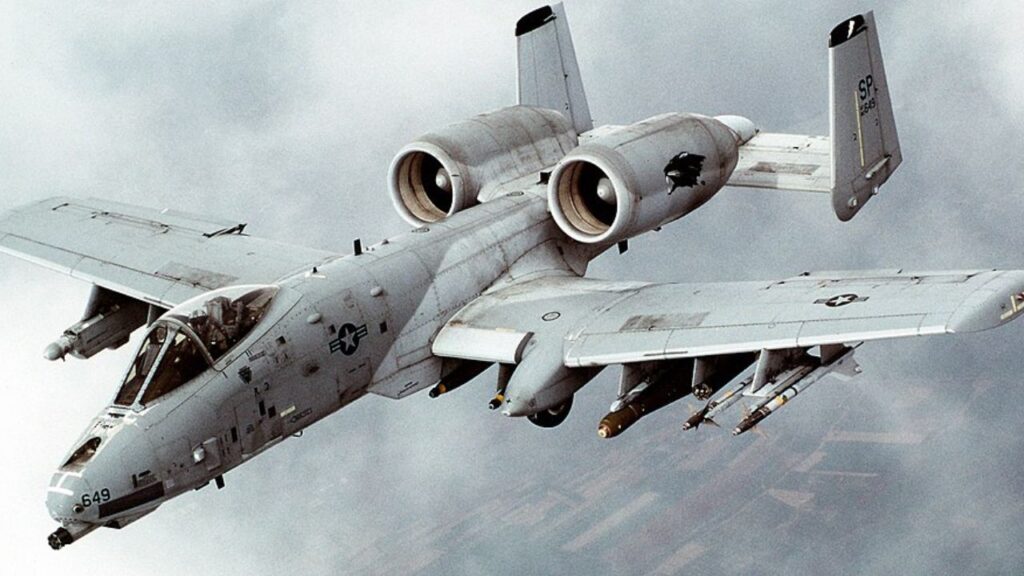
The Fairchild Republic A-10 Thunderbolt II, affectionately known as the “Warthog,” is a ground-attack aircraft designed for close air support of ground forces. First flown in the 1970s, the A-10 is celebrated for its durability, survivability, and powerful 30mm GAU-8/A Avenger cannon.
The A-10 has proven invaluable in various conflicts, from Operation Desert Storm to ongoing operations in the Middle East. Its ability to operate in austere environments and deliver precise firepower makes it a favorite among pilots and ground troops alike. Continuous updates ensure the A-10 remains a formidable force on the battlefield.