
Survivability is again the defining requirement in ground-vehicle design—not because any platform can “tank” every modern threat, but because today’s battlefields punish exposure. In drone-saturated fights and artillery-heavy engagements, the vehicles that matter most are the ones that can take damage, protect their crews, and remain recoverable and repairable. None of these machines are invulnerable, and outcomes still hinge on tactics, training, maintenance, and combined-arms support. But some vehicles are built from the outset to stack the odds in the crew’s favor.
Below is a news-analysis look at 10 vehicles and vehicle families widely associated in public reporting with crew-survivability-focused design. The shared approach is layered protection: armored architecture, mine-blast mitigation, spall reduction, fire suppression, compartmentalization, redundancy, and—increasingly—active protection systems (APS) and counter-drone adaptations such as roof add-ons and “cage” structures.
1) M1 Abrams (United States)
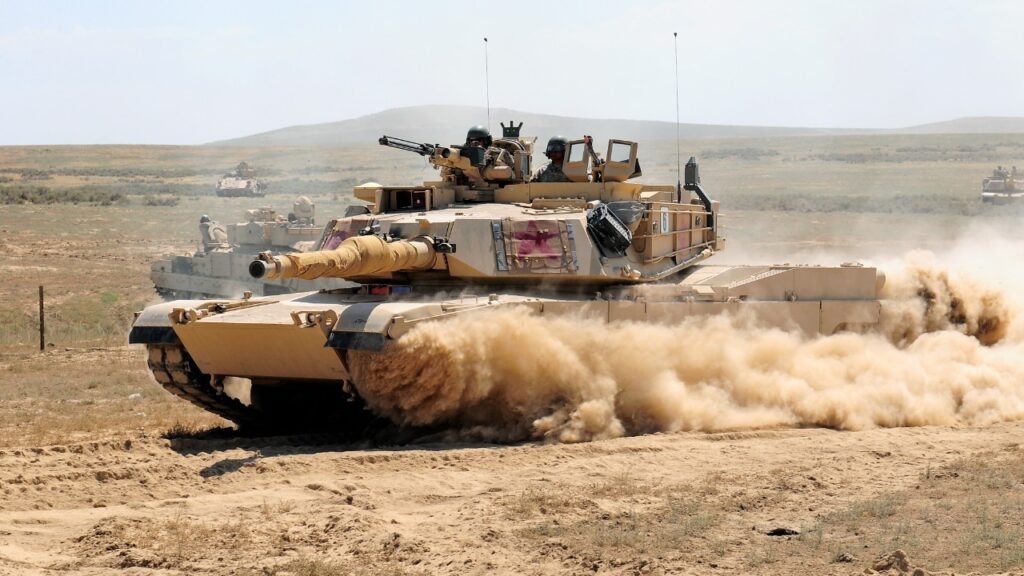
The M1 Abrams is often treated as a benchmark for Western main battle tank crew protection. Its survivability reputation is closely tied to design choices intended to prevent a penetration from becoming a catastrophic, crew-killing event—especially through separation and damage-control measures discussed widely in open reporting.
Strategically, heavy MBTs like Abrams are valued because they can absorb punishment while staying relevant in combined-arms maneuver. The trade-off is logistical: higher protection generally means higher weight, greater maintenance demands, and heavier fuel and recovery requirements—factors that shape how quickly a force can deploy and how reliably it can recover damaged vehicles under fire.
2) Merkava (Israel)

Israel’s Merkava family is frequently cited in survivability discussions as a vehicle shaped by hard operational lessons with an explicit emphasis on crew protection and damage limitation. That design philosophy remains relevant in close combat, urban engagements, and ambush-prone environments where threats can appear at short range and from unexpected angles.
Merkava also illustrates a broader point: survivability is not only hardware. Even a well-protected tank depends on infantry integration, route control, and layered defenses against ATGMs and drones—conditions that often drive upgrade priorities as much as raw armor performance.
3) Namer heavy APC (Israel)
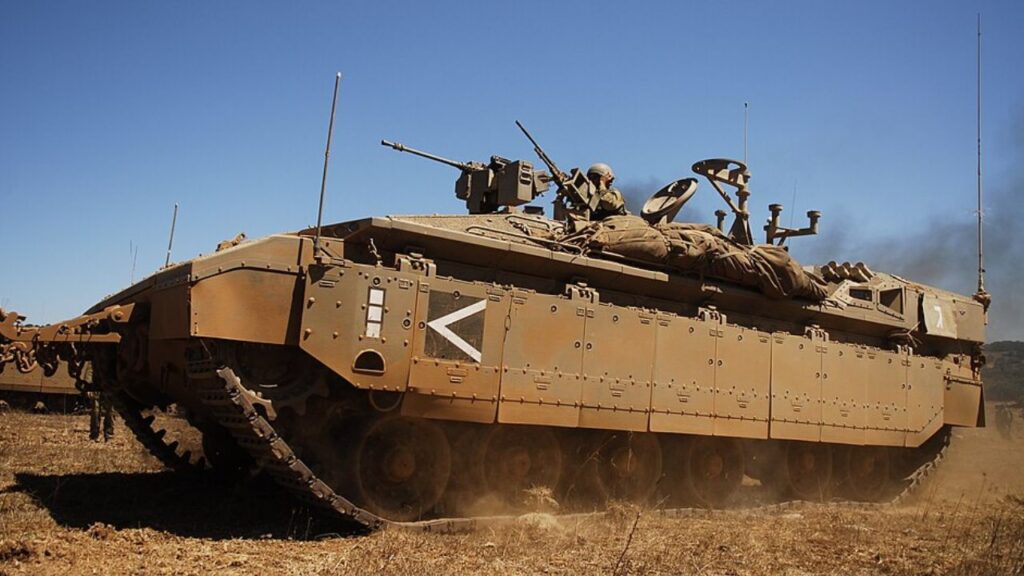
The Namer is commonly described as a “protected transport” built to move infantry under armor closer in spirit to tank-level protection than traditional APCs. In environments where dismounted infantry are essential for clearing and holding terrain, heavily protected carriers can reduce risk while keeping squads available for repeated missions.
The drawback is practical rather than conceptual: heavy APCs tend to be costly and heavy. That can limit fleet size and complicate strategic mobility and sustainment, forcing trade-offs between fewer highly protected vehicles and larger numbers of lighter platforms with different risk profiles.
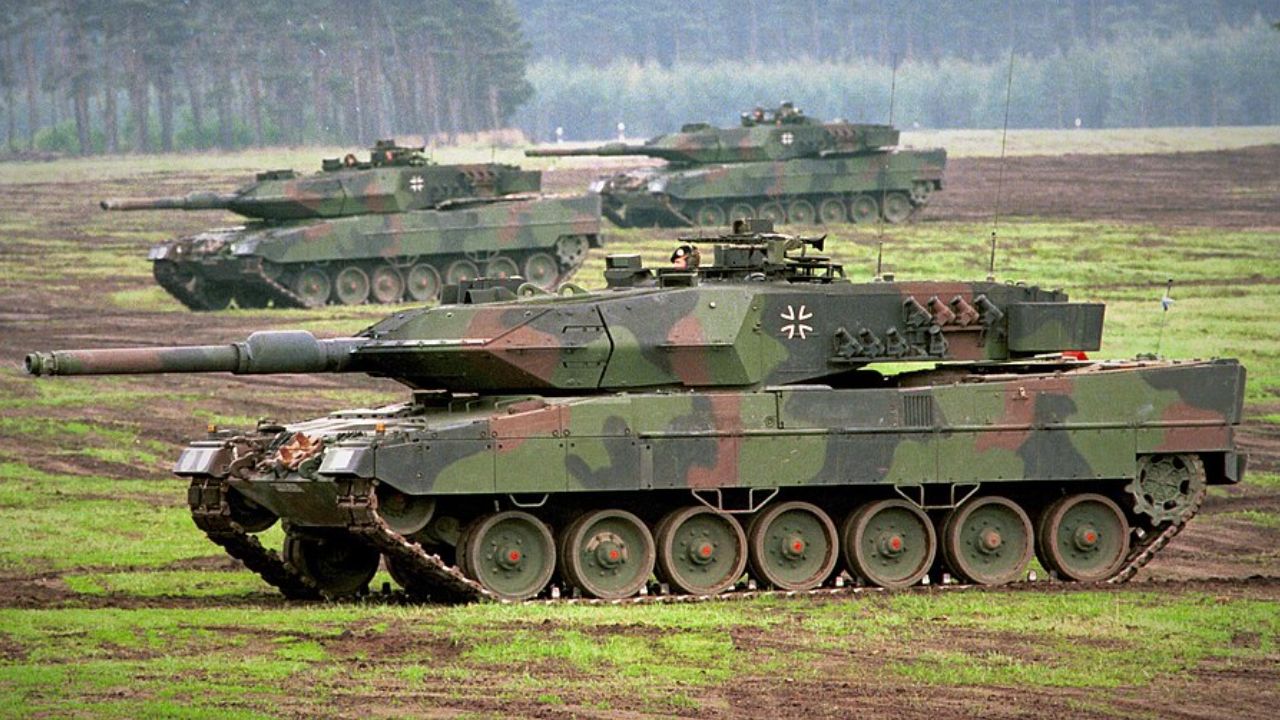
4) Leopard 2 (Germany)

Germany’s Leopard 2—produced by firms widely associated in public reporting with KMW and Rheinmetall—regularly appears on “survivable MBT” lists thanks to its reputation for robust protection and its long-running upgrade pathway. Modernization packages discussed publicly often emphasize improved armor modules and better situational awareness, reflecting how survivability evolves with the threat.
In peer-conflict planning, Leopard 2’s survivability story also includes sustainment. Protection is only part of staying power; so are spare parts, trained maintainers, and recovery assets that turn battlefield damage into a repair problem instead of a permanent loss.
5) Challenger 2 / Challenger 3 (United Kingdom)
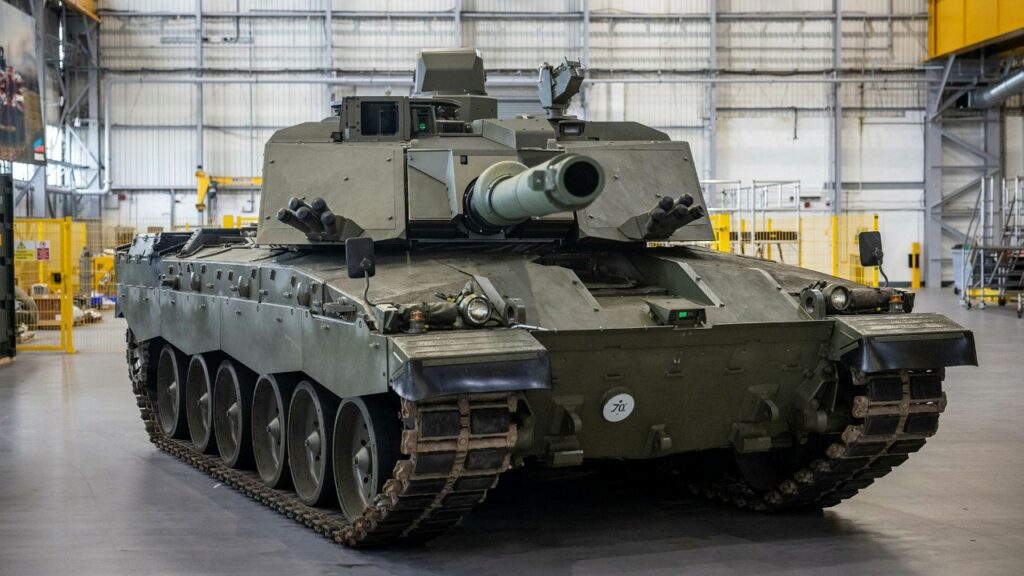
The Challenger line—Challenger 2 in service and Challenger 3 as an upgrade track associated with Rheinmetall BAE Systems Land—fits this list as an example of heavy armor being modernized for contemporary threats. Public discussion of such programs often leads with lethality and sensors, but the survivability dimension is about keeping pace with changing risks, including top-attack and precision fires.
For the U.K., that matters because a smaller armored force depends on high readiness and durable platforms to remain credible over time. Delays in upgrades can widen a protection gap as threats evolve faster than fleets can be refit.
6) CV90 (Sweden; BAE Hägglunds)

The CV90 infantry fighting vehicle is often cited as a survivable IFV platform, with attention in public reporting on modular protection and the ability to adapt with mission-specific kits. For IFVs, survivability is not just about frontal armor; it includes crew-compartment protection, spall mitigation, fire suppression, and maintaining mobility after damage.
In combined-arms maneuver, the IFV is where protection becomes especially consequential: it carries infantry who must dismount into danger and then remount to reposition. A more survivable IFV can expand commander options—so long as wider force-level defenses help manage drones, artillery, and anti-armor systems.
7) VBCI (France; Nexter)

France’s VBCI, associated with Nexter in public reporting, represents the wheeled IFV/APC approach: balancing protection with mobility and deployability. Wheeled platforms are often valued for operational reach and a lighter logistical footprint than heavy tracked vehicles, which can support faster reinforcement and easier sustainment.
At the same time, survivability trade-offs remain. Depending on configuration and environment, wheeled vehicles may be well protected against small arms and fragments yet still face serious risk from mines, heavy anti-armor threats, and top-attack munitions. That is why current survivability conversations increasingly include add-on protection, signature management, and integration with counter-UAS and electronic-warfare support.
8) Stryker (United States)

The Stryker family is often used to illustrate how survivability evolves in the field: protection packages and internal upgrades tend to follow the threat, from small arms and RPGs to mines/IEDs—and now drones. The broader lesson is that survivability is iterative: a vehicle enters service as a baseline, then operational feedback drives improvements in protection, awareness, and tactics.
Strategically, Stryker-type fleets also matter because they can be sustained and generated at scale more readily than the heaviest armor. In prolonged conflicts, that scale—paired with repairability and parts availability—can heavily influence how many vehicles are actually mission-capable day to day.
9) MRAP families (United States: Cougar/MaxxPro as illustrative examples)
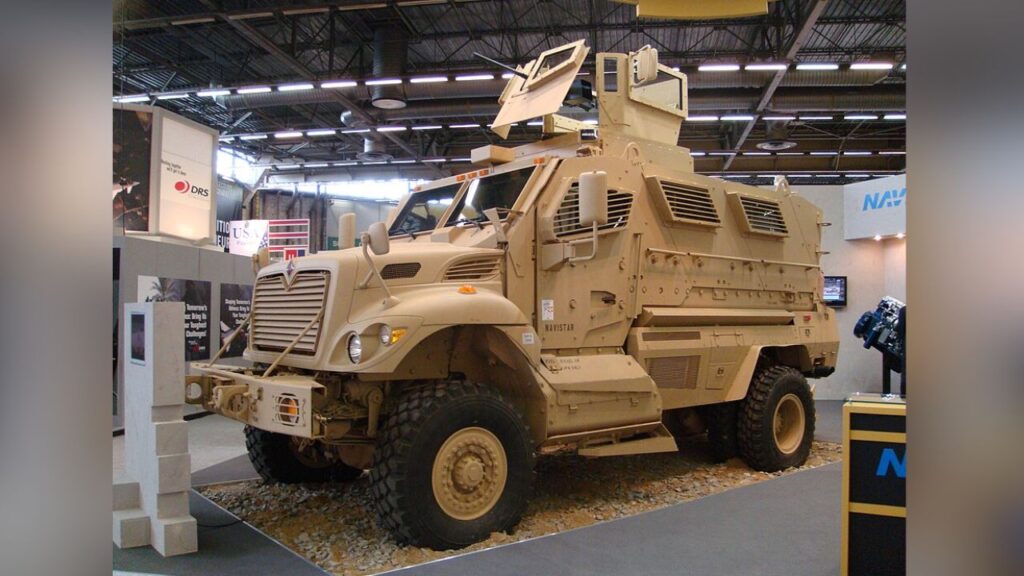
Mine-Resistant Ambush Protected (MRAP) vehicles are among the clearest examples of “crew survivability first” design from the last two decades, shaped directly by mine and IED threats. Widely recognized MRAP names such as Cougar and MaxxPro are often used as shorthand for the category rather than as claims that any single model is the best answer to every battlefield problem.
MRAPs shifted expectations by emphasizing blast shaping, ride height, and internal energy management to improve survival in mine/IED environments. Their limitations are equally important: weight, a higher center of gravity, and constrained off-road mobility can reduce usefulness in maneuver warfare, especially in broken, muddy, or cratered terrain.
10) Kirpi MRAP (Turkey; BMC)

Turkey’s Kirpi MRAP, associated with BMC, is frequently mentioned among modern mine-protected vehicles designed around convoy security and operations in IED-prone environments. As with MRAPs generally, the survivability focus is on blast protection and preserving the crew in ambush conditions rather than defeating every threat through armor alone.
Kirpi-type vehicles also underscore a procurement reality: survivability gains can sometimes be fielded quickly through mission-focused designs. But sustained performance in high-intensity warfare still depends on parts pipelines, trained mechanics, and recovery capacity—because protecting crews is only part of the challenge; keeping vehicles in service afterward is the other half.
What survivability looks like now: layered protection and faster adaptation
Across these platforms and categories, the survivability “stack” is increasingly consistent: modular/composite armor, spall liners, fire suppression, compartmentalization, and redundancy—augmented by APS where it is available and practical. The threat environment now blends ATGMs, mines/IEDs, artillery fragments, and drones/loitering munitions, with roof vulnerability and top-attack risk looming larger than many legacy designs originally assumed.
That helps explain the visible trend: not only heavier armor, but quicker adaptation. Roof add-ons, field-expedient cages, electronic-warfare support, better sensors, and tactics that reduce exposure time are becoming as central to survivability as traditional frontal protection.
What changes next: readiness, upgrades, and the recovery equation
Expect survivability investment to keep shifting toward integration—APS, counter-UAS measures, signature management, and the recovery/repair capacity that turns a hit into a maintenance event instead of a write-off. For many armies, the constraint will be throughput: budgets, industrial capacity, and how rapidly existing fleets can be upgraded without hollowing out readiness.
The promise implied by “maximum crew survivability” ultimately depends on combined arms. Even highly protected vehicles can be lost to top-attack munitions, multiple hits, artillery, mines, or catastrophic fires—especially when isolated. The vehicles above stand out less because they are untouchable and more because they reflect sustained design attention to saving crews in the real conditions of modern war.