
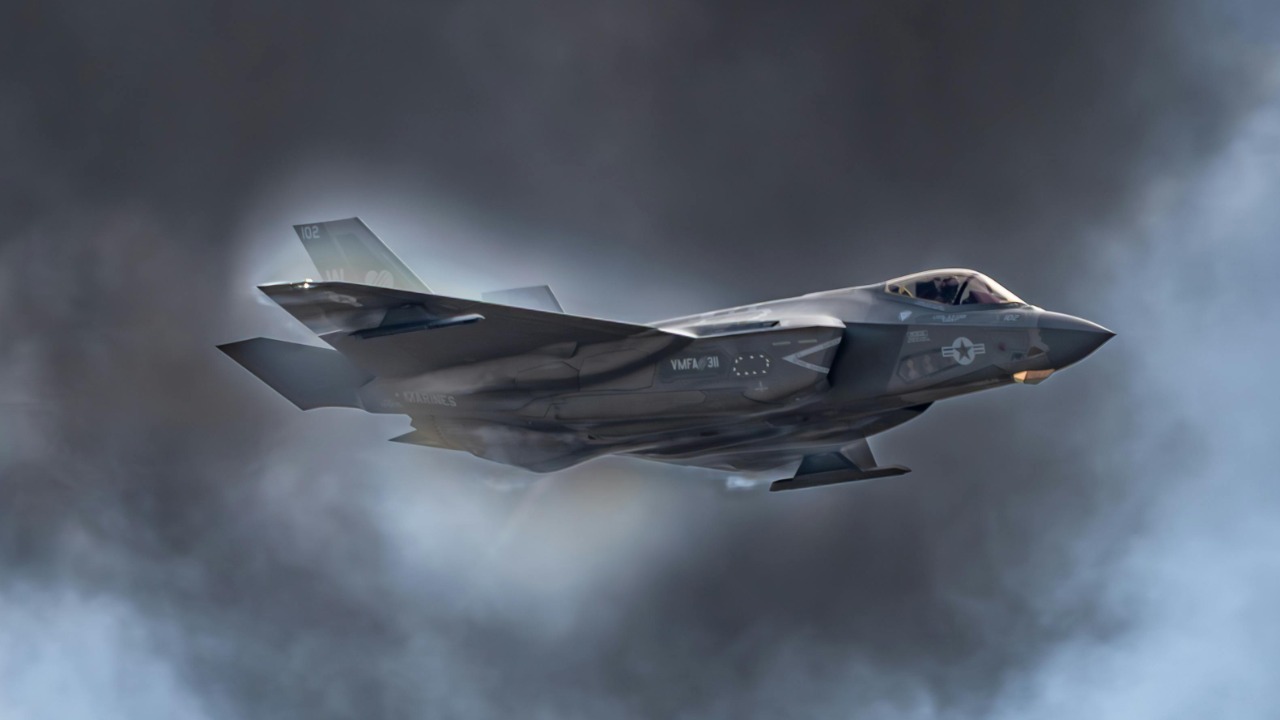
The F-35 Lightning II became the Pentagon’s largest aircraft program not because it is uniquely expensive per jet, but because it was structured to be a default tactical aircraft family across multiple U.S. services and an expanding group of allied air forces. When a single program is expected to deliver large procurement quantities and then be sustained, upgraded, and operated for decades, “largest” is ultimately a description of scale: a long-lived fleet, a multinational support enterprise, and a modernization pipeline designed to run for generations.
That same scale helps explain why the F-35 remains a constant feature in defense debates. Advocates emphasize stealth, sensors, and networking for operations in contested environments. Critics point to the complexity of development, the demands of software-driven upgrades, and the maintenance workload that can limit availability. Those tensions are not incidental—they are a byproduct of the program’s ambition to cover very different missions under one family of aircraft.
What happened: one program absorbed multiple missions
The main driver of the F-35’s size is structural. The Joint Strike Fighter concept aimed to consolidate a wide set of fighter and attack roles into a common family of aircraft. In U.S. service, that meant three variants for three branches: the Air Force’s F-35A, the Marine Corps’ F-35B, and the Navy’s F-35C, each shaped by different operating requirements.
In practice, that makes the program feel like three closely linked efforts rather than one simple purchase. The variants share design lineage and a common modernization path, but their differences ripple through testing, training, basing, and sustainment. And because the F-35 is positioned to sit alongside—and in some cases replace or cover roles performed by—legacy aircraft such as the F-16, F/A-18, and A-10, the fleet footprint becomes large even before considering international adoption.
Who is involved: a U.S.-led, multinational industrial system
The program’s size is also amplified by how it is organized. The United States Department of Defense leads the effort. Lockheed Martin is the prime contractor, Pratt & Whitney provides the engine, and a broad supplier base supports production and sustainment. International partners and Foreign Military Sales customers extend the production run and increase the long-term demand for training, parts, repairs, and upgrades.
This is why “largest program” is as much an industrial description as a military one. A wide supplier footprint spreads work across many regions, which can strengthen political backing in the U.S. and among partner countries. It also creates shared dependency: a complex aircraft tied to a globally distributed parts and maintenance pipeline makes logistics performance a strategic concern, not just an accounting detail.
Why it got so big: three variants, one modernization engine
The F-35’s central tradeoff is its central design choice: three variants built from a common foundation. The F-35A is optimized for conventional land-based operations, the F-35B for expeditionary and amphibious operations, and the F-35C for carrier aviation. Managing commonality while accommodating variant-specific needs increases complexity, and it makes changes—whether fixes, upgrades, or configuration shifts—more consequential across the fleet.
That dynamic is reinforced by the program’s software-heavy approach. Capability is delivered through block upgrades over time rather than arriving all at once, which means the aircraft’s effective capability depends on steady progress in development, testing, and fielding. This approach can keep the platform aligned with evolving threats, but it also ties operational outcomes to the discipline of upgrade execution long after the first aircraft are delivered.
Why it matters: contested airspace, coalition interoperability, and deterrence
Strategically, the F-35 is intended to support U.S. and allied airpower in contested environments that include integrated air defenses and advanced fighters. The idea is not simply a single performance metric, but an aircraft that combines stealth, sensors, and networking to operate as a survivable, information-rich node in high-threat airspace. Many specifics behind these advantages are variable or not publicly detailed, but the purpose is straightforward: expand commanders’ options while reducing risk in demanding scenarios.
The program’s coalition role is equally central to its scale. When multiple allied air forces operate a common fifth-generation platform, interoperability can be easier to build into training, basing, and operational planning. That can strengthen deterrence in a practical way: potential adversaries must account for a wider set of forces that can work together with compatible tactics and support structures.
The cost debate: procurement versus sustainment (and why “largest” often means O&S)
Public discussion often focuses on headline numbers, but the more useful distinction is between procurement and operations & sustainment. Buying aircraft is only the beginning of decades of costs tied to maintenance, spares, upgrades, training, and the logistics systems that keep aircraft mission-capable. Because the F-35 is planned as a widely fielded, long-lived family, sustainment is a major driver of overall scale—and a consistent source of scrutiny.
Availability is where those debates become real for operational units. A large fleet on paper does not guarantee a large number of jets ready on a given day; that depends on maintenance throughput, parts flow, and the maturity of the support enterprise. Critics argue the maintenance and logistics burden can suppress readiness, particularly for a software-centric aircraft that evolves through upgrades. Supporters argue performance can improve as the enterprise matures and processes are refined. What is clear either way is that the program’s size magnifies sustainment outcomes—good or bad—across services and partner forces.
Scale effects: resilience and exposure
Scale can offer advantages. Large production runs can strengthen learning curves, stabilize supply chains, and expand the pool of trained operators and maintainers across the U.S. and partner countries. Over time, that breadth can improve flexibility in training, maintenance capacity, and parts distribution.
But scale also concentrates risk. When many organizations rely on a common aircraft family, bottlenecks in repair capacity, component availability, or upgrade integration can become fleet-wide constraints. As legacy fleets retire and roles consolidate, the health of the F-35 enterprise becomes more tightly linked to overall tactical aviation capacity—raising the stakes of sustainment policy, retrofit planning, and upgrade pacing.
What changes next: modernization, sustainment reform, and force-mix choices
The next phase of the story is less about whether the F-35 is here to stay—it is already embedded across services and allied fleets—and more about how effectively it can be sustained and modernized at scale. Block upgrades will remain central, which means testing capacity, software stability, and retrofit planning are operational enablers, not background tasks. Because the program touches so many users, even modest improvements or delays can cascade across multiple services and partner nations.
The F-35 will also continue to draw comparisons with other prominent defense efforts, even if those programs differ in purpose and structure. Its defining characteristic is scope: how many organizations it involves and how long it is expected to serve. Ultimately, the program’s “largest” status will be judged less by abstract labels than by practical outcomes—sustainment performance, modernization tempo, and day-to-day availability—because those factors determine whether the Pentagon’s biggest aircraft program translates into consistently usable combat power.
In the end, the F-35 became the Pentagon’s largest aircraft program because it represents a long-term choice to standardize a major share of U.S. and allied tactical airpower around a common, evolving fifth-generation family. That choice offers strategic upside in coalition operations and contested environments, while concentrating pressure on sustainment and upgrade execution. The program’s success will be measured by a simple operational reality: how many aircraft are ready, with what capability, when they are needed.