
The M4 Sherman’s reputation remains one of the most contested subjects in U.S. armored warfare history because it touches the most personal question a crew faces: what happens when the tank is hit. For many veterans, “survivability” wasn’t an abstract metric. It was whether a penetration meant a manageable bailout or a fast-moving fire inside the fighting compartment. A publication-ready account should focus less on later folklore and more on what the wartime loss and fire dynamics are reported to show.
Widely cited discussion of this debate often traces back to Belton Cooper’s memoir Death Traps. As summarized in Wikipedia’s entry on Death Traps, Cooper linked the Sherman’s combat losses to a recurring mechanism: the tank being penetrated and then burning, with ammunition fires playing a central role in his explanation. The same context also matters for balance. Historian Steven Zaloga has disputed some of Cooper’s broader conclusions, and Tank Historia notes that the popular “Ronson” label is considered by some historians a postwar myth rather than a term commonly used during WWII. Taken together, that framing points toward a cautious approach: emphasize reported loss and fire patterns, and avoid treating contested slogans as evidence.
M4 Sherman
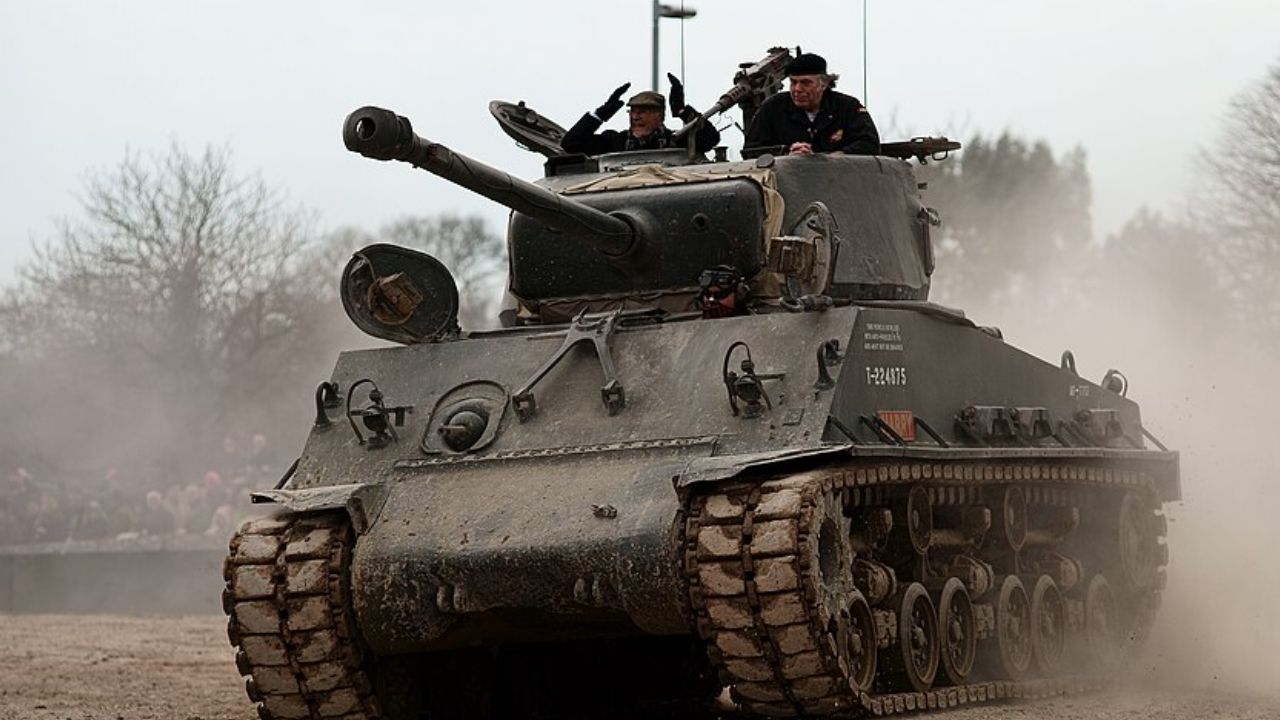
The M4 Sherman was the standard U.S. medium tank that became associated in popular memory with mass production and punishing frontline attrition. When some U.S. crews “feared” it, that didn’t necessarily mean they thought the tank was useless. It meant they had reason to worry about the consequences after the armor was defeated.
In the account summarized in the context for this piece, the fear centers on what followed a penetration—specifically, ammunition fires in a tank described by Cooper as thinly armored. That distinction matters. Crews can accept the idea that vehicles get knocked out; what erodes confidence is the belief that a single successful hit is likely to turn into a lethal fire.
Even without turning this into a universal verdict on the Sherman, that kind of experience can shape behavior. If crews expect a penetration to trigger an ammo fire, they may be quicker to bail out, more cautious about exposure, and less willing to accept positional risk. In that sense, “fear” becomes part of unit culture because it is tied to observed outcomes, not just reputation.
Belton Cooper’s memoir Death Traps
Belton Cooper’s memoir Death Traps sits at the center of the modern public understanding of why some U.S. tankers dreaded the Sherman. In the version of events reflected in the provided context, Cooper described extreme attrition and emphasized a specific destruction pathway: penetrations that led to ammunition fires. That linkage—hit, penetration, fire—is a major reason his narrative has remained influential.
The most concrete figures attributed to Cooper in the provided sourcing are tied to a single formation. In his telling, the U.S. 3rd Armored Division suffered a “580% Sherman loss rate” during the European campaign, described as 648 tanks destroyed and another 700 knocked out and repaired. Presented together, those numbers convey repeated cycling of tanks through combat: some written off, many disabled, recovered, returned, and exposed again.
Whatever a reader concludes about the memoir’s broader claims, those reported figures help explain how a fearful reputation could form. A pattern of frequent knockouts, combined with the expectation that penetrations could produce ammunition fires, is the kind of frontline experience that spreads quickly through crews and replacement channels.
U.S. 3rd Armored Division
The U.S. 3rd Armored Division is where Cooper’s argument becomes a story anchored to numbers rather than general impressions. The provided context states that the division’s reported experience amounted to a 580% Sherman loss rate across the European campaign, consisting of 648 Shermans destroyed and another 700 knocked out and repaired. Even taken strictly as one unit’s account, those are the kind of headline figures that can shape how an entire vehicle is remembered.
It is also important to be clear about what “580%” implies in this telling. It does not mean the division lost nearly six times its tank strength in a single moment. It points to cumulative losses over time—tanks replaced and then lost again—alongside a large number that were knocked out but recovered and repaired.
That kind of attrition has an obvious psychological effect. If crews repeatedly see vehicles disabled, recovered, and sent back out under the same threats—and if many of the worst outcomes are associated with ammunition fires after penetration—fear becomes less a myth and more a rational response to a brutal pattern.
Historian Steven Zaloga
Any responsible treatment of this topic has to acknowledge that it is debated, not settled by a single memoir. Historian Steven Zaloga is included in the context for that reason: he has disputed some of Cooper’s broader conclusions. That caveat doesn’t erase the loss-and-fire mechanism emphasized in Cooper’s account, but it does caution readers against treating one veteran’s experience as a definitive technical judgment for every unit and every engagement.
The practical value of Zaloga’s dispute, as framed here, is interpretive discipline. Memoirs can capture what crews saw and feared, but they can also generalize from a particular unit’s experience. In this case, it is possible for Cooper’s reported patterns—high cumulative losses and penetrations followed by ammunition fires—to be meaningful while some of the larger conclusions drawn from them remain contested.
For readers trying to understand the Sherman’s reputation, that distinction matters. “Fear” can be evidence of repeated battlefield outcomes. It is not, by itself, a complete technical assessment of the tank’s overall effectiveness.
Tank Historia
Tank Historia appears in the provided context as a check on one of the most common pieces of Sherman folklore: the popular “Ronson” nickname. As summarized there, the label is considered by some historians a postwar myth rather than a term commonly used during WWII. That matters because a memorable nickname can easily substitute for analysis, even when its historical footing is shaky.
Separating disputed labels from reported mechanisms also helps clarify what can be said with confidence within the bounds of the sourcing provided here. The context supports a specific explanation for why fear could take hold: severe attrition as described for the U.S. 3rd Armored Division, and a recurring concern in Cooper’s account that penetrations could lead to ammunition fires. Those points do not require leaning on a catchphrase whose wartime use is questioned.
In the end, the Sherman debate is best handled by keeping the focus where the evidence in this context points: wartime loss and fire dynamics as described in widely cited summaries of Death Traps, paired with clear acknowledgment that historians such as Steven Zaloga dispute some of Cooper’s broader conclusions. That combination explains why some U.S. crews feared the M4 Sherman—without turning a contested legend into the whole story.