
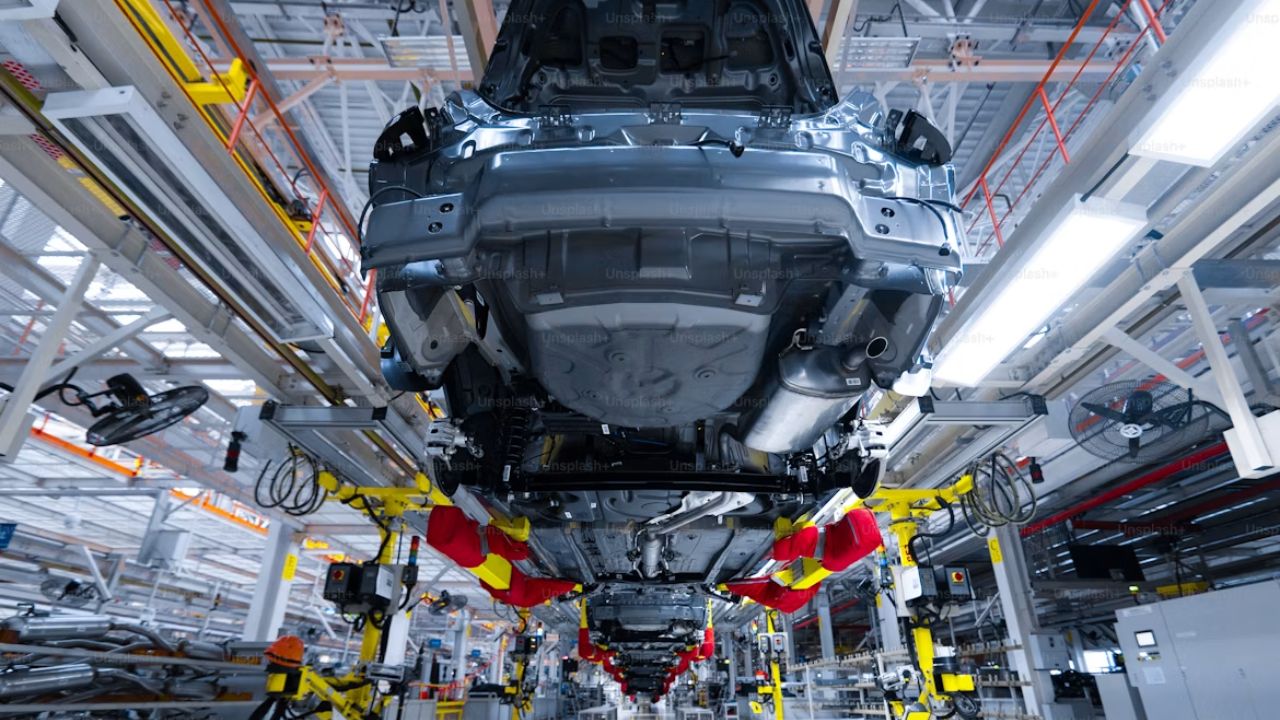
Civilian automakers and their suppliers are moving deeper into defense supply chains—not by trying to displace major defense primes, but by providing industrial capacity in areas where demand is rising fastest: mobility platforms, drone-adjacent components, sensors, and other dual-use electronics. The shift is most visible in the U.S. and Europe, where NATO rearmament and Ukraine-driven demand have put a premium on one question alongside capability: how quickly can production scale? Governments are looking for resilient output that can surge without waiting years for specialized defense lines to ramp up.
For automakers, the timing reflects commercial pressure as much as strategy. The EV transition, fierce global competition, and margin squeeze are forcing hard decisions about factories, tooling, and how to keep skilled labor utilized through volatile consumer cycles. Defense work—often steadier than retail demand, and sometimes urgent—can offer diversification and help stabilize parts of the industrial footprint.
What’s actually happening: not tanks, but throughput
The trend is less about household auto brands becoming prime contractors for marquee weapon systems and more about supplier-level contracting and selective assembly that plays to automotive strengths. Typical targets include military trucks and logistics vehicles, autonomous ground-vehicle subsystems, drone and loitering-munition subassemblies, counter-UAS kits, wiring and communications harnesses, thermal-management components, battery packs, and production tooling.
These contributions matter because they sit in categories that get consumed and replaced quickly: spares, modules, and “good enough” systems that can be fielded in volume. In a sustained, high-tempo fight, the ability to replenish fleets, replace burned-out electronics, and keep drone inventories stocked can shape operational tempo. Automakers and suppliers do not need to design an entire system to be strategically relevant; delivering reliable parts at scale and on schedule can be enough.
Why defense wants auto capacity: scale discipline
Defense procurement can produce mission-tailored performance, but it has often struggled to surge production at acceptable cost and speed. Automakers, by contrast, are built around mass-manufacturing discipline: process control, automation, quality systems, and tightly managed supply chains. When governments ask for faster delivery and lower unit costs, the auto ecosystem—OEMs and Tier-1 suppliers—can look like an available pool of production expertise and capacity.
There is also a practical electronics driver behind the strategy. Modern forces burn through motors, sensors, compute modules, power electronics, and communications hardware in ways that increasingly resemble commercial electronics supply chains. Companies that already produce batteries, semiconductors-related modules, electric motors, and software-defined hardware can become valuable partners even when they never touch final weapons integration.
Why automakers are saying yes: diversification and a hedge against volatility
For large automakers—GM, Ford, Stellantis, Volkswagen-group firms, Toyota—and the wider supplier network behind them, defense work can provide a different demand profile than consumer sales. Government procurement is not immune to politics or budget cycles, but it is often less sensitive to interest rates, incentives, and quarterly swings in showroom traffic. In periods when EV adoption, pricing pressure, or competition compress margins, defense-adjacent contracts can help smooth revenue and keep lines running.
Industrial policy is reinforcing that logic in the U.S. and Europe. Re-shoring, subsidies, and “resilience” agendas are increasingly tied to national security. Facilities capable of producing electric drivetrains, battery modules, and power electronics are being viewed not only as commercial assets but also as potential surge capacity. Where conversion is feasible, “commercial overcapacity” can become “national capacity” without building an entirely separate industrial base.
The dual-use overlap: EV tech and military mobility
Mobility and power are among the clearest overlaps. EV drivetrains can offer quiet movement, high torque at low speeds, and onboard electrical power for sensors and communications—useful in certain military roles. Battery and thermal-management expertise can also translate into portable power, silent watch, and electrified auxiliary systems.
But the dual-use story is not a shortcut to battlefield advantage. Ruggedization, electromagnetic resilience, sustainment in harsh environments, and performance under electronic warfare can reduce or negate off-the-shelf benefits. In practice, the opportunity is less “plug and play” and more “commercial foundations that still require military hardening and disciplined integration.”
Drones, sensors, and the production race
The overlap is especially visible in drones and counter-drone ecosystems. Key components—motors, controllers, cameras and sensors, wiring, compact power systems, and the manufacturing methods to build them consistently—sit close to the capabilities of companies already producing high-volume electronics and mechatronics. As demand for attritable systems remains high, defense customers are placing more weight on whether suppliers can scale and sustain production, not just build prototypes.
This is also where U.S. and European priorities converge: stockpiles, spares, and surge capacity. Readiness is as much an industrial problem as an operational one. A system that cannot be replenished quickly becomes a boutique capability, and boutique capabilities tend to get rationed in ways that can distort planning.
Who’s involved—and why much of it stays low-profile
Big-name automakers are part of the broader shift, but much of the work is happening deeper in the stack. Tier-1 suppliers that build power electronics, battery subsystems, drivetrains, embedded controllers, and related manufacturing equipment can be better positioned than consumer-facing brands to take on defense-adjacent roles. Their contributions often show up as subcontracts, “commercial technology partner” work, or tooling and process support rather than as a headline weapons announcement.
Keeping a low profile can also be deliberate. Some companies are wary of reputational backlash from consumers or employees who do not want a familiar brand associated with warfare. Others avoid drawing attention to supply-chain dependencies or export-control complexity before they have the compliance processes to manage it.
What changes next: procurement, compliance, and supply-chain hardening
If the trend continues, the biggest shifts may come less from new weapon categories and more from how defense buys, qualifies, and sustains what it already seeks to field. In the U.S., the Department of Defense and Army modernization efforts are increasingly shaped by capacity-first thinking—identify bottlenecks, expand output, and shorten time to field. In Europe, the logic is similar: accelerate production, rebuild stocks, and reduce single points of failure exposed by wartime consumption.
Bringing commercial industry into defense supply chains also adds friction. Export controls and ITAR-style compliance can slow timelines, restrict participation, and complicate globally distributed engineering. Cybersecurity requirements, IP protection, and the risk of leakage to pacing threats—often framed around Russia and China—mean defense work has to be treated as a different class of business, not simply another customer segment.
The strategic consequence: factories as deterrence
The underlying bet is that industrial capacity is becoming a form of deterrence. If an adversary believes the U.S. and Europe can replace losses, expand production of drones and vehicles, and keep electronics flowing despite disruption, the coercive value of a short, sharp war diminishes. If commercial supply chains prove fragile—overconcentrated, dependent on constrained semiconductors or critical minerals—then operational plans can collapse into logistics and production math.
Automakers are not positioned to replace firms like Lockheed Martin or Rheinmetall as system integrators, and the current shift does not require them to. As conflict becomes more defined by stockpiles, repair cycles, and attrition—especially in drones and vehicles—companies that can manufacture motors, batteries, sensors, harnesses, and modules at scale gain strategic relevance. The next question is less whether civilian industry can contribute to military production, and more whether governments and companies can build the contracts, compliance, and hardened supply chains needed to keep producing when it matters.