
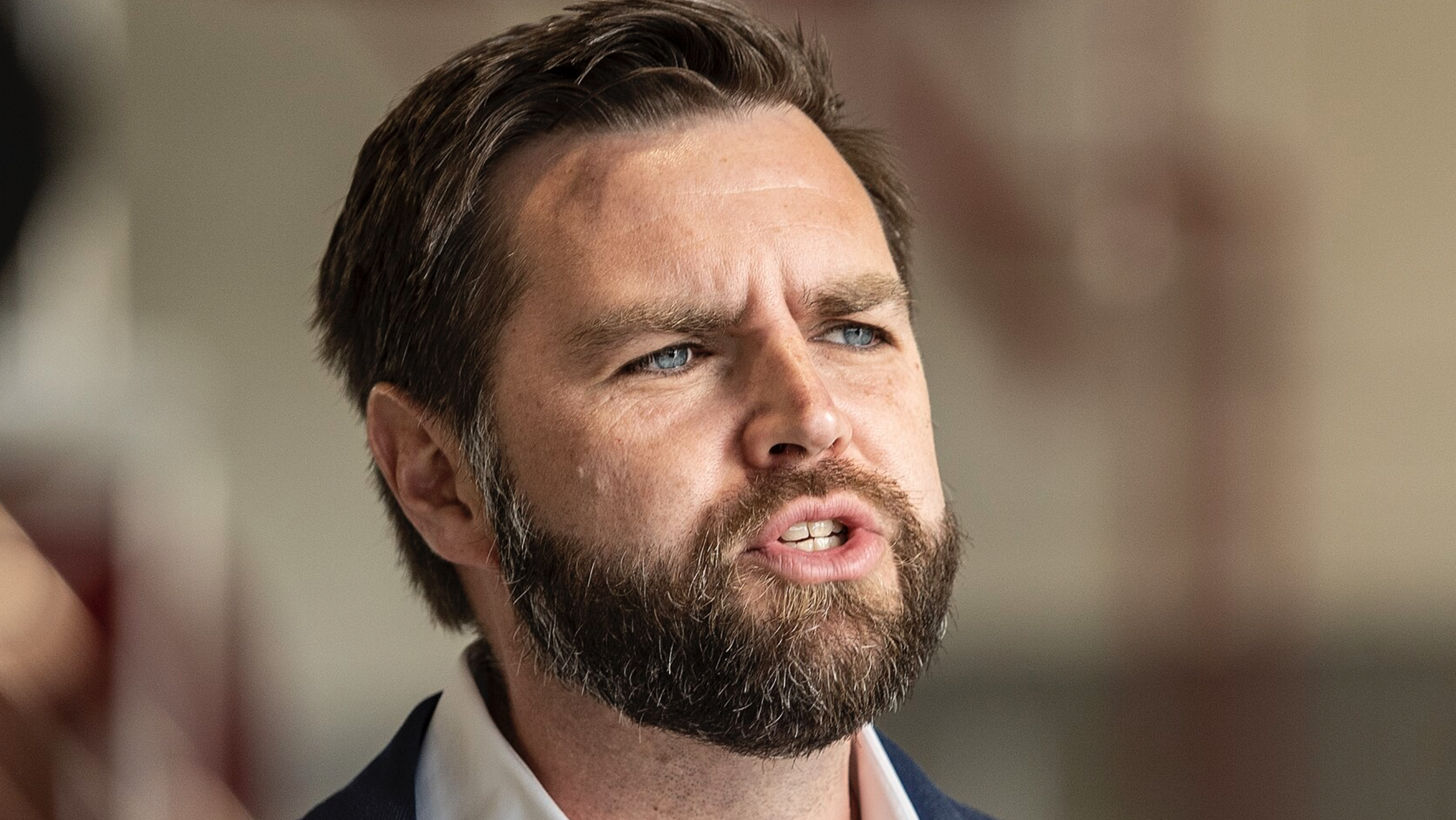
Vice President JD Vance departed Joint Base Andrews on June 20, 2026, for Switzerland to begin the next round of negotiations with Iran, even as Tehran moved the same day to close the Strait of Hormuz again, citing what it called Israeli violations of the ceasefire in Lebanon. “Looking forward to starting the technical talks with the Iranians, the Pakistanis, and the Qataris,” Vance told reporters before boarding his flight. “Our understanding is that the Iranians have just landed. The Qataris, the Pakistanis, and some of our technical negotiators are there on the ground. So look, we’ll have a couple days of talks. We want to get this thing kicked off in the right way. There’s a lot to discuss, but we’re going to go through it all.”
What Vance Said About Lebanon
Asked whether renewed fighting in Lebanon threatened to derail the broader negotiating process, Vance said the situation was improving despite the headlines. “Marco and the entire team have been actively managing what’s going on in Lebanon,” Vance said, referring to Secretary of State Marco Rubio. “Despite the headlines, things are actually getting better there. Things have calmed down a little bit. It’s gonna be something we’re just gonna have to continuously manage to ensure that Israel and Lebanon are both safe and secure.” He described the central challenge as a “chicken-and-egg problem” in which retaliatory strikes by both sides keep restarting the cycle of violence, saying officials simply need to “stop the shooting for long enough to get the ceasefire to hold.”
Israel and Hezbollah had only re-committed to their ceasefire earlier Saturday, after an earlier truce collapsed within hours on Friday — the second such breakdown in as many days. Hezbollah had accused Israel on Friday of failing to comply with any ceasefire agreement covering Lebanon for nearly two years, and said it would continue striking Israeli forces in response.
What Vance Said About the Negotiating Structure
Vance described the upcoming talks as primarily aimed at establishing process rather than resolving substantive issues immediately. “I think number one, just getting things set up in the right way and getting the actual structure of the negotiation in place,” he said. “So the way that we’re gonna do this is that we’re gonna have a principal level of political leadership at the top, and then obviously the technical team is gonna stay on the ground.” Vance said he could only remain in Switzerland for “a day or two” before returning, even as working-level talks among technical experts were expected to continue afterward. “I think we’re gonna hopefully make progress on the nuclear issue, make progress on the Lebanon ceasefire issue,” he said. “Those are the two big things that I think we’re gonna be focused on. I’m sure the Iranians are gonna have issues they’d like to discuss as well.”
The Strait of Hormuz Closure
The trip unfolded against the backdrop of a fresh dispute over the Strait of Hormuz. The Islamic Revolutionary Guard Corps’ naval division warned commercial vessels against approaching the strait after Iran announced Saturday it was closing the waterway again, accusing the U.S. of violating its obligations under the ceasefire because of Israel’s continued operations in Lebanon. The IRGC said vessels attempting to cross “could encounter mines or be targeted by navy forces,” and Iranian state broadcaster IRIB reported that traffic through the Persian Gulf had grown noticeably lighter.
The Trump administration disputed that the strait was actually closed. Vance told Fox News that “we’re not seeing any evidence that the Iranians are still closing down the Strait of Hormuz,” adding that “we got 16 million barrels out of the Strait of Hormuz in just the last 24 hours. That is basically to where it was before the war even started. And so that suggests that the straits really are open.” He acknowledged that clearing any remaining mines from the waterway “is going to take some time.”
The Delegations
Iran’s delegation would be led by Mohammad Bagher Ghalibaf, the speaker of Iran’s parliament, who has played a central role in the country’s negotiations throughout the conflict. Foreign Minister Abbas Araghchi and Foreign Ministry spokesperson Esmaeil Baghaei were also part of the delegation, alongside several other officials, including banking and oil sector representatives. Iranian Foreign Ministry spokesperson Baghaei said Iran intended to “follow up on and demand the implementation of the other side’s commitments” given the dispute over Lebanon.
White House envoy Steve Witkoff and Trump’s son-in-law, Jared Kushner, were already on the ground in Switzerland addressing technical aspects of the negotiations before Vance’s arrival. Pakistani Prime Minister Shehbaz Sharif and Pakistan’s army chief, Field Marshal Syed Asim Munir, were also set to participate, alongside Qatari mediators, with Pakistan’s Prime Minister’s Office confirming that technical-level talks would take place June 21 at the Bürgenstock resort in central Switzerland as a follow-up to the Islamabad Memorandum of Understanding. The director of the International Atomic Energy Agency was also expected to take part in the discussions, according to Axios.
What the U.S. Is Seeking
Axios reported, citing two regional sources with direct knowledge of the talks, that the United States hoped the first round of negotiations would conclude with Iran formally inviting United Nations inspectors to visit nuclear sites that were bombed by the U.S. and Israel during the earlier conflict. In exchange, the sources said, the U.S. is prepared to grant Iran access to some of its frozen funds, beginning with a $6 billion account held in Qatar that Iran would be permitted to use to purchase humanitarian goods. The last IAEA inspection of those sites took place before the war that began in 2025.
Background on the Delayed Trip
Vance’s departure had originally been planned for Thursday but was postponed at the last minute, with a White House spokesperson saying at the time that “the logistics of these negotiations have never been simple or predictable.” Switzerland’s foreign ministry confirmed Friday that the scheduled talks among the U.S., Iran, Qatar, and Pakistan had been postponed, before announcing Saturday that it welcomed the arrival of Iran’s delegation and that discussions tied to implementing the memorandum of understanding would proceed. “For reasons of confidentiality, no further information can be provided regarding those present or the discussions,” the Swiss foreign ministry said in a statement.
Vance described his own travel planning over the preceding days as “a delicate coordination dance” requiring attention to “diplomatic protocols,” telling reporters that the timing of his departure had shifted multiple times as officials worked out the logistics with Iranian, Qatari, and Pakistani counterparts.
A Notable Shift in Strategy
CNN noted that allowing Iran to raise the Israel-Hezbollah conflict in Lebanon as part of the Switzerland talks marked a shift in U.S. strategy, since neither Israel, Hezbollah, nor the Lebanese government are formal parties to the negotiations. The memorandum of understanding signed earlier in the week by Trump and Iranian President Masoud Pezeshkian calls for hostilities to end “on all fronts,” including in Lebanon, even though Israel and Hezbollah were not signatories to that agreement.