
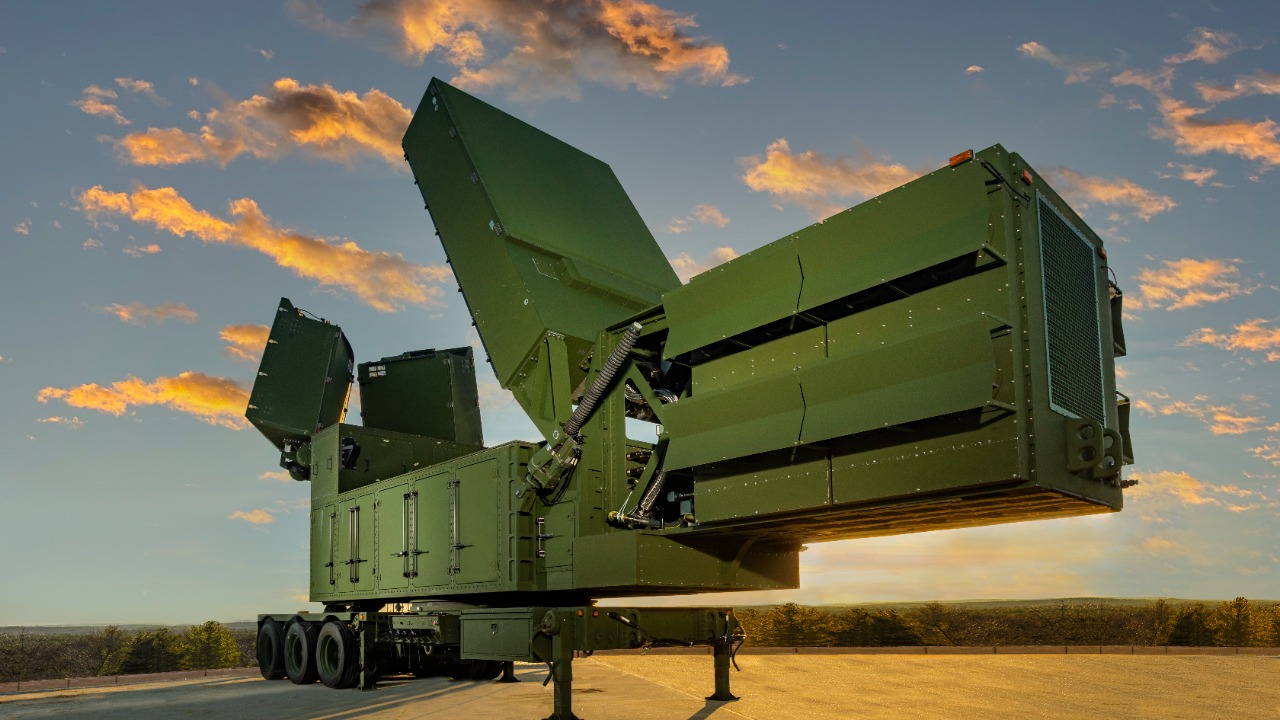
The U.S. Army has locked in a $1.03 billion commitment to field a new generation of ground radar, handing Raytheon the latest and most visible vote of confidence in its Lower Tier Air and Missile Defense Sensor program. The award cements the system’s transition from development to scaled production and signals how urgently the service wants to refresh the radar backbone of its air and missile defenses. It also underscores how a single contract can reshape the industrial and strategic landscape around one of the Army’s most critical modernization priorities.
The deal, structured as a major production modification, is designed to accelerate deployment of the LTAMDS radar to operational units while keeping pressure on performance and schedule. For Raytheon and its parent RTX, the award validates years of investment in advanced sensing technology and positions the company at the center of U.S. and allied efforts to counter faster, more elusive aerial threats.
The $1.03 billion contract and how it fits into the Army’s radar push
The Army has treated the Lower Tier Air and Missile Defense Sensor as the anchor of its next-generation air and missile defense architecture, and the new award reflects that priority. According to contract details, the service used an Army Contract Modification to channel $1.03 billion into continued low-rate initial production and associated support. The structure allows the Army to scale quantities while it refines fielding plans and integrates the radar with existing command and control networks. For Raytheon Receives, the modification builds on earlier development and test phases and locks in a predictable production ramp that can support both U.S. and potential foreign demand.
Financially, the award is part of a broader pattern of large radar investments flowing to RTX. Earlier, the Army Awards $1.03 billion to RTX for LTAMDS Radar Production, underscoring how central the program has become to the service’s modernization accounts. A separate report notes that the U.S. Army has awarded Raytheon, a subsidiary of Arlington County Fortune 500 aerospace and defense contractor RTX, a $1.025 billion deal tied to the Lower Tier Air and Missile Defense Sensor (LTAMDS), highlighting how multiple tranches of funding are converging on the same capability. Together, these figures show that the Army is not experimenting at the margins but committing at scale to a radar it expects to serve as the lower-tier workhorse for years.
What LTAMDS is designed to do that Patriot could not
At the heart of the spending is a technical bet. The Lower Tier Air and Missile Defense Sensor is meant to replace the long-serving Patriot radar with a sensor that can see farther, track more targets, and survive in harsher electronic warfare environments. Program descriptions emphasize that the Lower Tier Air, or LTAMDS, was created by Raytheon to replace Patriot’s legacy radar within an Integrated Air and Missile Defense System (IAMDS). Quick Facts on the system describe its Role and Mobility as Expeditionary, towed, and road mobile, with a footprint that fits in C-class transport aircraft, which allows commanders to reposition coverage quickly as threats shift.
Foreign analysis has framed the capability leap in stark terms. One assessment argues that the new radar “will eliminate the shortcomings of Patriot,” citing its power and ability to “penetrate” electronic warfare interference and detect very fast and small targets at impressive distances. That same commentary notes that information about the system’s operating modes points to an ability to quickly switch between frequencies, a key attribute for survival in a contested spectrum. These claims, described as allegedly based on available technical data, align with the Army’s stated goal of fielding a radar that can handle cruise missiles, ballistic missiles, and advanced aircraft in a single integrated picture.
RTX’s industrial posture and the path from testing to production
The contract also reflects how RTX has positioned itself as a radar powerhouse. The company, which presents itself as a global aerospace and defense leader on its corporate site, has organized Raytheon as a core business segment focused on advanced sensing and effectors. Corporate materials on RTX highlight a portfolio that spans air and missile defense, command and control, and precision weapons, giving the firm a broad base to support programs like LTAMDS. Within that structure, Raytheon has been able to move from prototype arrays to production representative units while keeping design authority and manufacturing under one umbrella.
That industrial posture has been reinforced by a series of Army decisions. Earlier in the program, RTX was cleared to begin low-rate initial production of the Lower Tier Air for the Arm, marking the transition from engineering and manufacturing development to fieldable hardware. A later modification, described as Army Awards RTX $1.7 Billion Contract Modification for LTAMDS Radar Low Rate Initial Production, boosted the number of systems on order and extended production in Andover, MA, through 2029. That same account notes that RTX’s LTAMDS system previously achieved key test milestones, giving the Army confidence to scale up. Together, these steps show a deliberate march from Sensor development to sustained manufacturing, with the latest $1.03 billion award serving as a capstone to the early production phase.
Strategic implications and what comes next for Army air defense
The strategic logic behind the Army’s spending is straightforward. Adversaries are fielding faster ballistic missiles, low-flying cruise missiles, and small unmanned systems that can saturate older radars. The service wants a sensor that can handle that mix while feeding data into a broader network of shooters and command nodes. Analysts note that RTX Secures a $1.03B Contract to Supply LTAMDS System to the Army, and that this investment is framed as a bet on cutting-edge radar technology. Another report describes how the U.S. Department of Defense has tasked Raytheon to produce LTAMDS for the U.S. Army under a deal highlighted by Rojoef Manuel, with the system expected to track targets moving at thousands of miles per hour, a capability referenced in coverage by Rojoef. These performance expectations explain why the Army is willing to commit multi-billion-dollar sums before the radar is fully fielded across the force.