
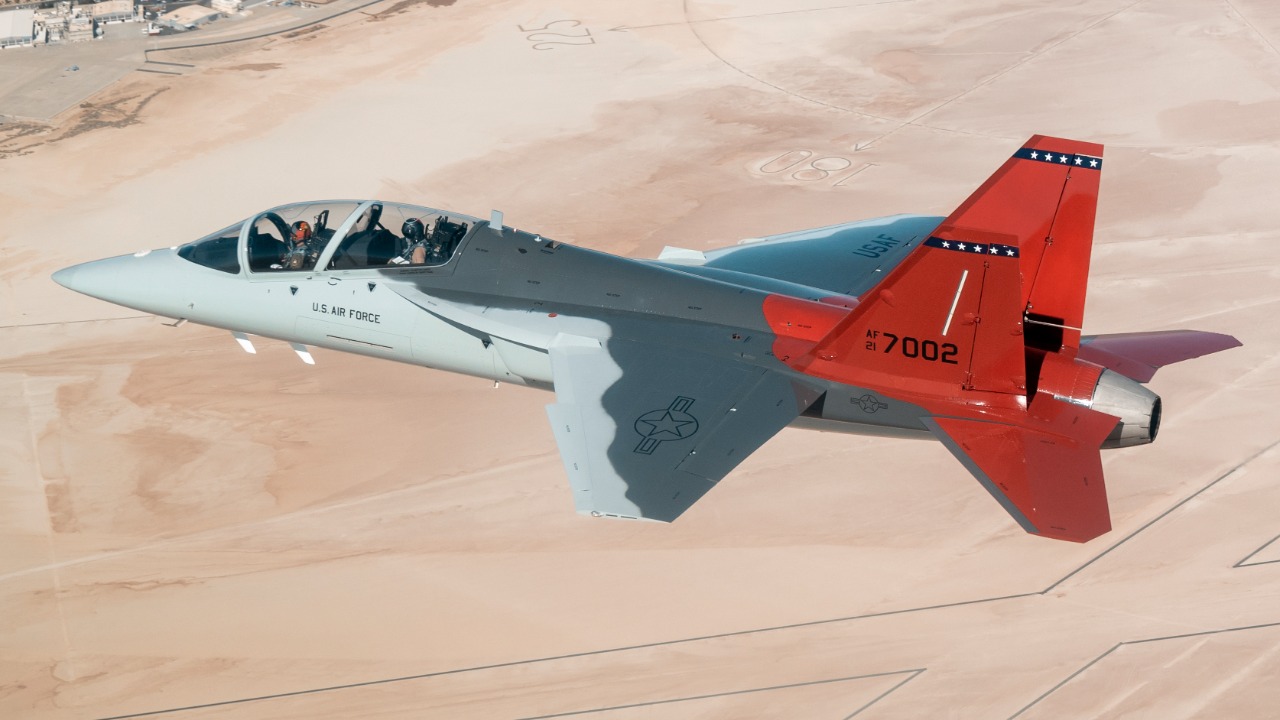
The U.S. Air Force has formally brought the T-7A Red Hawk into operational service, turning a long-running modernization program into a visible reality on the flight line. The new jet trainer is intended to replace aircraft that have served for more than six decades and to reshape how the service prepares pilots for high-end combat aviation. I see this induction as a pivotal moment that links heritage, digital design, and a new generation of aircrews who will learn to fight in a far more data driven environment.
From ceremony to service: how the Red Hawk entered the fleet
The transition from program to fleet presence became tangible when Air Education and Training Command staged an official arrival ceremony that framed the T-7A as the opening act of a new training era. At Joint Base San Antonio, Randolph, the Air Force highlighted that the 99th Flying Training Squadron would be the first unit to operate the aircraft, underscoring that the service is not treating this as a distant promise but as an immediate operational shift. I read that event as more than pageantry, because it signaled that the Air Force is now reorganizing its training enterprise around a platform designed from the outset for modern sensors, networks, and tactics.
That ceremony featured U.S. Air Force Lt Col Michael “Hyde” Trott, the 99th Flying Training Squadron commander, alongside Steve Schmidt, a Boeing T-7A Red Hawk pilot, who together personified the handoff from industry to squadron-level operators. Their presence, captured as they marked the aircraft’s arrival, reinforced that the T-7A is no longer confined to test ranges or design reviews but is now embedded with the unit that will shape its day to day use for students. The Air Force framed the event as the start of a new era in pilot training, and I see that framing as justified given that the T-7A is replacing aircraft that have supported undergraduate pilot training for more than six decades, a point emphasized in the official AETC account of the milestone.
Randolph’s role and the path from test to training
Joint Base San Antonio, Randolph, is emerging as the symbolic and practical heart of the T-7A rollout, and I view that choice as a deliberate statement about where the Air Force wants to anchor its future training culture. The base is the first to receive the Red Hawk, and its selection reflects both existing infrastructure and the concentration of instructor expertise that can absorb a new aircraft without pausing the flow of new pilots. By positioning the T-7A here, the Air Force is effectively turning Randolph into a live laboratory where new syllabi, simulator integration, and maintenance practices can be refined before the jet spreads across the training enterprise.
The road to this point has run through a series of test milestones that gave the service confidence to move from prototypes to fleet aircraft. Earlier, the first T-7A Red Hawk arrived at Edwards Air Force Base, Calif, where a dedicated test campaign has been executed to validate performance and systems integration. That test work is tied to a broader integration plan that looks ahead to additional training locations, including Sheppard AFB in Fiscal 2035, which signals that the Air Force is thinking in terms of a multi decade training architecture rather than a quick replacement of a single airframe. I see the Edwards phase, described in detail in the Edwards reporting, as the technical bridge that made the Randolph arrival possible.
Design, digital training, and what sets the T-7A apart
What makes the T-7A Red Hawk more than a fresh coat of paint on a familiar mission is the way it has been conceived as a complete training system rather than just a jet. The aircraft is an all new advanced pilot training platform for the Air Force, built with flexibility to adapt to evolving threats and mission sets. Its design is paired with ground based training, high fidelity simulation, and data rich debrief tools that allow instructors to replay and dissect every maneuver, which in my view is essential for preparing pilots for complex, multi domain operations.
The Air Force has been explicit that the induction of the first T-7A Red Hawk advanced training aircraft into service signals a broader shift toward digital first pilot training. That shift is intended to better prepare aircrews for modern, data intensive combat environments where information processing and decision speed can matter as much as raw flying skill. The manufacturer has highlighted that the Red Hawk is built to improve pilot readiness through an integrated system that links cockpit, simulator, and analytics, a concept laid out in its description of the training solution. I interpret this as a recognition that the next generation of pilots will need to be as comfortable managing data streams and networked weapons as they are pulling Gs in a turn.
Timelines, instructor experience, and what comes next
The Air Force’s move to place the T-7A with front line training squadrons follows a sequence of earlier steps that brought instructor pilots into the program before students ever touched the jet. Instructor pilots began flying the first T-7 in a training milestone that signaled the service’s intent to build internal expertise early, and the squadron involved has indicated that the Air Force expects the jet to reach initial operational capability in late summer 2027. I see that timeline as ambitious but necessary, given the pressure to replace aging trainers and to align the new aircraft with updated syllabi and simulator networks, a process that was previewed in instructor accounts of those early flights.
The first physical handover of a T-7A trainer aircraft to the Air Force, which occurred on a January delivery, marked the moment when the service could begin to move from planning to execution. That introduction was described as a way to enhance the ability of pilots to train for and execute complex mission profiles, a claim that aligns with the aircraft’s emphasis on advanced avionics and high angle of attack handling. The arrival of the T-7A Red Hawk has been portrayed as a landmark for Air Education and Training Command over the coming years, and I share that assessment, because the aircraft is expected to reshape how new pilots experience everything from their first formation flight to their final check ride. The broader community has taken notice as well, with aviation observers noting that The Red Hawk has landed and that The United States Air Force has officially welcomed the T-7A into service, a sentiment captured in public commentary on the milestone.
Looking ahead, I expect the rollout to accelerate as more aircraft arrive at Joint Base San Antonio, Randolph, and as additional training hubs are prepared to receive the jet. The Air Force has already framed the T-7A Red Hawk as a central pillar of its future training construct, and the narrative around its induction emphasizes both heritage and innovation. Official accounts describe how a T-7A Red Hawk assigned to the 99th Flying Training Squadron was staged during the arrival events, while other reports highlight that AETC holds the aircraft’s introduction as the start of a new era in pilot training at JOINT BASE SAN ANTONIO, RANDOLPH, the first base to receive the T-7A. Those details, reflected in Air Force and AETC reporting, sit alongside descriptions of how Lt. Col. Michael Trott and Steve Schmidt marked the occasion and how the arrival of the T-7A Red Hawk marks a major step for AETC over the coming years, as noted in reserve coverage and in the broader description of how the Air Force received its first T-7A Red Hawk trainer aircraft in January, a moment chronicled in delivery reports and in the summary of how the service has inducted its first T-7A Red Hawk advanced training aircraft into service through its official communication channels, as noted in induction coverage.