
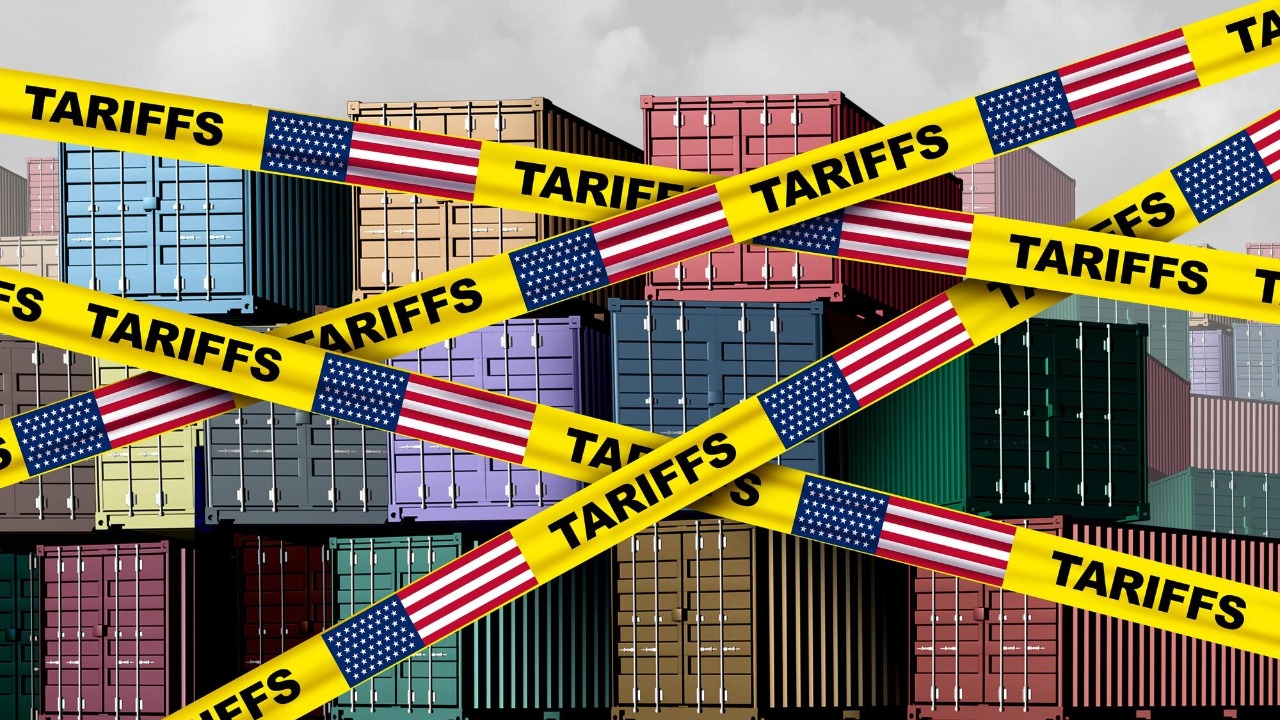
President Donald Trump has moved to fuse economic pressure with moral rhetoric, vowing sweeping 25% tariffs on countries that continue trading with Iran while publicly praising protesters confronting the Islamic Republic’s security forces. The twin messages, delivered through social media posts and public remarks, signal a strategy that seeks to isolate Tehran’s leadership and elevate those risking their lives in the streets at the same time.
As I weigh the implications, I see a White House trying to turn access to the United States market into leverage over the global response to unrest inside Iran, even at the cost of a confrontation with major powers. The question is whether this mix of punitive tariffs and vocal solidarity can meaningfully change the calculations of both foreign governments and Iran’s embattled citizens.
Trump’s 25% tariff threat and the new economic front
In his latest escalation, President Donald Trump has declared that any country doing business with the Islamic Republic of Iran will face a 25% tariff on its exports to the United States. He framed the move as “effective immediately” and cast it as a direct response to Tehran’s behavior, turning access to the American market into a tool of coercive diplomacy rather than relying solely on traditional sanctions. In a post on Truth Social, Trump warned that “any country doing business with the Islamic Republic of Iran will pay a Tariff of 25%,” a formulation that leaves little ambiguity about his intent to punish not just Iran but its commercial partners as well, with the language of “Effective immediately” underscoring the urgency he wants to project.
From my perspective, this is a significant expansion of secondary pressure, because it targets the broader web of trade that sustains Iran’s economy rather than only Iranian entities themselves. Reporting on the announcement notes that Trump used his Truth Social account on a Monday to spell out that imports from countries “doing business with Iran” would be hit with a 25% levy, effectively daring governments and companies to choose between Tehran and the United States market. One detailed breakdown of which countries still trade with Iran explains that the president’s message, posted in Jan and attributed to “On Monday Trump” on Truth Social, explicitly tied the new tariff to the Islamic Republic of Iran, while another analysis by Jemma Crew and Faarea Masud, described as Business reporters, explores how such a blanket measure could ripple through partners that maintain energy, industrial, or consumer links with Iran and are now being told that “any country doing business with the Islamic Republic of Iran will pay a Tariff of 25%.”
Global trade partners caught between Washington and Tehran
The reach of Trump’s threat depends on who is still willing to trade with Iran and how exposed those partners are to American retaliation. Iran’s economy remains intertwined with a range of buyers and intermediaries, from energy importers to manufacturers that still source petrochemicals or metals from Iranian suppliers despite years of sanctions. Analyses of current trade patterns show that several states maintain commercial ties with Iran, often through complex arrangements that try to navigate existing restrictions, and it is these networks that Trump is now trying to disrupt by attaching a 25% cost to any goods they send into the United States.
When I look at the list of countries that continue to do business with Iran, I see a mix of regional neighbors and larger economies that have treated Iranian trade as a manageable risk rather than a red line. A detailed overview of “Which countries do business with Iran and what could US tariffs mean?” notes that Jemma Crew and Faarea Masud, identified as Business reporters, have mapped out how energy flows, industrial imports, and financial channels still connect to Tehran, and how a sudden 25% tariff on those partners’ exports to the United States could force difficult choices. Trump’s own wording, captured in a breakdown of “What did Trump say?” that quotes him saying “Effective immediately, any country doing business with the Islamic Republic of Iran will pay a Tariff of 25%,” makes clear that he is not carving out exceptions for allies or strategic partners, but instead is trying to redraw the cost-benefit calculation for anyone still engaged in Iranian trade.
China’s backlash and the risk of a wider economic clash
No country illustrates the stakes of this gambit more clearly than China, which has long been a key buyer of Iranian oil and a central player in global supply chains. Beijing has already signaled that it will not accept Washington’s attempt to dictate its commercial relationships, with reports that China has threatened to retaliate against Donald Trump after he said he would impose 25% tariffs on countries that trade with Iran. From my vantage point, that response suggests that the tariff threat is not just about Iran, it is also a direct challenge to China’s economic autonomy and its broader contest with the United States over who sets the rules of global commerce.
Any confrontation with China over Iran policy would reverberate far beyond the Middle East, because it would entangle two of the world’s largest economies in yet another dispute layered on top of existing tensions over technology, security, and currency. A closer look at Beijing’s position shows that Chinese officials view the proposed 25% tariff as an extraterritorial attempt to punish their own trade decisions, and they have hinted at countermeasures that could affect American exporters or investors. The fact that China, identified explicitly in reporting as having “threatened to retaliate” against Donald Trump’s plan, is already signaling resistance underscores how a policy framed around Iran could quickly morph into a broader economic clash with a major power, even as global observers track the situation inside Iran itself through resources that aggregate information on the country such as dedicated Iran profiles and parallel tools that do the same for China.
Backing Iran’s protesters as repression intensifies
Trump’s economic offensive is unfolding alongside a very different kind of message aimed directly at people on the streets of Iranian cities. As protests have spread and security forces have intensified their crackdown, activists say 2,000 dead, including children, as security forces use batons, tear gas and firearms to crush the uprising, a toll that conveys the scale of the regime’s response. In that context, Trump has told Iranians that “help is on its way,” language that he and his advisers clearly hope will signal moral support and perhaps hint at further measures, even as the precise nature of any additional assistance remains Unverified based on available sources.
From where I sit, the combination of tariffs and rhetoric is meant to convince protesters that Washington is not only watching but is also trying to weaken the regime that is confronting them. Reports from inside the country describe Iranians making their first calls to the outside world as authorities struggle to maintain control, Trump said on Truth Social that he was announcing a tariff of 25% on imports from countries doing business with Iran, tying his economic move directly to the unfolding crackdown. One account of the unrest, which highlights that Activists say 2,000 dead and labels the piece with a Reading Time marker, captures the human cost of the protests that Trump is praising, while another explains how his message that “HELP IS ON ITS WAY” has been received by those risking their lives. His administration has reinforced that stance through official briefings and media appearances, including a video in which President Donald Trump announces a 25% tariff on countries that trade with Iran and keeps “military action” on the table, as well as coverage that details how Iranians are reaching out as the regime tightens its grip and how Trump’s Truth Social posts, amplified by references to On Monday, Trump and Iran, are shaping perceptions of American policy.