
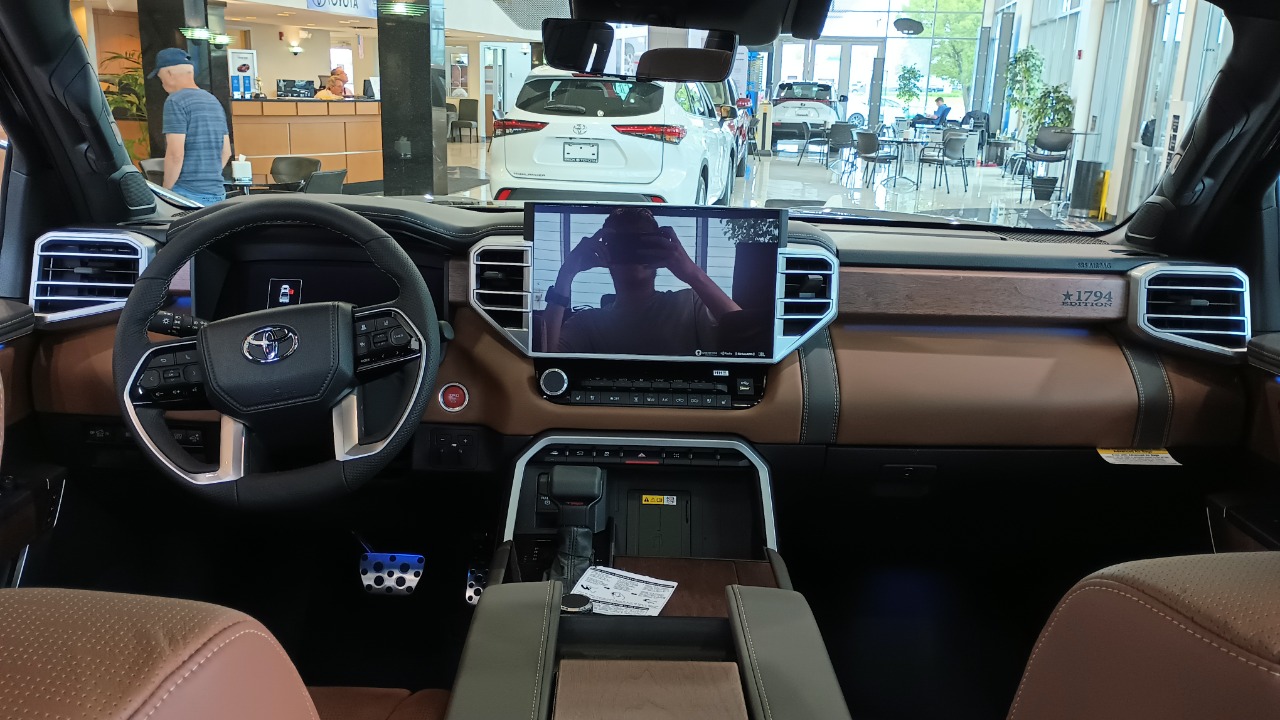
Toyota is recalling a large batch of its newest full-size pickups after identifying a defect that can knock out a key safety feature just when drivers need it most. The company is recalling 162,000 Toyota Tundra and Tundra Hybrid trucks from the 2024 and 2025 model years because the in-dash display can freeze or go dark, cutting off the rearview camera feed during reversing. The move underscores how a single software-driven component can ripple through a vehicle’s broader safety systems and force a major intervention across the United States market.
The recall affects recently sold trucks often used for heavy-duty work, towing, and family hauling. While no serious crashes tied directly to the defect have been detailed in the available reports, the scale of the campaign and the nature of the failure have raised pointed questions about quality control in an era when even basic visibility now depends on complex electronics.
What Toyota says is going wrong inside the Tundra
Toyota has acknowledged that the problem centers on the multimedia display that dominates the dashboard of the latest Toyota Tundra and Tundr Hybrid models. According to Toyota, the screen can stop responding or fail to display the backup camera image, leaving drivers without the rearward view that federal rules expect every new light vehicle to provide. In a statement from PLANO, Texas, Toyota explained that it is conducting a safety recall involving certain model year 2024 and 2025 Toyota Tundra and Tundr Hybrid vehicles, and that owners can confirm whether their truck is affected by entering a vehicle identification number or license plate on the company’s recall lookup site, a process detailed in the official recall notice.
Independent reporting has framed the defect in practical terms that matter to drivers. The trucks’ display can get stuck or go blank, which in turn can interrupt the camera view that appears automatically when the driver shifts into reverse. One report notes that the display can become stuck or go blank, increasing crash risk if the camera feed is lost while reversing, describing how the malfunction could increase the risk of a crash if a driver relies on the camera image while backing up and suddenly loses it mid maneuver, a risk tied directly to the figure of 162,000 affected trucks.
How the defect affects safety and daily driving
The core safety concern is straightforward: when a driver shifts a modern truck into reverse, the expectation is that a clear, real-time image of the area behind the vehicle will appear on the center screen. In these Toyota Tundra and Tundra Hybrid pickups, that expectation can be broken. Reports on the campaign describe how the rearview camera feed can fail to appear or can cut out because the multimedia system’s screen is frozen, which means the driver may be backing a large, tall vehicle with significant blind spots and no electronic assistance. One analysis of the recall notes that Toyota has joined Nissan and Ford on the 2026 recall list after pulling back 162,000 vehicles over a rearview camera problem, explicitly stating that Toyota is recalling 162,000 Tundras over backup camera failures that can leave drivers without the mandated view behind the truck.
For owners, the defect is not just a compliance issue but a daily inconvenience that can complicate parking, tight driveways, and job sites. The Tundra is a large pickup, and many buyers depend on the camera to line up trailers, avoid low obstacles, and keep track of children or pedestrians who might be behind the tailgate. A briefing on the recall explains that the new Toyota campaign impacts 162,000 Tundra and Tundra Hybrid pickup trucks and that, according to Toyota, the trucks’ multimedia screens can fail to display the backup camera image.
Scope of the recall and who is affected
The campaign is national in scope and sizable in raw numbers, all of them relatively new Toyota Tundra and Tundra Hybrid pickups sold in the United States. These are not older vehicles nearing the end of their service lives but current generation models that many buyers only recently drove off dealer lots. Coverage of the recall has repeatedly emphasized the same figure, noting that Toyota announced it would recall about 162,000 pickup trucks because of faulty screens that can disrupt the backup camera view.
Owners of these trucks are scattered across urban, suburban, and rural markets, reflecting the Tundra’s role as both a workhorse and a family vehicle. Some use the trucks for construction or agricultural work where frequent reversing around equipment is routine, while others rely on them as daily drivers in crowded neighborhoods where a clear rear view is essential. One summary of the situation notes that the recall affects 162,000 Tundra and Tundra Hybrid pickup trucks and that, according to Toyota, the trucks’ multimedia displays can malfunction in a way that prevents the camera image from appearing, a description that reinforces the breadth of the recall and the specific models involved.
What owners should do next
For drivers who own a 2024 or 2025 Toyota Tundra or Tundra Hybrid, the first step is to confirm whether their vehicle is included in the recall. Toyota has directed owners to check recall status using their vehicle identification number or license plate through its online tools, a process laid out in the company’s official communication from PLANO, Texas, which explains that Toyota is conducting a safety recall involving certain Toyota Tundra and Tundra Hybrid vehicles and that owners can verify inclusion by entering their VIN or plate details as described in the Toyota notice. Once a truck is confirmed as affected, owners can schedule an appointment with a dealer, where technicians are expected to repair or reprogram the multimedia system at no cost.
Until the fix is completed, drivers are being urged to treat the backup camera as potentially unreliable and to fall back on traditional safety practices such as checking mirrors carefully and looking over their shoulders before reversing. Reporting on the recall has stressed that the defect can cause the display to freeze or fail unpredictably, which means drivers should not assume that a working camera at the start of a trip will still be functioning later in the day. One account of the campaign notes that the company has acknowledged the risk of a crash if the display locks up and that owners should respond promptly to recall notices.
What the recall signals about modern truck design
The Tundra recall highlights a broader shift in automotive risk, as software and screens have become critical safety components. In this case, a multimedia system that controls entertainment, navigation, and vehicle settings is also the gateway for the rearview camera, so a glitch in one domain can cascade into a visibility problem. Analysts have pointed out that Toyota has now joined Nissan and Ford on the 2026 recall list over camera and display issues, a pattern that suggests the industry as a whole is grappling with the reliability of complex digital interfaces, as noted in coverage that describes how Toyota, Nissan and Ford are all contending with recalls tied to rearview camera failures in recent reporting.