
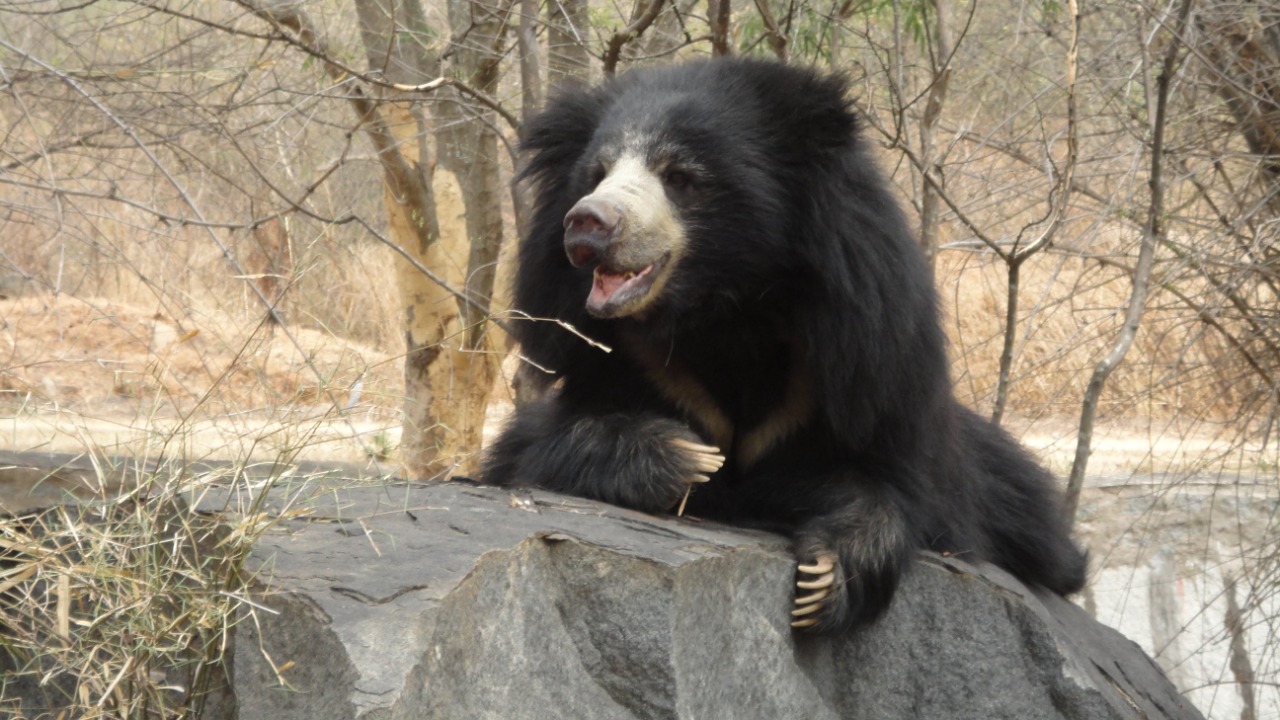
Among the world’s eight bear species, the sloth bear is responsible for more human deaths than any other species. The sloth bear, a termite‑eating specialist from the Indian subcontinent, has accumulated the highest human body count, not because it is the strongest bear, but because of how and where it lives. To understand why, one must consider behavior, habitat, and documented attack statistics rather than strength alone.
Why “deadliest” is not the same as “strongest”
When people imagine the most dangerous bear, they usually picture a hulking grizzly or a polar bear towering over Arctic ice. That intuition is understandable, since Among all bear species, both the grizzly bear and polar bear take the crown as the strongest. Weighing more than around 800 pounds, they can deliver astonishing force with a single swipe. Yet strength alone does not determine which species kills the most people, because lethal encounters depend on how often bears meet humans and how they react when they do.
In practice, the “deadliest” bear is the one that most frequently turns human contact into serious injury or death. Larger species, like polar bears and grizzlies, are dangerous in areas where they are accustomed to humans or protecting cubs, but they often avoid conflict when possible. However, those same species often avoid conflict when they can, and many attacks stem from surprise or food conditioning rather than a default urge to charge. To identify the bear with the highest human toll, I have to look beyond muscle mass to patterns of aggression and the crowded landscapes where people and bears are forced into daily contact.
The sloth bear’s brutal record
By that measure, the sloth bear stands apart. Researchers estimate that sloth bears have mauled thousands of people and killed hundreds over the past 20 years, a record that makes them the bear species with the highest human body count, and Researchers link this to both their temperament and their proximity to villages and farms. In central and eastern India, where people walk through scrub forest to collect firewood or tend fields, encounters are frequent, and the bears’ response is often an explosive charge aimed at the head and face. One detailed study of large carnivore attacks in this region counted hundreds of incidents involving sloth bears, a toll that far exceeds recorded attacks by tigers or leopards in the same landscapes.
Sloth bears, named for their long claws and shaggy coat, are built for tearing open termite mounds but are known to attack perceived threats, including tigers, wolves, and humans. It is thought that poor rural communities in India and Sri Lanka have suffered hundreds of serious maulings, including 48 fatal cases in one documented series of attacks, and Although the total number of incidents is hard to track, the pattern is consistent. When I compare those figures with the far lower global totals for polar or grizzly bear killings, the conclusion is stark: the sloth bear is the bear most likely to leave a trail of human casualties.
How behavior and habitat turn risk into reality
To understand why this medium‑sized insectivore is so lethal to people, I have to look at its behavior in context. Sloth bears live in dry forests and scrub that are heavily used by humans, and they often rest in dense cover during the day. People walking quietly through this vegetation can stumble upon a sleeping bear at close range, triggering a defensive attack that targets the face and scalp. Firsthand accounts describe victims whose eyes, noses, and mouths were torn away in seconds, which aligns with reports that these animals are one of the most aggressive bears and probably has the worst reputation among locals who share their range, a view echoed in a Comments Section where users describe sloth bears as uniquely terrifying.
Geography magnifies that aggression. In parts of India, towns like Ooty, a hill town that was one of the famous “hill stations” of the British Raj in Tamil Nad, now sit close to fragmented forest where bears forage at night. As human developments expand, people and sloth bears share narrow corridors, increasing the likelihood of surprise encounters. Survival and mortality in wildlife populations are influenced by a complex of interacting factors including climate and geographic area, diseases, predators and human activities, and Survival and conflict for sloth bears follow the same ecological logic. Where people are numerous, forests are degraded, and bears are easily startled at close range, the casualty count climbs.
Why other bears still matter, and how to stay alive
None of this means that other bears are benign. In the Arctic, polar bears are apex predators that sometimes treat humans as prey, and in North America, debates over which species is most dangerous often pit the grizzly against the polar bear. One study concludes that while grizzly bears are dangerous, polar bears show a slightly higher predatory intent, especially in remote coastal settlements. In online discussions, people often ask What bear is the most dangerous, and some argue that if they were standing 50 ft from every currently known bear species, the polar bear would be the one they feared most, a scenario raised in Jun that highlights how raw power shapes public perception.