
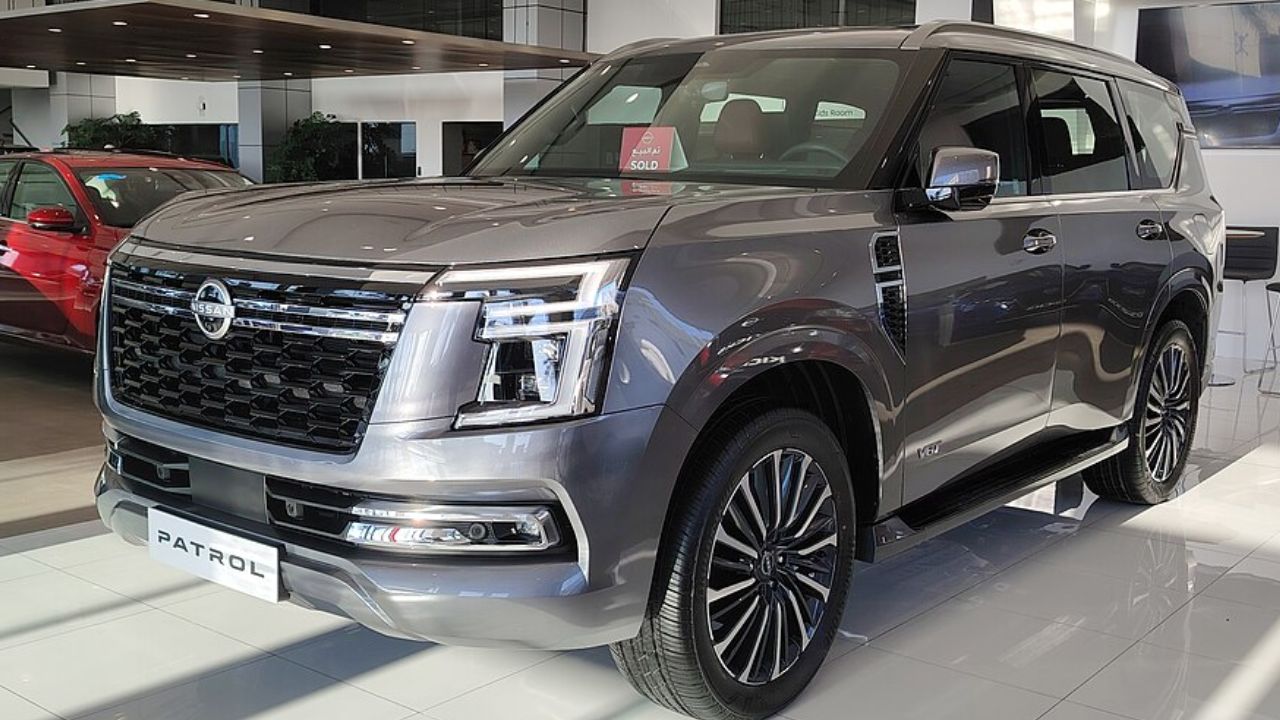
Some SUVs earn their reputation with glossy launch videos and big, shouty slogans. The Nissan Patrol did it the other way: by showing up, year after year, in places that punish machinery and rewarding drivers who just need the thing to work. It’s the kind of vehicle that doesn’t beg for attention—yet somehow ends up being the one everyone trusts when the road turns into a suggestion.
For decades, the Patrol has built a quiet fanbase across deserts, mountains, and work sites where “reliability” isn’t a marketing word, it’s a survival trait. And while newer crossovers are busy debating their screen sizes, the Patrol has been out there doing the unglamorous stuff: towing, crawling, hauling, and taking hits without making it your problem.
A reputation built far from city streets
If you want to understand the Patrol, you don’t start in a suburban driveway. You start in the Middle East, Australia, and parts of Africa—regions where distance is real, heat is relentless, and help can be hours away. In those places, the Patrol isn’t a weekend toy. It’s an everyday tool.
That’s also where its toughness story got written. Fleet operators, families, and off-road guides tend to keep what works and ditch what doesn’t. The Patrol stuck around, and not because it was trendy—because it kept coming back.
The “workhorse DNA” that never really left
Older Patrols—especially the Y60 and Y61 generations—earned a cult-like following for being simple, durable, and mechanically straightforward. Solid axles, body-on-frame construction, and a focus on strength over flash gave them a kind of old-school credibility. They were the SUVs people modified, repaired, and passed down, sometimes like a slightly oily family heirloom.
That toughness wasn’t accidental. Nissan built those Patrols with the assumption they’d be driven hard, loaded heavy, and maintained in less-than-perfect conditions. When a vehicle’s design brief quietly includes “it might live its whole life in dust,” you get a different kind of engineering.
Then the modern Patrol showed up—and didn’t get soft
When the Y62 Patrol arrived (2010 onward in many markets), it looked like it might be the moment the name went fully luxury. Bigger body, more tech, more comfort—the usual signs of an SUV heading toward mall duty. But the surprise is that it kept the fundamentals that matter: a strong ladder frame, serious towing ability, and an engine lineup designed for effortless shove rather than delicate efficiency.
In many regions, the Patrol’s big V8 became part of its identity. It’s not subtle, and it’s definitely not trying to win an eco award, but it delivers the kind of smooth, unstressed power that helps in sand, when towing, or when you’ve got a full load and a long climb ahead. And in tough markets, “unstressed” is basically a love language.
Desert credibility is a special kind of credibility
There’s a reason the Patrol is a common sight on dunes: it’s stable, predictable, and robust under repeated punishment. Sand driving heats everything up and demands constant momentum control, which exposes weak cooling systems, fragile drivetrains, and overcomplicated setups pretty quickly. The Patrol’s ability to take that routine abuse—and come back for more—has become part of its public identity in places like the UAE and Saudi Arabia.
It’s also where the Patrol versus Land Cruiser debate has lived for years, like a friendly rivalry that sometimes stops being friendly. The point isn’t that one is universally “better.” It’s that the Patrol has earned the right to be in the conversation, and in some circles, it’s the default pick for hard use.
Why “tough” isn’t just about off-roading
Real toughness shows up in boring moments: towing a heavy trailer in high heat, idling for hours at a job site, or doing long highway stretches fully loaded without drama. The Patrol’s size and construction help here. A heavy-duty frame, generous cooling, and a drivetrain built for torque all matter when the vehicle’s day job is simply not complaining.
It’s also why the Patrol has been popular with people who don’t care about lap times or touchscreen animations. They care about durability, parts availability, and whether the SUV feels like it was designed with actual work in mind. The Patrol often does, even when it’s wearing leather seats.
The hidden advantage: global, real-world stress testing
Some vehicles get tested in controlled environments and then spend their lives in mild weather. The Patrol has been stress-tested by customers, constantly, across some of the harshest conditions on the planet. That kind of feedback loop is brutal, but it’s also effective: weaknesses get exposed quickly, and reputations don’t survive on wishful thinking.
And because the Patrol is sold and used heavily in demanding regions, it benefits from a huge ecosystem of knowledge and support. Mechanics know it, owners share tips, and aftermarket companies build solutions for the things people actually do with it. That’s an underrated part of toughness: not just surviving, but being easy to keep alive.
It’s not perfect—just dependable in the ways that count
Calling the Patrol “tough” doesn’t mean it’s flawless. It’s big, it can be thirsty, and depending on the market and model year, some of the modern tech can be pricey to fix. If your priority is fuel economy or a compact footprint, the Patrol is basically the opposite of your vision board.
But toughness isn’t the same thing as perfection. The Patrol’s appeal is that it’s designed to keep going when conditions are ugly, loads are heavy, and the trip is long. For a lot of owners, that’s worth more than an extra couple of miles per gallon.
How it became “quietly famous”
The funny thing is the Patrol didn’t become legendary through one big moment. It didn’t need a superhero ad campaign or a celebrity ambassador pretending to enjoy camping. It became famous the way the best tools do: someone used it hard, it didn’t break, and they told someone else.
That’s why you’ll meet Patrol owners who talk about theirs like it’s a trusted coworker. Not glamorous, not trying to impress anyone—just solid, capable, and weirdly comforting when you’re far from home. In a world of increasingly complicated SUVs, that kind of straightforward toughness feels almost rare.
The Patrol’s toughness, in one sentence
The Nissan Patrol became one of the world’s toughest SUVs by being the vehicle people rely on when reliability stops being optional. It’s the SUV that built its name in heat, dust, and distance—quietly, consistently, and without asking for applause.