
When Americans talk about “intelligence failures,” they usually mean one of two things: a failure to warn of an imminent attack, or a failure to inform policymakers accurately enough to avoid a major strategic mistake. Popular retellings often hinge on a missing intercept or a single ignored memo. In practice, the historical record is more complicated. Many crises featured partial warning, ambiguous reporting, and decisions shaped by competing priorities. Still, a small set of episodes keeps recurring in declassified histories, oversight reviews, and bipartisan commission work because they expose the same stress points in how the U.S. Intelligence Community (IC) collects, analyzes, and shares information.
From Pearl Harbor to 9/11 to the Iraq WMD assessments of 2002–03, the pattern is rarely “no information.” More often, relevant information sits in separate channels, is interpreted through faulty assumptions, or reaches the people who can act on it too late—or in a form that doesn’t translate into action. These lessons matter now because today’s targets and threats feature the same complications: denied-area collection, deception and disinformation, cyber operations, and fast-moving escalation risks in challenges involving China, Russia, Iran, and North Korea.
What “failure” looks like in practice
“Failure” is a blunt label for what are often multiple breakdowns at once: collection gaps, analytic tradecraft problems, and coordination failures among agencies and policymakers. Warning can fail even when pieces exist, because “connecting the dots” in time depends on workflow, prioritization, and dissemination—not just on access. Analytic judgment can fail when uncertainty is compressed into overly confident conclusions, dissent is muted, or mirror-imaging distorts estimates of adversary intent.
It also helps to distinguish an intelligence failure from a policy failure using intelligence. Intelligence products can be caveated or contested inside the IC while decision-makers gravitate toward the interpretation that best fits their objectives. Many public postmortems emphasize this point, because focusing only on collectors and analysts can obscure how warnings were received, weighed, and acted upon.
Pearl Harbor: general warning without actionable focus
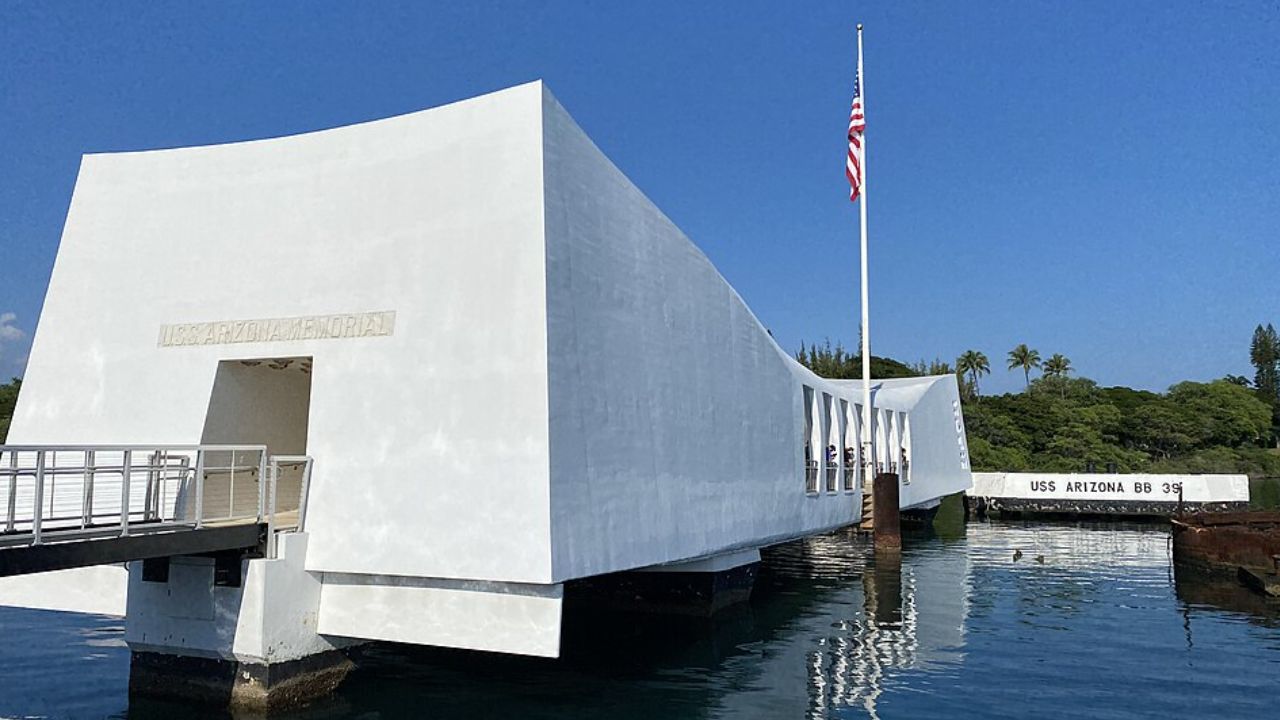
Pearl Harbor remains a defining example of strategic surprise in U.S. memory because it highlights how indicators can be missed—or not elevated—when coordination and prioritization don’t match the pace of events. In broad terms, it is often cited as a case where there was awareness that conflict risk was rising, but the specific warning of where and when was not delivered or acted upon effectively.
The enduring lesson is less about omniscience than about organizational seams. When collection, analysis, and operational readiness are distributed across institutions, the handoffs matter: who owns the problem, who can elevate it, and how quickly information moves. The gap between general threat awareness and specific, actionable warning is a recurring fault line that later episodes would expose again.
9/11: fragments, stovepipes, and a system that moved too slowly
The 9/11 Commission Report cemented 9/11 as the modern benchmark for warning failure, while also underscoring that the system held relevant fragments without turning them into prevention. The failure is commonly described as a mix of missed signals, interagency stovepipes, and the difficulty of prioritizing specific leads amid large volumes of threat reporting. Whatever the mix of causes, the outcome was a mass-casualty attack that reshaped U.S. strategy for years.
Institutionally, 9/11 is often linked to how the CIA, NSA, FBI, and other entities handled collection, analysis, and dissemination under pre-9/11 rules and cultures. Public accounts emphasize that legal, bureaucratic, and procedural barriers complicated information sharing and rapid coordination. Even when the issue was not the absence of “dots,” the system struggled to fuse them quickly enough to create a coherent operational picture.
Iraq WMD (2002–03): confidence outran the evidence
If 9/11 is often framed as “we didn’t connect the dots,” the Iraq WMD assessments are remembered as “we connected them too tightly.” Postwar reviews and Senate/IC oversight work are frequently cited in discussions of tradecraft failure, including problems with sourcing, confidence levels, and the handling of dissent. The core concern is not that intelligence must be perfect under uncertainty, but that uncertainty can be edited down into apparent consensus—especially when the policy environment demands clarity.
The strategic effects were severe. Assessments treated as firm ground became part of the justification for war, with long-term implications for U.S. credibility, alliance politics, and resource allocation. A failure at this scale does more than damage analytic reputation: it can shape force posture, readiness demands, and procurement priorities, and it can make later warnings harder to sell because earlier confidence was oversold.
Other shocks that reveal the same weaknesses
Several other episodes are frequently debated as “intelligence failures,” partly because definitions vary and partly because policy choices blur the line between flawed intelligence and flawed use of intelligence. Bay of Pigs is often invoked as a case where intelligence and operational planning collided with optimistic assumptions and an inadequate reading of political dynamics. Vietnam-era shocks such as the Tet Offensive are commonly discussed in terms of strategic surprise and the gap between available indicators and leadership expectations.
The Iranian Revolution and the subsequent hostage crisis are also often cited in retrospectives on the difficulty of judging political stability and elite decision-making—areas where HUMINT access can be thin and technical collection has limits. U.S. warning gaps around the Yom Kippur War sometimes appear in the same discussions as reminders that intent can be missed even when capabilities are visible. The fall of the USSR is frequently framed not as a single “missed intercept,” but as the challenge of recognizing systemic collapse in real time.
More recently, Afghanistan is debated through two related lenses: assessments of Taliban resilience over time and, later, how quickly the Afghan government might unravel once U.S. support shifted. Public discussion often treats this as a blend of intelligence judgment and policy assumptions, with the added reality that estimates are only one input into decisions on timelines, force posture, and evacuation planning. The broader point is not that intelligence “owns” outcomes, but that it can expand—or narrow—the space for preparation.
The patterns that keep recurring
Across these cases, the hardest question is usually intent, not capability. Adversaries can conceal decision-making, run deception, and exploit the fact that analysts must weigh multiple explanations for the same indicator. Mirror-imaging can make the improbable seem impossible, right up to the moment it occurs.
A second pattern is structural: stovepipes and slow dissemination can degrade warning even when collection is strong. The IC is not one organization but a federation of agencies—CIA, NSA, FBI, DIA among them—with different missions, authorities, and cultures, often operating under distinct legal and operational constraints. When the handoffs are slow or unclear, time-sensitive information can land as background noise instead of a trigger for action.
A third pattern is tradecraft under pressure. National Intelligence Estimates (NIEs) and related products are designed to inform policy, but the process can reward consensus language and discourage sustained ambiguity, especially when leaders want a clean answer. Politicization pressures—overt or subtle—can affect how confidence is expressed, how dissent channels are used, and whether caveats survive editing. None of this requires a conspiracy; it can emerge from ordinary incentives and the human preference for coherence.
Why it matters now: deterrence, escalation, and defense spending
The stakes are not limited to surprise attacks. Intelligence failures also show up as mismanaged risk in environments where miscalculation can escalate quickly. Poor warning or flawed judgment can distort deterrence—either by underestimating an adversary’s willingness to act or by overestimating threats and provoking premature, costly moves. In nuclear and cyber contexts, ambiguity can be manipulated through disinformation and fast, deniable operations.
There is also a direct material effect. Intelligence judgments shape readiness and spending by influencing the assumptions planners bake into force structure, stockpiles, cyber resilience, air and missile defense, and munitions inventories. Threat inflation can lock in expensive decisions that are slow to reverse; threat underestimation can leave gaps that are costly to close under pressure.
What changes next: reforms help, but they don’t eliminate surprise
The post-9/11 era produced major reforms aimed at coordination and domestic security, including the creation of ODNI, the growth of DHS, and expanded joint approaches such as Joint Terrorism Task Forces. Oversight mechanisms—Congress and the FISA court among them—also became central to how collection authorities are debated and constrained. These changes addressed real information-sharing and prioritization problems, while also adding layers of process to an already complex system.
The deeper issue is that reform cycles often target the last crisis. After warning failures, the system pushes broader collection and faster sharing; after analytic failures, it emphasizes tradecraft standards and dissent. Both are necessary, but neither can eliminate uncertainty, deception, or the basic difficulty of predicting human decisions. The realistic goal is not perfection. It is an IC—and a policy apparatus—that can surface uncertainty honestly, move critical signals quickly, and challenge institutional blind spots before they harden into consensus.
That is what the most consequential U.S. intelligence failures reveal: the limits of collection, the fragility of interpretation, and the decisive importance of coordination. The question isn’t whether the IC will face another surprise or another contested estimate—it will. The question is whether the U.S. system, intelligence and policy together, can learn fast enough to keep the next failure from becoming the next strategic turning point.