
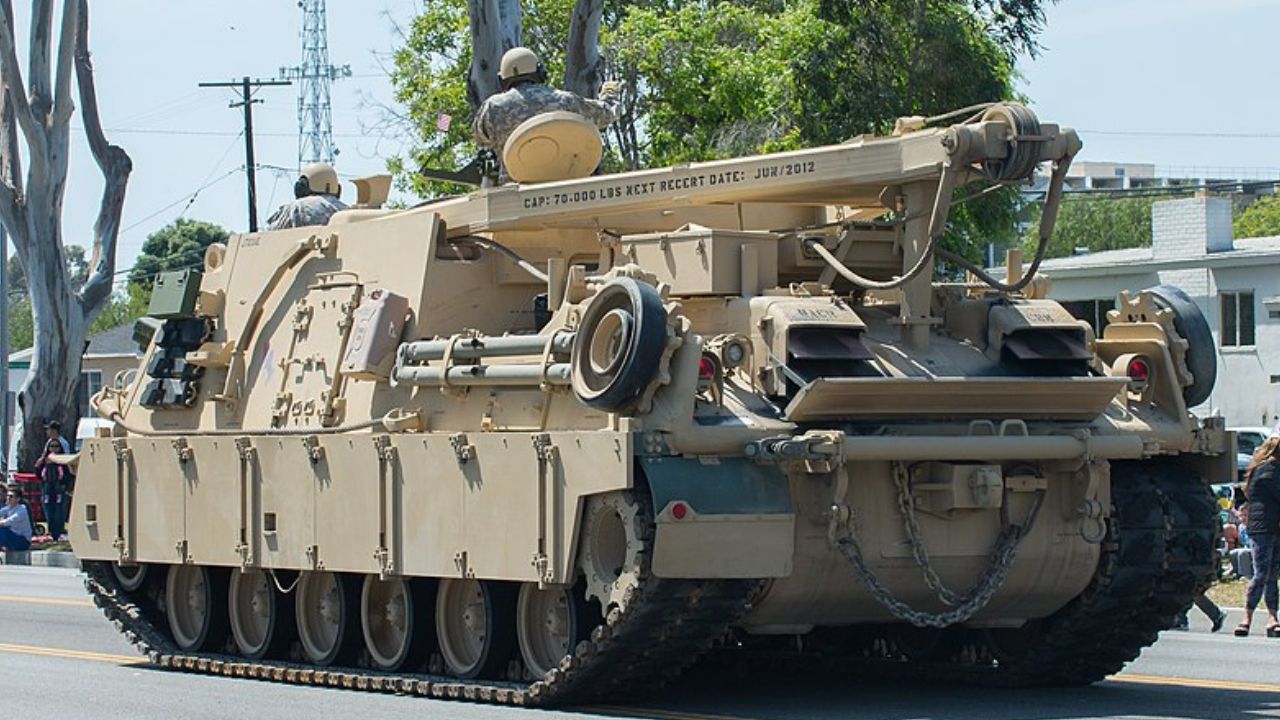
When a tank gets stuck, it doesn’t just look dramatic—it becomes a real problem. A disabled 70-ton machine can block a route, slow an entire unit, or turn into an expensive “please don’t leave me here” sign for the enemy. That’s where the M88 recovery vehicle comes in, rumbling up like a tow truck that goes to the gym, then does it again in full body armor.
In recent field operations and training rotations, crews have been leaning hard on the M88’s one job: getting other armored vehicles out of trouble, even when the terrain is ugly and the clock is ticking. The stories coming out of units are strikingly similar—something heavy breaks, sinks, or slides into the kind of spot that makes a driver mutter words not fit for a radio. Then an M88 shows up and hauls the problem back into the world of solvable things.
A battlefield tow truck with a serious attitude
The M88 is an armored recovery vehicle built to retrieve and repair tanks and other tracked vehicles under tough conditions. Think of it as a specialized rescue platform: it’s protected, it’s powerful, and it’s designed to work close to danger rather than waiting for the coast to clear. While some recovery can be done with lighter vehicles or improvised methods, there’s a point where physics wins, and you need a purpose-built machine.
Modern versions like the M88A2 Hercules are designed specifically to handle the weight and bulk of newer main battle tanks. That matters because as tanks got heavier and more complex, older recovery solutions started to run out of muscle. The M88 didn’t just keep up—it evolved into a vehicle that can pull, lift, winch, and stabilize itself while doing it, all without asking nicely.
Why “others couldn’t reach” is the whole point
Recovery isn’t just about strength; it’s about access. If a tank slides into a ditch, sinks into mud, or breaks down on a narrow route lined with soft shoulders, the problem isn’t only weight—it’s where that weight ended up. A standard wrecker might not make it down the same path, and another tank trying to assist can easily become the sequel: “Now there are two stuck tanks.”
The M88 is built for the same kinds of terrain tanks drive through, which is a big deal. Tracked mobility helps it crawl into places wheeled recovery vehicles would avoid, and its armor lets it operate closer to the front or in areas where taking your time isn’t an option. In plain terms: it can go where the problem is, not where it’s convenient to stand and point at the problem.
The gear that makes it work: winches, cranes, and controlled brute force
At the heart of the M88’s reputation is its recovery toolkit. The vehicle’s main winch is the star of the show, built to pull massive loads with the kind of steady force that doesn’t care if the stuck vehicle is embarrassed about it. With rigging and mechanical advantage, crews can multiply pulling power, which is how you move something enormous without snapping cables or tearing hardware out of a hull.
Then there’s the crane, which turns the M88 into a mobile repair platform. When a tank throws a track or needs a heavy component swapped in the field, lifting gear matters as much as towing power. And because the M88 is designed for this, it carries tools, parts, and the layout to support the kind of mechanical work that would otherwise require a trip back to a depot.
What recovery actually looks like (spoiler: it’s not just “hook and go”)
The cinematic version of recovery is simple: attach cable, rev engine, tank pops out, everybody cheers. Real recovery is more like a cautious, methodical puzzle where the wrong move can damage a vehicle—or worse, hurt someone. Crews have to judge soil, slope, anchor points, and how the disabled vehicle is sitting, because pulling the wrong direction can dig it in deeper.
That’s why M88 operations are as much about crew skill as equipment. Rigging lines, setting up snatch blocks, coordinating hand signals, and keeping tension controlled takes practice. The vehicle supplies the muscle, but the crew provides the judgment, and that combination is what turns “impossible” into “annoying but doable.”
Heavy rescue in the worst places: mud, ditches, and broken drivetrains
Some of the most common “can’t reach it” recoveries start with terrain—deep mud, soft sand, steep embankments, or narrow roads with no safe turnaround. When a tank bogs down, it can settle quickly, and once the hull is dragging, extraction gets harder by the minute. An M88 can approach carefully, use its blade and anchoring techniques to stabilize, and pull with the kind of controlled force that reduces the chance of making the situation worse.
Mechanical failures create a different kind of headache. A tank that can’t move under its own power may still be sitting on a tight route, exposed, and in the way. The M88’s ability to tow heavy armored vehicles—while also providing limited on-site repair capability—means a unit doesn’t always have to choose between abandoning equipment and risking a longer, more complicated extraction later.
Why it matters: logistics, momentum, and not leaving steel behind
Recovering a tank isn’t just about saving a piece of hardware, although that’s definitely part of it. It’s also about keeping a formation moving and keeping routes open. A single disabled vehicle can create a bottleneck that turns an organized plan into a traffic jam with camouflage.
There’s also a morale and security angle that’s hard to ignore. Crews don’t like the idea of leaving their vehicle behind, and commanders don’t like the idea of valuable equipment becoming a stationary target or an intelligence gift. When an M88 can get in, get the job done, and get out, it reduces the chances that a bad day turns into a lasting problem.
The quiet teamwork behind the headline moments
The M88 rarely gets the spotlight the way tanks do, but it’s the vehicle everyone wants nearby when something goes sideways. It’s a mix of toughness and practicality, and it’s often operated by crews who are equal parts mechanic, rigger, and problem-solver. Their work happens in the margins—between the plan and reality—where missions are won or stalled.
And maybe that’s the best way to understand why the M88 keeps showing up in those “others couldn’t reach” stories. It’s not magic, and it’s not just horsepower. It’s a purpose-built rescue machine, driven by trained crews, doing the unglamorous work that keeps the glamorous machines in the fight.